The basics of safe used cooking oil (UCO) storage: cool it to room temperature, transfer it into a sealed leak-resistant container, keep it in a cool, accessible location away from heat and foot traffic, and maintain a regular pickup schedule to prevent overflow.
Improper disposal methods create safety hazards, drive up costs, and can put a business out of compliance with local health and fire codes. Containers that overflow, spill, or sit unprotected invite a chain of problems: slip-and-fall incidents, plumbing damage, grease trap failures, and regulatory scrutiny.
Proper UCO storage is part of a larger operational system that connects fryer management, staff training, and scheduled recycling pickups. When that system works, the kitchen runs more efficiently, liabilities drop, and used cooking oil is preserved as a valuable resource rather than treated as throwaway waste. Mahoney Environmental partners with foodservice businesses to build that system from the ground up, including storage containers or automated equipment, scheduled pickups, and compliance support customized to each operation.
Why Properly Used Cooking Oil Storage Matters
Safety Risks in the Kitchen
Improper used cooking oil handling creates compounding hazards in commercial kitchens. Transferring hot oil too soon risks serious burns. Spills create slip-and-fall conditions. Overfilled or improperly sealed containers near heat sources introduce fire risk. Degraded oil also produces free radicals, making proper storage a staff safety issue as much as an operational one.
Compliance and Regulatory Requirements
Local health departments and fire marshals have specific expectations around grease containment and storage. Many jurisdictions require that UCO be stored in clearly labeled, leak-resistant containers kept away from drains and public areas. Larger operations storing significant volumes of cooking grease may also need to maintain a Spill Prevention, Control, and Countermeasure (SPCC) plan under EPA regulations. Failure to meet applicable standards can result in fines, failed inspections, or temporary shutdowns.
Operational and Cost Impacts
When oil is stored improperly, grease trap problems are not far behind. Grease that reaches drains strains plumbing and drives up pumping frequency. Spills that reach floors or drains can require professional cleanup and power washing — costs that compound quickly when you factor in lost labor time.
Unsecured outdoor tanks are a common target for UCO theft, which costs the foodservice industry millions of dollars each year. Theft disrupts pickup schedules, triggers additional service calls, and can erase accumulated rebate value overnight. Disorganized storage also creates cleanup burdens that pull staff away from higher-priority work.
What Type of Container Should You Use for Used Cooking Oil?
Approved Storage Containers
UCO storage containers should be built to handle the demands of a commercial kitchen environment. Key requirements include:
- Durable, leak-resistant construction rated for high-temperature liquids
- Tight-sealing lids that contain unpleasant odors and block contaminants
- Sufficient capacity for the volume of cooking grease generated between pickups
- Compatibility with the oil types collected, whether vegetable oil, canola oil, peanut oil, animal fat, or a blend
Containers that are cracked, corroded, or missing hardware should be replaced immediately. Damaged equipment is one of the most common contributors to spills and compliance issues.
Indoor vs. Outdoor Storage Options
The right setup depends on kitchen volume and available space:
- Indoor containers work well for short-term holding in lower-volume operations; position them in a designated spot that is accessible but out of high-traffic zones
- Outdoor tanks/automated equipment suit higher-volume kitchens and move the collection point outside the kitchen environment entirely
- Outdoor bins offer a middle-ground option for operations that need external storage without a full tank installation
- All storage locations should be in a cool, dark place to slow oil degradation and reduce odor buildup between pickups
- Outdoor placement should account for staff access, security measures, and proximity to service vehicles
The type of fat your kitchen generates can also influence which storage solution is the right fit. Animal-based fats like tallow solidify in cold temperatures, which can make standard outdoor tanks impractical in colder climates. In those situations, a heated bulk tank keeps the collected fat fluid and pumpable year-round. Mahoney Environmental offers heated tank options in select service areas — contact us to find out what’s available for your location.
Labeling and Identification
Every oil storage container should be clearly marked for UCO to prevent accidental mixing with:
- FOG (fats, oils, and grease) from other kitchen sources
- Food waste
- Cleaning chemicals or other liquids
Mixed waste reduces the value of collected oil and can disqualify it from recycling programs entirely.
Step-by-Step: How to Store Used Cooking Oil Properly
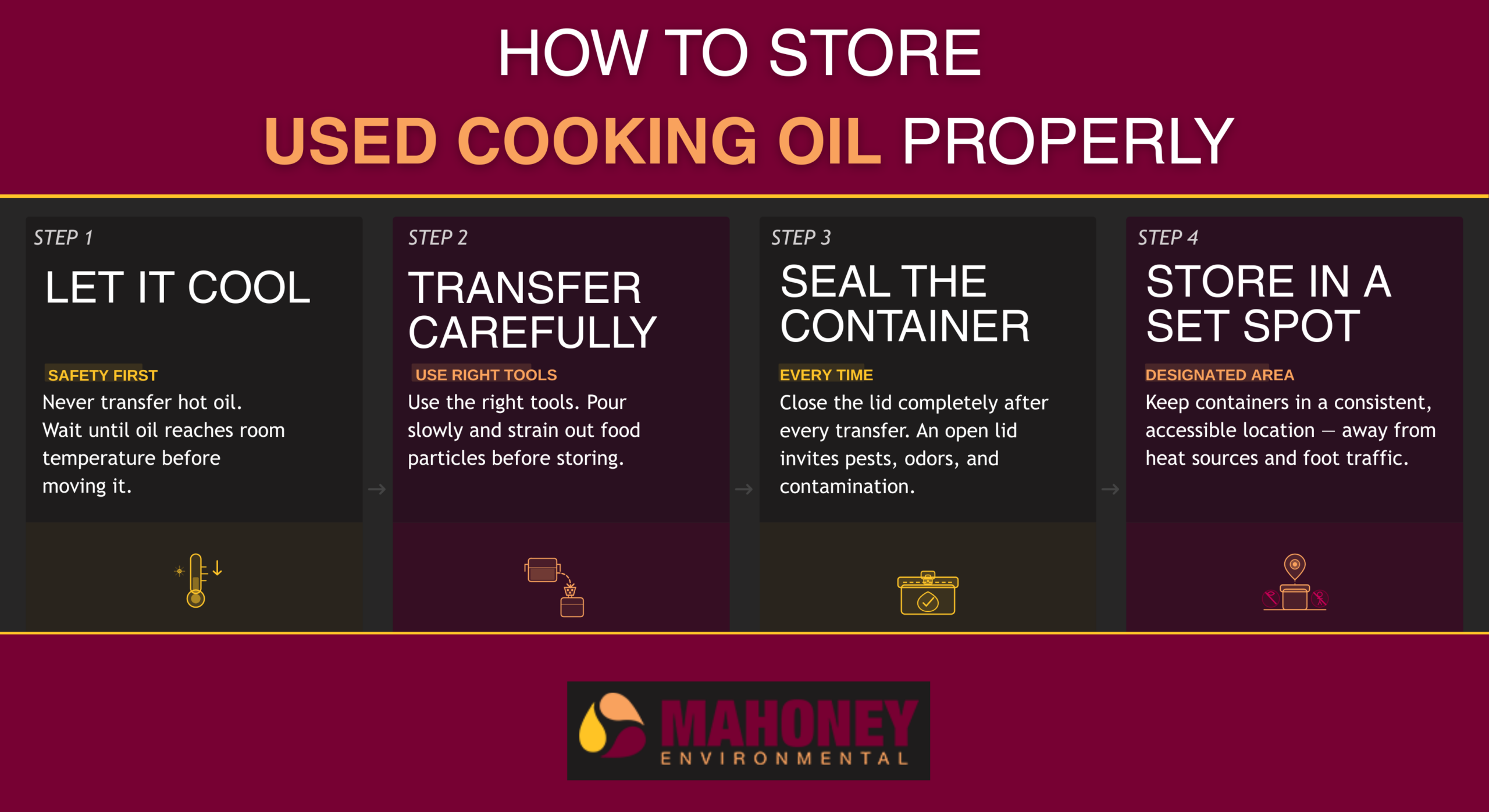
Step 1: Allow Oil to Cool Safely
Hot oil should never be transferred directly into a storage container. Allowing oil to reach room temperature before moving it reduces the risk of burns and prevents thermal stress on containers. This is especially important after heavy deep-frying cycles when oil temperatures remain elevated well after the fryer is turned off. Staff should treat cooling as a required step, not an optional one.
Step 2: Transfer Oil Carefully
Use appropriate tools when moving oil from the deep fryer to the storage container. Slow, controlled pours minimize splashing. Old oil that has already exceeded its usable life should be flagged separately and prioritized for the next scheduled pickup.
Step 3: Secure the Container
After every transfer, close the oil storage container lid completely. An unsecured lid allows contaminants to enter the oil, attracts pests, and accelerates odor buildup. This step takes seconds and prevents a range of downstream problems. If the container is stored outdoors, keep it locked between transfers to prevent theft.
Step 4: Store in a Designated Area
Place storage containers in a consistent, designated location away from heat sources and high-traffic zones. Staff should know exactly where UCO goes, and that location should stay clear of obstructions. Proper placement also makes it easier for collection professionals to access containers efficiently during scheduled pickups.
Best Practices for Managing Used Cooking Oil Storage
Maintain a Regular Pickup Schedule
- Work with your UCO provider to set a pickup cadence based on actual oil volume
- Never allow containers to reach capacity, as overfilled tanks lead to spills and overflow
- Use the pickup schedule to track oil usage trends and identify inefficiencies
- Keep fresh oil and used oil clearly separated at all times
Train Staff on Proper Handling
- Document SOPs for UCO handling and review them during onboarding and shift changes
- Post handling instructions near collection points for easy reference
- Hold staff accountable for consistent practices across all shifts
- Address gaps immediately when procedures are not being followed
Prevent Theft and Contamination
- Use locking mechanisms on outdoor tanks and outdoor bins
- Limit access to collection areas to authorized staff only
- Work with a provider that monitors pickup volumes so discrepancies are flagged early
- Inspect containers regularly for signs of tampering or contamination from water, chemicals, or mixed waste
Keep Storage Areas Clean
- Clean spills around storage containers immediately to prevent slip hazards and pest activity
- Inspect the oil storage container and the surrounding area as part of daily or weekly kitchen maintenance
- Replace containers showing wear, damage, or compromised seals before they become a liability
Common Mistakes to Avoid
- Transferring hot oil before it has cooled to a safe handling temperature
- Using unapproved, damaged, or unlabeled containers
- Allowing indoor tanks or outdoor bins to overfill between pickups
- Mixing UCO with other waste streams, including FOG or food waste
- Storing old oil past the point where it should have been collected
- Ignoring pickup schedules, which leads to overflow and increased health risks
How Used Cooking Oil Recycling Fits Into Your Operation
From Waste to Valuable Resource
UCO collected from commercial kitchens does not go to a landfill. When properly stored and collected, it is processed into valuable commodities, including renewable diesel and sustainable aviation fuel (SAF). This closed-loop system depends on waste cooking oil that has been stored without contamination. Cooking grease that has been mixed with other waste, exposed to water, or allowed to degrade significantly is harder to process and worth less as a raw material.
Business Benefits
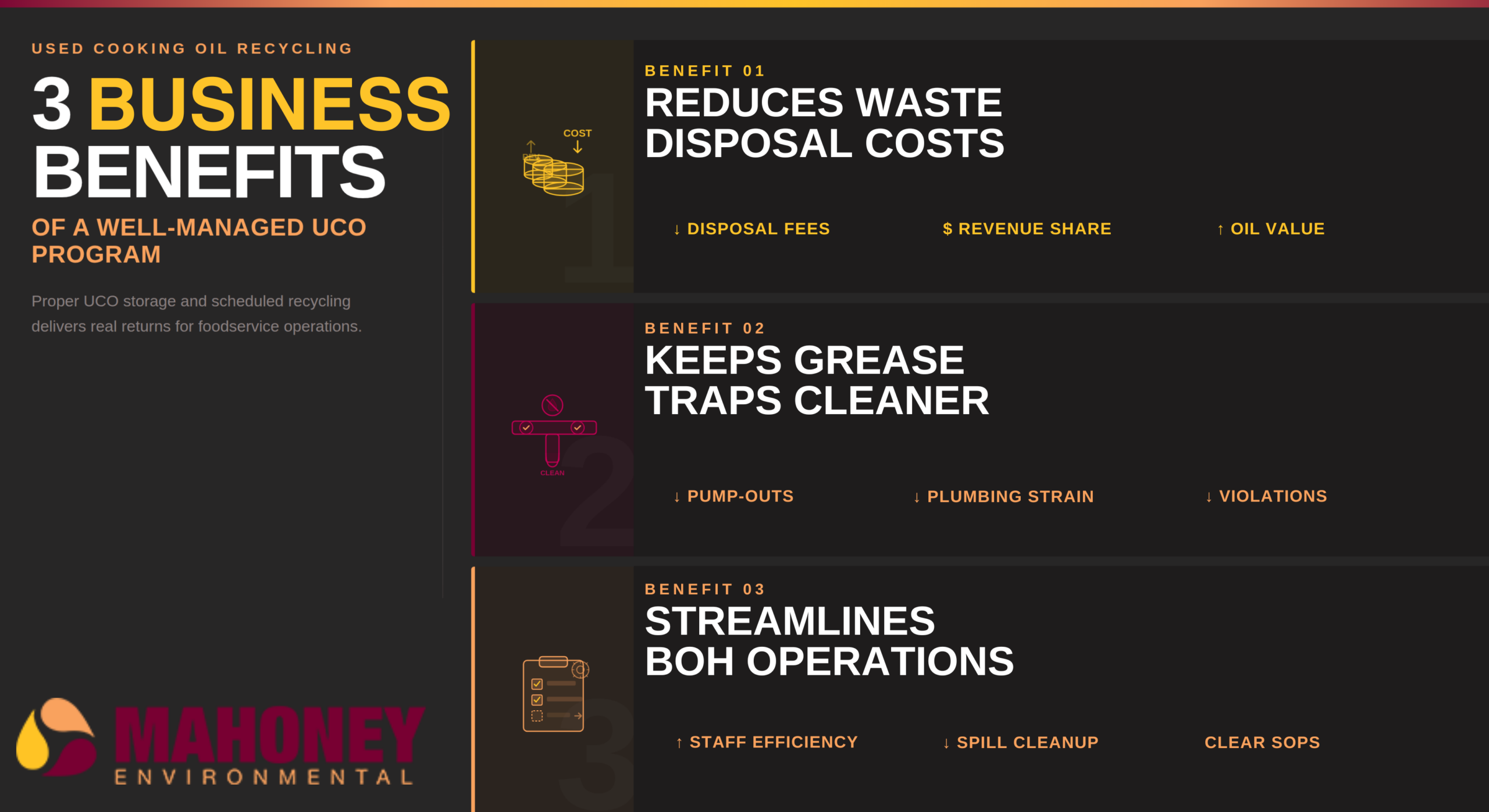
A well-managed UCO program reduces waste disposal costs, keeps grease traps cleaner, and streamlines back-of-house operations. For many foodservice businesses, it also generates a rebate or revenue share based on collected oil volume, turning a waste product into a direct financial return.
Environmental Impact
Responsible UCO recycling keeps cooking grease out of landfills and prevents it from entering storm drains or straining water treatment systems. For foodservice operators, it is a practical way to reduce environmental impact without changing core kitchen operations.
 Work With a Professional Used Cooking Oil Partner
Mahoney Environmental provides foodservice businesses with the equipment, scheduling, and compliance support needed to manage UCO properly. Our professionals assess each operation’s needs and design a collection and storage program that fits the volume, layout, and workflow of the kitchen.
Services include:
- Scheduled pickups based on your kitchen’s oil volume
- Oil storage containers and indoor or outdoor tank installation
- Compliance guidance for local health and fire code requirements
- Customized programs for single locations and multi-unit operations
Contact Mahoney Environmental or book a service today to build a used cooking oil storage and recycling program tailored to your operation.

 Call Us Now (800) 892-9392