At a Glance: The best way to dispose of cooking oil is to recycle it through a professional collection service. Never pour cooking oil down the drain. It solidifies in sewer pipes, causes blockages, and can result in expensive repairs and regulatory fines.
For commercial kitchens, proper disposal means storing used cooking oil in approved containers and scheduling regular pickups with a licensed recycler. This guide covers everything foodservice operators need to know about handling cooking oil safely and staying compliant.
Need a solution now? Schedule today →
Why Proper Cooking Oil Disposal Matters
When cooking grease enters the sewer system, it solidifies and coats pipe walls. Over time, this buildup combines with food waste and other debris to form blockages that can cause sewage backups and sanitary sewer overflows.
The U.S. EPA reports that grease causes a significant amount of sewer system blockages nationwide. For restaurants, the consequences include:
- Sewer backup into your kitchen or dining area
- Damage to municipal sewer pipes and wastewater systems
- Large fines, depending on your jurisdiction
- Environmental contamination of local waterways
A single restaurant can release thousands of pounds of fat, grease, and cooking oils into the sanitary sewer annually without proper controls. Avoiding these problems starts with understanding the right way to handle used cooking oil.
What Is the Most Environmentally Friendly Way to Dispose of Cooking Oil?
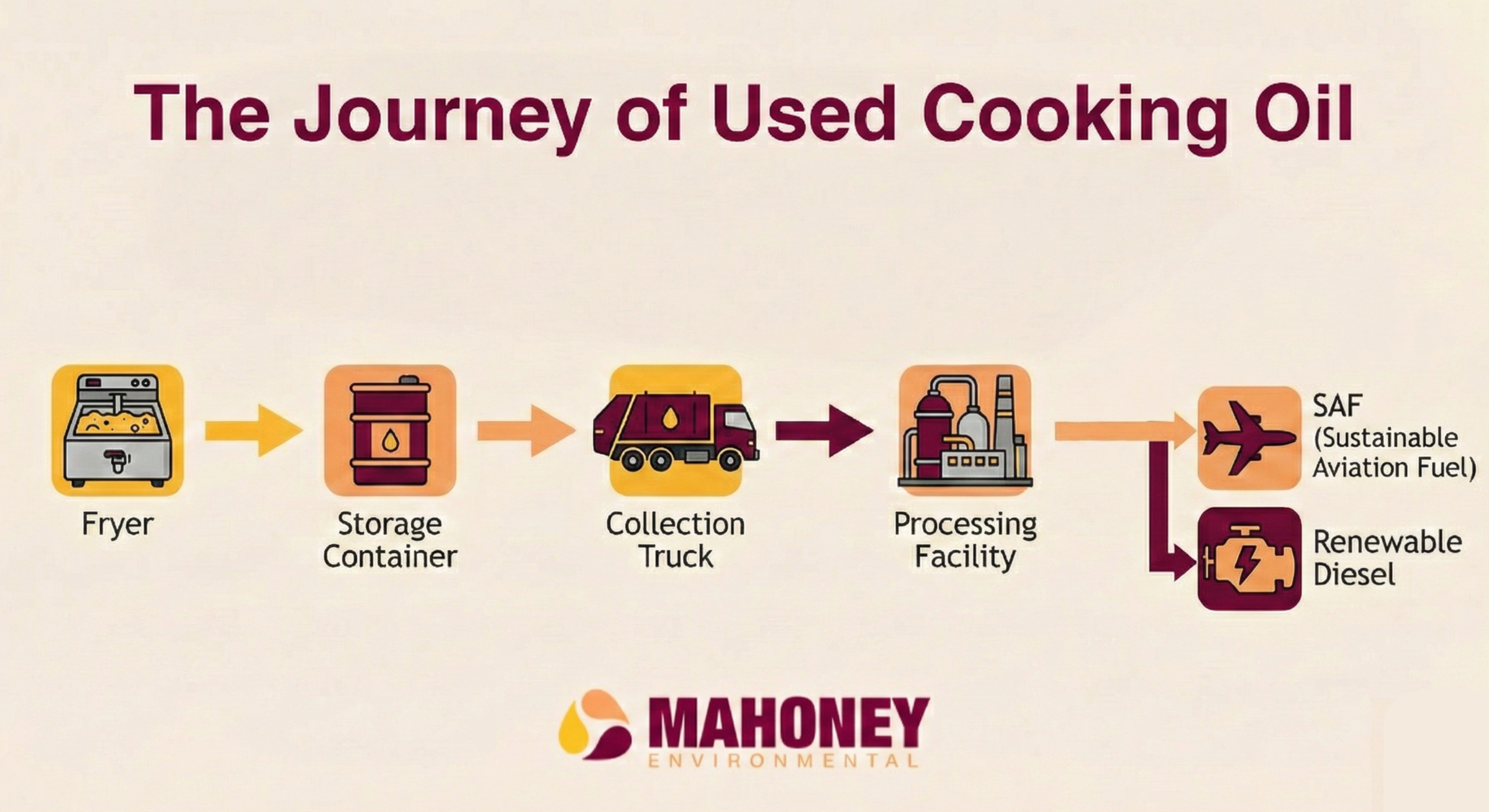
Recycling is the best option. When collected by a professional service, used cooking oil becomes a valuable resource rather than a waste product.
Recycled cooking oil is processed into:
- Biodiesel and renewable diesel: cleaner-burning fuels for vehicles and equipment
- Sustainable aviation fuel: helping airlines reduce carbon emissions by up to 70%
- Animal feed supplements and industrial lubricants
To recycle your used cooking oil, you’ll need proper storage containers and a pickup schedule with a licensed collector. Mahoney Environmental works with restaurants, hotels, and other foodservice establishments to collect used cooking oil and ensure it’s recycled into renewable products.
How Do I Dispose of Small Amounts of Cooking Oil?
For small amounts of used cooking oil or vegetable oil at home or in low-volume operations:
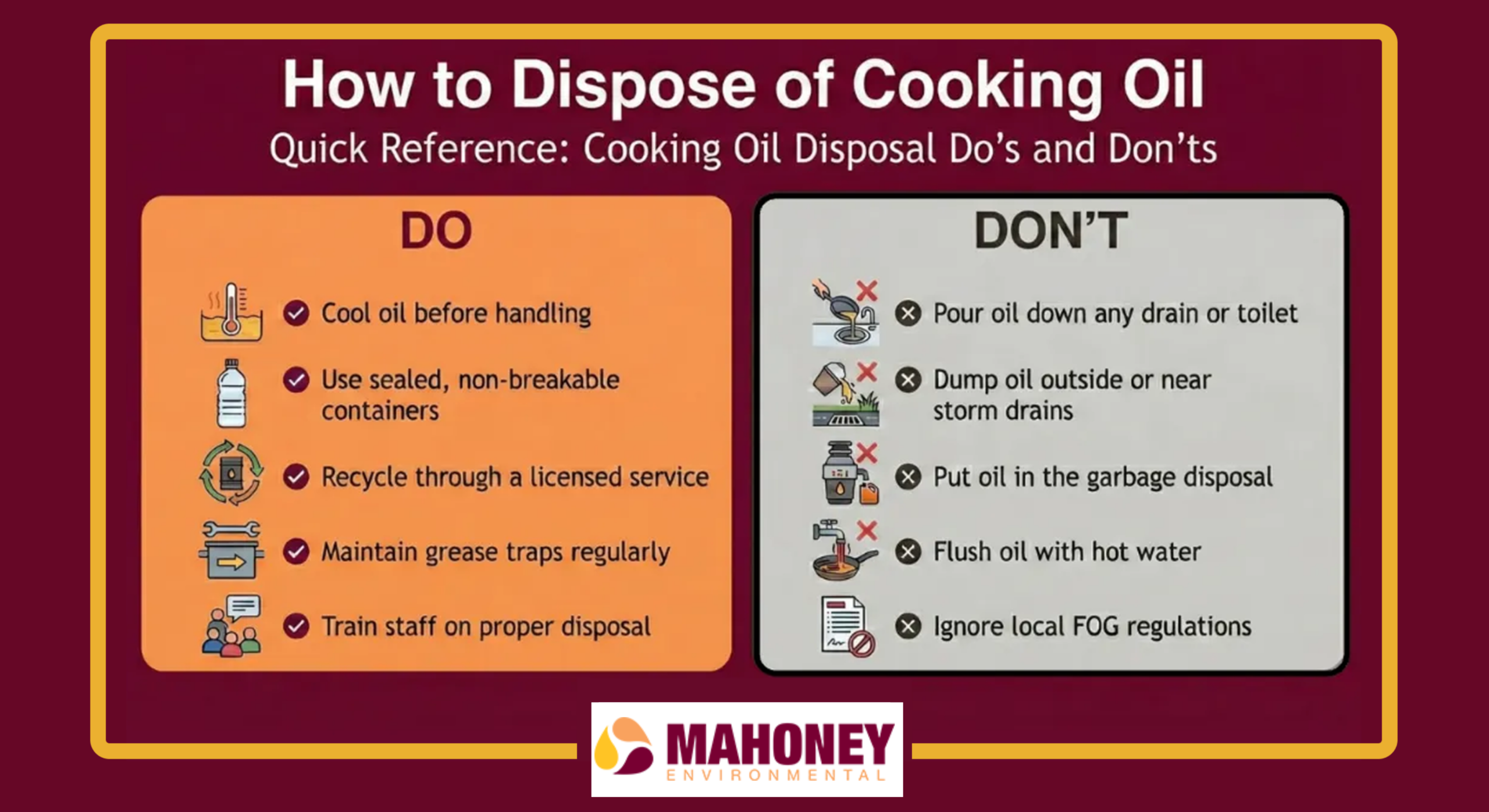
- Let the oil cool completely
- Pour it into a sealable, non-breakable container
- Dispose of the sealed container in your household trash
Never put cooking oil in plastic bags or breakable containers that could leak. Even small amounts of oil in the solid waste stream can cause problems if not properly contained.
For bacon grease and other cooking fats: Wipe pans with a paper towel before washing, and dispose of the paper towel in the trash. This keeps grease out of your drain and reduces the load on grease traps.
Some communities have a grease drop-off location or accept used cooking oil at household hazardous waste collection sites. Check with your local solid waste department for options in your area.
How Do I Dispose of Large Amounts of Cooking Oil?
Commercial kitchens generate significant volumes of used cooking oil that can’t simply go in the garbage. Proper disposal requires:
Approved storage containers: Use leak-proof, clearly labeled containers designed for used cooking oil. Steel or heavy-duty plastic containers work best. Keep them secured with lids to prevent contamination.
Regular collection service: Partner with a professional recycler who provides containers and scheduled pickups. This ensures proper disposal and gives you documentation for health inspections.
Compliance with local codes: Many municipalities have specific requirements for storing and disposing of residential fats, oils, and grease from commercial operations. Restaurants and other foodservice establishments must follow these regulations.
Mahoney Environmental provides storage containers sized for your operation and establishes pickup schedules based on your volume. Our team handles the collection so you can focus on running your kitchen.
How Do I Dispose of Olive Oil and Other Specialty Oils?
Olive oil, vegetable oil, and other liquid cooking oils all require the same disposal methods. Despite differences in the kitchen, they create identical problems in your plumbing and the sewer system.
Never pour any cooking oil, including olive oil, down the drain or into the garbage disposal. For commercial operations, add specialty oils to your used cooking oil containers for recycling.
Can I Pour Cooking Oil Down the Drain?
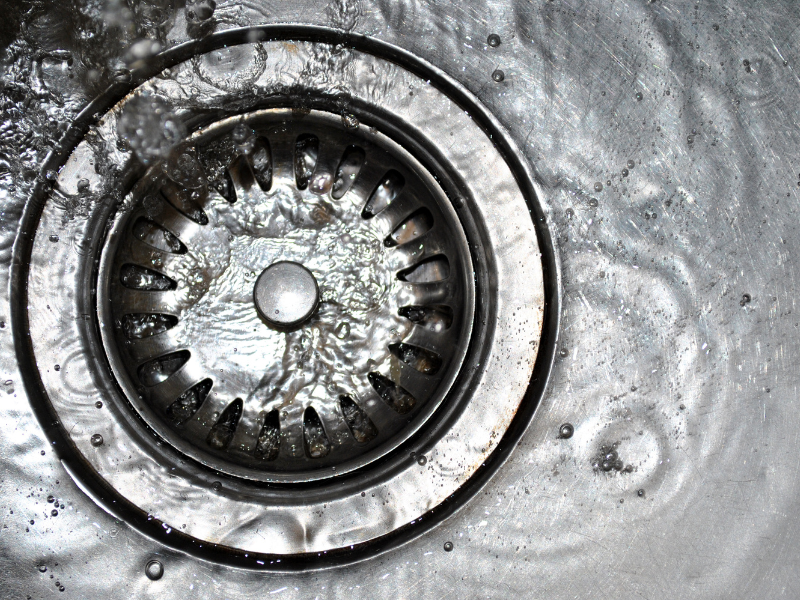
No. Never pour cooking oil, cooking grease, or any fat down the sink, toilet, or floor drain.
- Oil solidifies in pipes as it cools, even if you run hot water
- Grease accumulates over time, narrowing pipes and trapping food particles
- Blockages cause backups that can flood your kitchen with sewage
- Municipal systems suffer too — your grease contributes to citywide sewer problems
Running hot water while pouring oil down the drain doesn’t help. The oil simply solidifies further down the line, creating blockages that are harder and more expensive to clear.
Grease Traps Protect Your Plumbing
Commercial kitchens are required to have grease traps or grease interceptors that capture fat, grease, and cooking oils before they enter the sewer system. These devices separate FOG from wastewater, allowing cleaner water to flow to the sanitary sewer while trapping grease for removal.
Grease trap maintenance essentials:
- Clean when 25% full (the industry-standard “one-quarter rule”)
- Schedule professional cleaning every 1–3 months
- Keep maintenance logs for inspections
- Never add chemicals that push grease into the sewer
Mahoney Environmental provides grease trap cleaning services to keep your traps functioning properly and your operation compliant with local regulations.
Can I Dump Cooking Oil Outside?
Never dump used cooking oil in the yard, parking lot, or near any drain. Even if you’re far from a street drain or catch basin, oil seeps into soil, contaminates groundwater, and eventually reaches waterways.
Outdoor dumping is illegal under the Clean Water Act and local environmental codes. It also harms wildlife and can result in significant fines for your business.
Make Disposal Easy with Mahoney
Proper disposal of used cooking oil protects your kitchen, your plumbing, and the environment. When you work with a professional recycler, your waste oil becomes a resource, converted into renewable fuels that reduce emissions and support sustainability.
Since 1953, Mahoney Environmental has helped foodservice operations handle cooking oil the right way. We provide:
- Used cooking oil collection with scheduled pickups
- Grease trap cleaning and maintenance
- Fresh cooking oil delivery in select markets
All cooking oil we collect is processed and recycled. We’ll work with you to create a service schedule that fits your operation’s needs.
Contact Mahoney Environmental at (800) 892-9392 to get started.
 Call Us Now (800) 892-9392