Modern life runs on energy, and every kilowatt of power and every gallon of fuel traces back to a natural resource pulled from the earth. Those resources fall into two distinct categories: renewable resources that replenish through natural processes on a human timescale, and nonrenewable resources that do not. The difference between them shapes how businesses make sourcing decisions, how the U.S. energy mix evolves, and how operators plan for the long term.
Here is a clear look at the differences between renewable and non-renewable resources, what each is used for, and why the shift toward renewables matters for businesses and the environment.
What Are Renewable Resources?
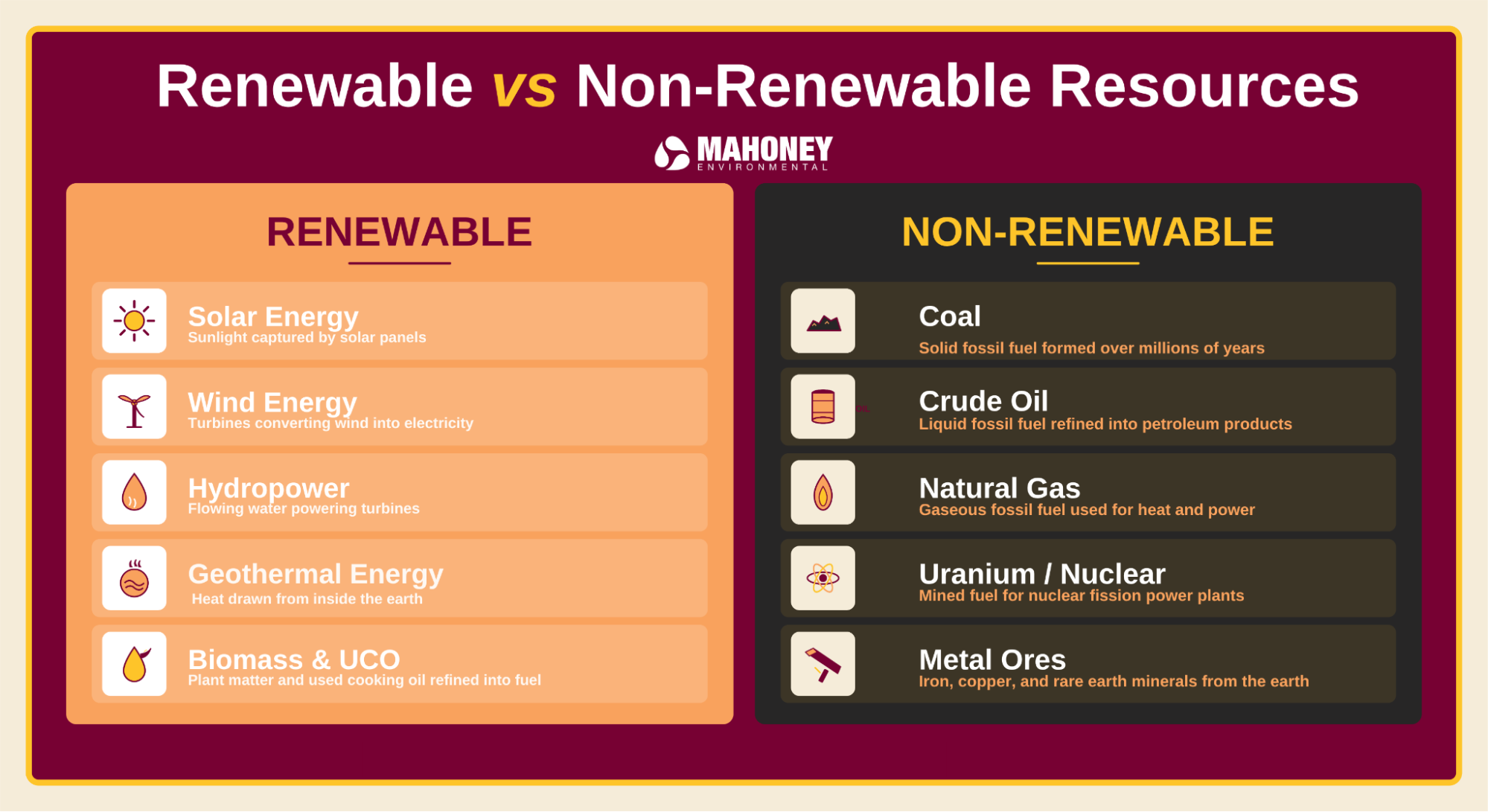
A renewable resource is a natural resource that regenerates faster than it is consumed. Sunlight, wind, moving water, the earth’s internal heat, and growing plants all qualify because the source itself is not depleted by use. Even at a large scale, the underlying supply keeps replenishing.
The most common renewable energy sources include:
- Solar energy. Solar power converts sunlight into electricity, heat, or both. A single solar panel can charge a battery; a utility-scale solar array can feed thousands of homes.
- Wind energy. Wind turbines convert moving air into electricity and are now the largest source of utility-scale renewable electricity in the United States.
- Hydropower. Flowing water turns turbines at dams and run-of-river plants, and has been a workhorse of the U.S. grid for over a century.
- Geothermal energy. Geothermal energy taps heat stored inside the earth to drive turbines or to heat and cool buildings.
- Biomass and biofuels. Wood, agricultural residues, animal fats, and used cooking oil can be burned for energy or refined into liquid biofuels such as renewable diesel and sustainable aviation fuel.
Renewable energy sources also share another advantage: they produce far lower greenhouse gas emissions than fossil fuels over their full life cycle, which is why they sit at the center of efforts to slow climate change.
What Are Non-Renewable Resources?
A non-renewable resource is a finite resource that exists in a limited supply and does not regenerate on a human timescale. Most nonrenewable sources took hundreds of millions of years to form through slow geological processes, and once burned or consumed, the supply is permanently reduced.
According to the U.S. Department of Energy, fossil energy sources, including oil, coal, and natural gas, are non-renewable resources that formed when prehistoric plants and animals died and were gradually buried by layers of rock. Different types of fossil fuels formed depending on what organic material was present and the temperature and pressure conditions over time.
Non-renewable resources include:
- Fossil fuels. Coal, crude oil, and natural gas are the three primary fossil fuels. Crude oil is the most familiar liquid fossil fuel, refined into gasoline, diesel, jet fuel, and the chemical building blocks behind a wide range of petroleum products.
- Nuclear fuels. Uranium powers nuclear energy generation through nuclear fission. A nuclear power plant produces no carbon dioxide during operation, but uranium itself is mined by a mining company from finite ore bodies.
- Metal ores and minerals. Iron, copper, lithium, and rare earth elements are extracted from deposits in the earth’s crust in limited quantities.
How Renewable and Non-Renewable Resources Are Used
Nonrenewable resources still dominate global energy use. Common applications include:
- Crude oil is refined into gasoline, diesel, jet fuel, and the feedstocks behind plastics, lubricants, solvents, and synthetic fibers.
- Natural gas heats buildings, fuels industrial processes, and generates electricity at power plants across the country.
- Coal still fuels a meaningful share of U.S. electricity and supports steelmaking and cement production.
- Nuclear power provides reliable baseload electricity with no carbon dioxide emissions at the plant.
- Metal ores become the steel, copper wiring, and batteries embedded in nearly every product on the global market.
Renewable resources, meanwhile, are scaling fast across the same categories:
- Solar energy heats water, charges batteries, and feeds the grid through rooftop and utility-scale solar panel installations.
- Wind energy generates electricity at onshore and offshore wind farms.
- Hydropower runs dams and regional grids.
- Geothermal energy heats buildings and produces electricity where subsurface conditions allow.
- Biomass is burned for power or refined into renewable diesel and sustainable aviation fuel.
It is worth noting that even renewable energy systems depend on some nonrenewable materials, including the silicon, aluminum, and rare earth metals used in a solar panel or wind turbine. The two categories are deeply connected.
The Environmental Cost of Non-Renewable Energy
Non-renewable energy comes with real environmental tradeoffs. The most significant impacts include:
- Greenhouse gas emissions. Burning fossil fuels releases carbon dioxide and other greenhouse gases into the atmosphere. The U.S. Environmental Protection Agency identifies fossil fuel combustion for electricity, transportation, and industry as the largest source of U.S. greenhouse gas emissions, and the main driver of global warming and longer-term climate change.
- Air pollution. Coal combustion releases particulate matter, sulfur dioxide, and nitrogen oxides. Petroleum products release smog-forming pollutants when burned in vehicle engines.
- Disproportionate community impact. Neighborhoods near refineries, power plants, and major roadways often bear the heaviest burden of fossil fuel pollution.
- Land and water disturbance. Large-scale mining and drilling can disturb wide land areas, contaminate groundwater, and require ongoing reclamation work.
How the United States Is Shifting Toward Renewable Energy
The U.S. energy mix is moving steadily toward renewables. According to the U.S. Energy Information Administration, renewable energy sources provided about 24% of U.S. utility-scale electricity in 2025, up from roughly 12% in 1990. Wind led the renewable category, followed by solar, hydropower, biomass, and geothermal, and solar was the fastest-growing source on the grid. Battery storage capacity is expanding rapidly as well, helping renewable energy systems deliver reliable power even when the sun is not shining or the wind is not blowing.
The transportation sector is shifting, too. Electric vehicle sales continue to grow, renewable diesel is replacing petroleum diesel in heavy-duty fleets, and major airlines are signing long-term agreements for sustainable aviation fuel as a lower-carbon alternative to conventional jet fuel. These shifts are reshaping the global market for energy feedstocks and creating new value for waste streams that used to be discarded.
Used Cooking Oil: A High-Value Renewable Resource Hiding in Plain Sight
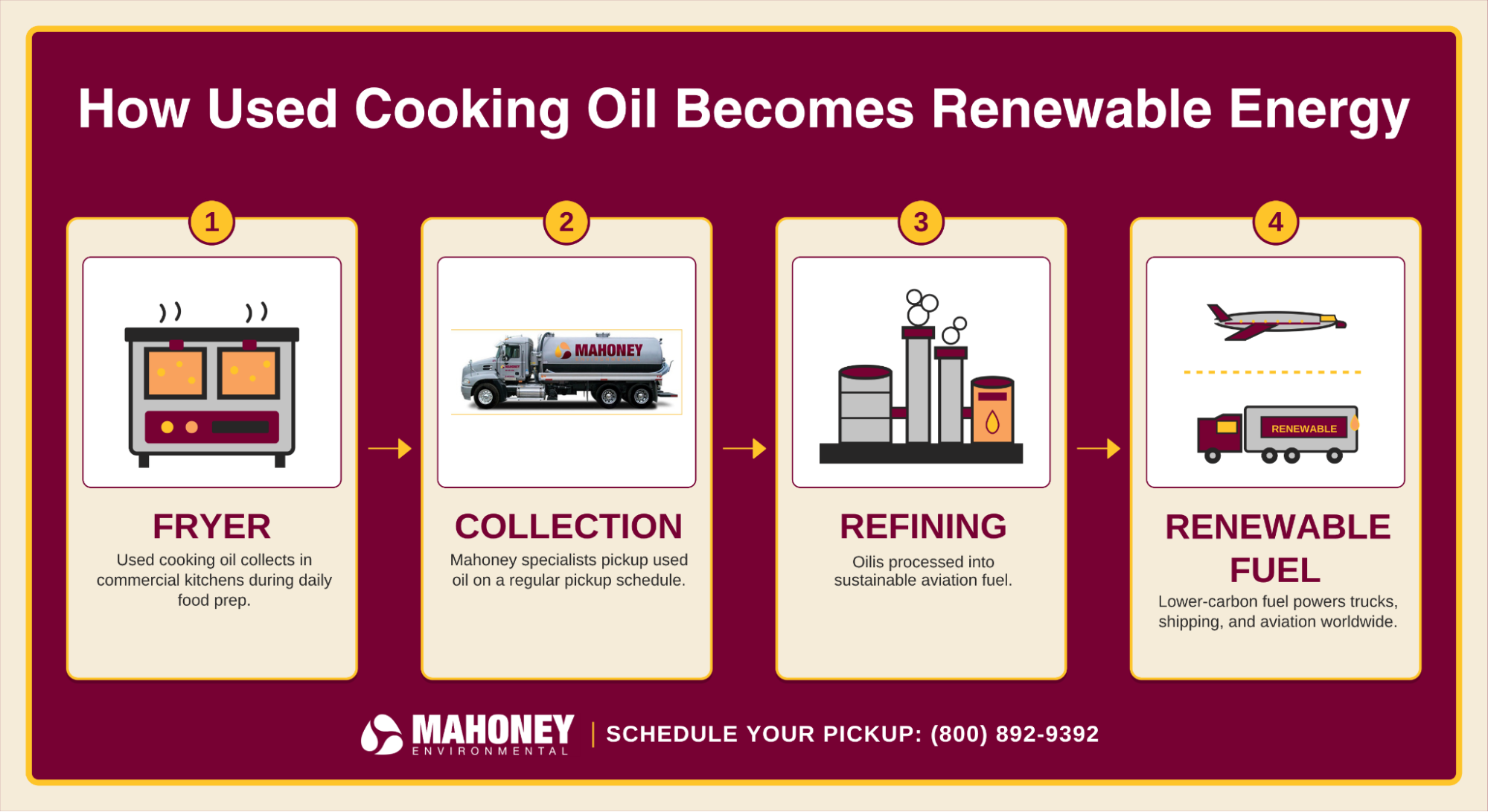
One of the most strategically important renewable feedstocks is also one of the least visible: used cooking oil collected from commercial kitchens. Historically treated as waste, used cooking oil is now one of the highest-value low-carbon feedstocks on the planet.
Here is why it matters:
- A direct path to renewable fuel. Used cooking oil from restaurants, hotels, stadiums, hospitals, and food manufacturers is refined into renewable diesel and sustainable aviation fuel.
- Significant emissions reductions. Renewable diesel made from used cooking oil has roughly one-fifth the carbon intensity of petroleum diesel.
- A solution for hard-to-electrify sectors. It is a powerful tool for cutting greenhouse gas emissions in trucking, shipping, and aviation, where battery power is not yet practical at scale.
- A revenue stream for foodservice operators. What used to be a back-of-house disposal problem now displaces fossil fuel demand at large scale, turning a waste-handling cost into added value.

Partner with Mahoney Environmental for Cooking Oil Recycling
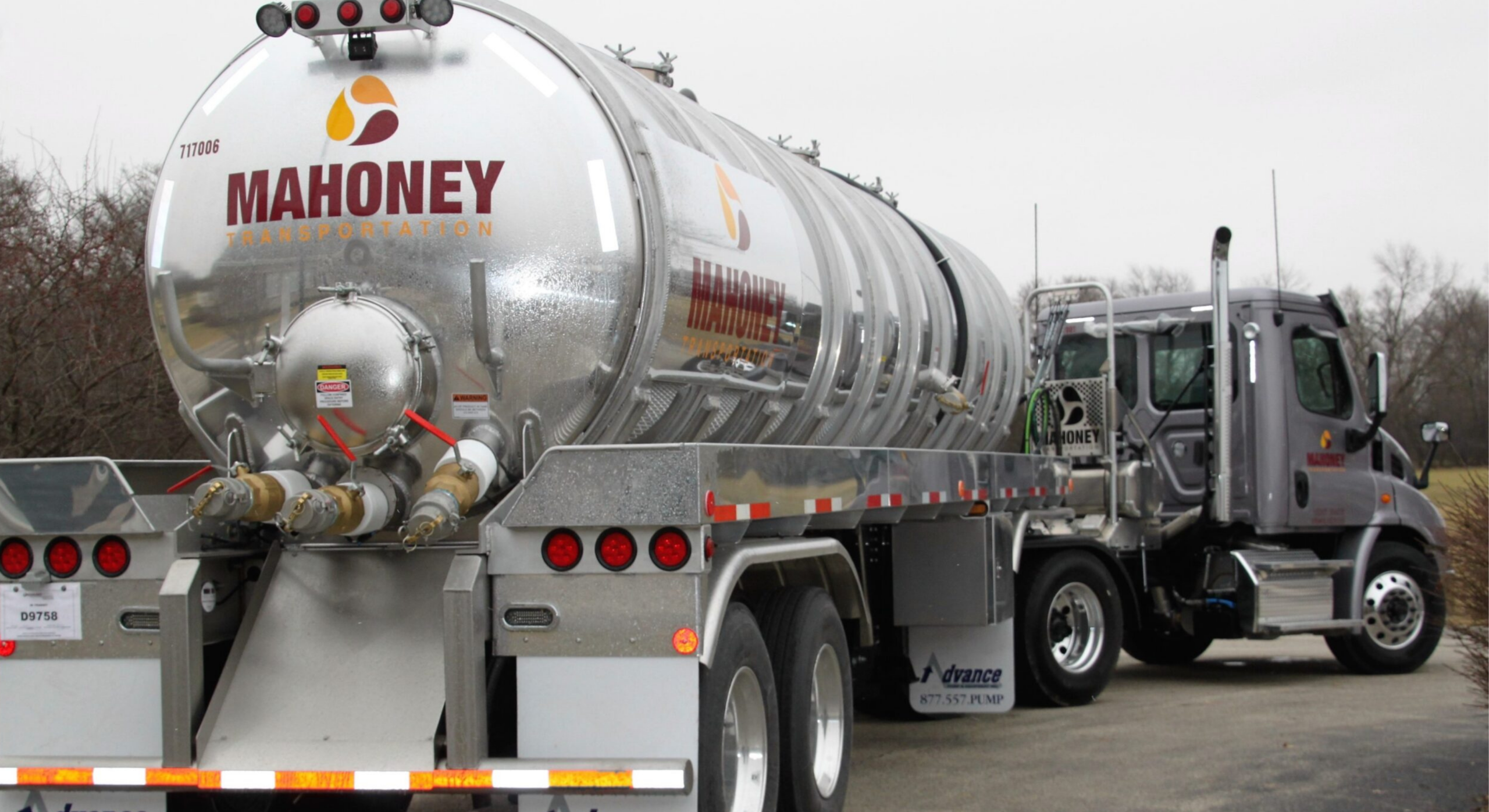
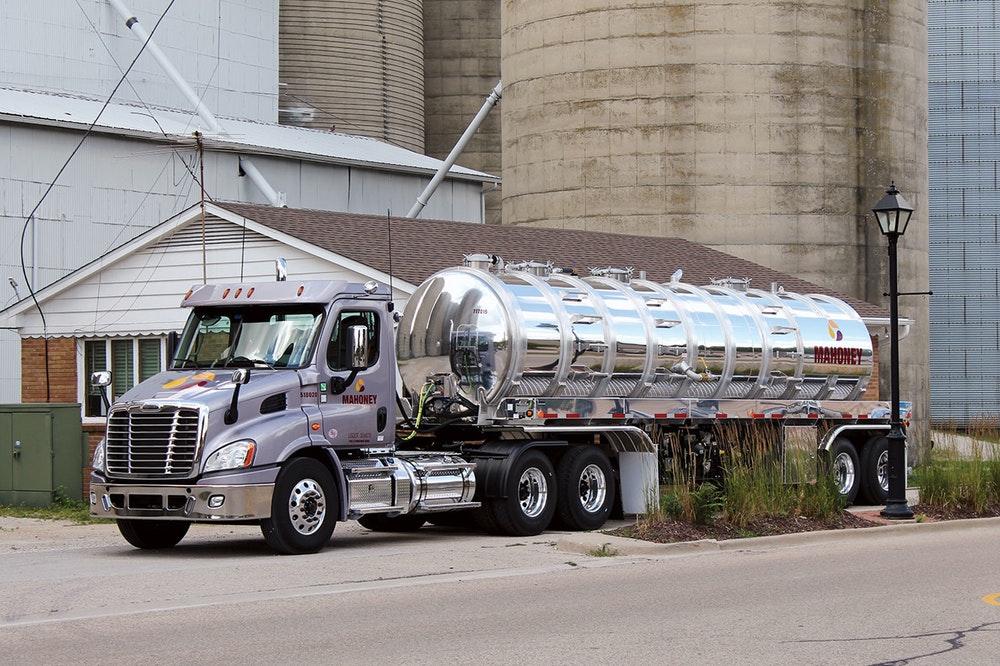
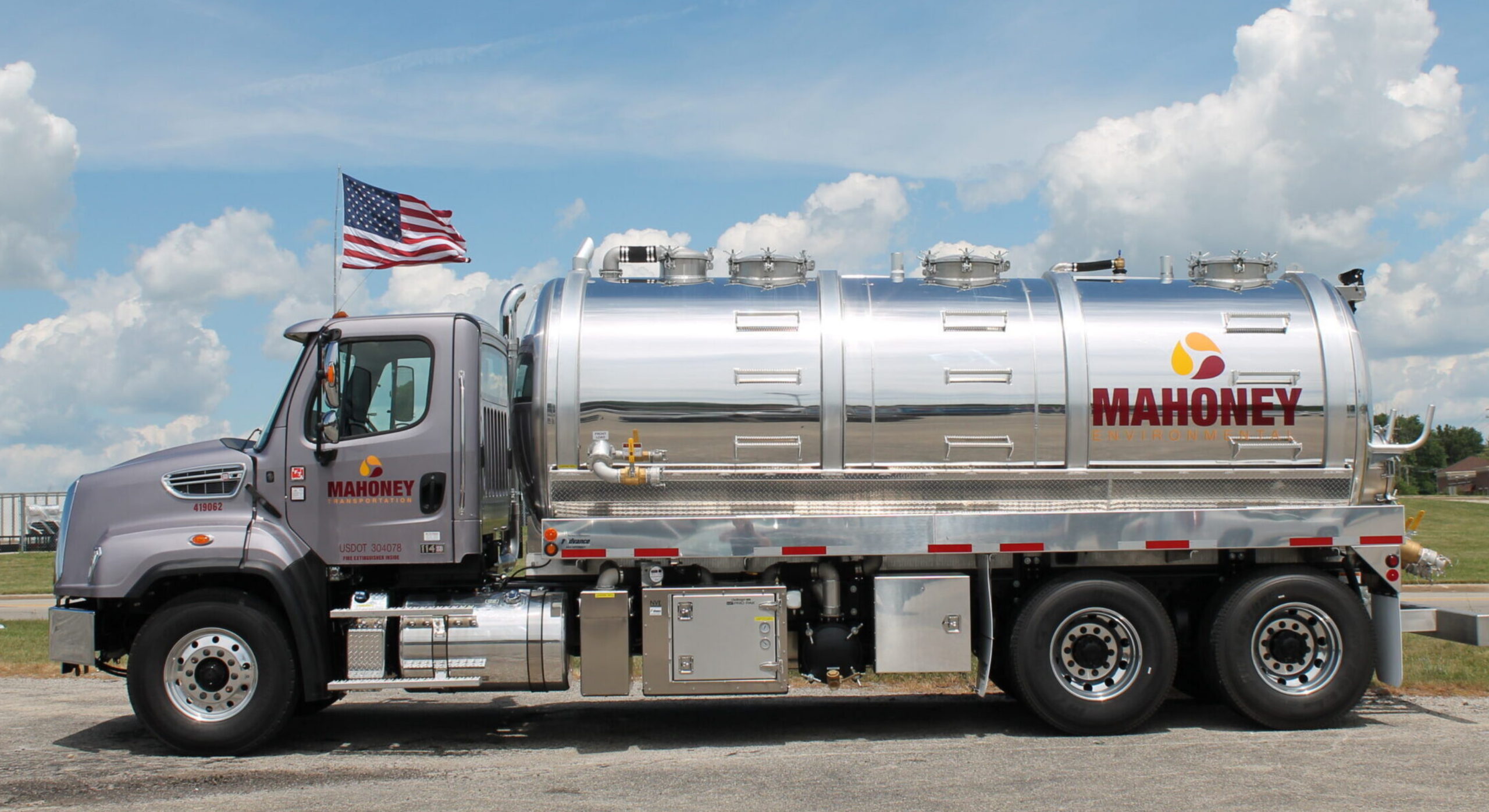
Mahoney Environmental has been turning used cooking oil and other waste products into useful products since 1953. We collect used cooking oil from restaurants, bars, hotels, stadiums, healthcare facilities, and other commercial kitchens across the country, then transport that oil to be refined into renewable diesel and sustainable aviation fuel.
Used cooking oil must be handled safely. Holding it onsite for extended periods creates slip and burn hazards, pest issues, theft risk, and potential code violations. Our services include:
- Scheduled used cooking oil pickups that fit your operation
- Fresh cooking oil delivery to keep your kitchen fully stocked in select cities
- Bulk containers and automated cooking oil systems built for high-volume kitchens
- Commercial grease trap services for indoor and outdoor traps
- Equipment design and installation for the back of the house
When you work with Mahoney Environmental, you protect your kitchen, improve your bottom line, and play a direct role in the renewable energy transition. To schedule your next cooking oil collection, contact us today to schedule a service or become a new client.
 Call Us Now (800) 892-9392