The Short Answer: Most restaurants should change fryer oil every one to five days. High-volume operations frying breaded or battered items daily may need to change oil every day or two. Moderate-volume kitchens can often run three to five days between changes. Low-volume operations with proper filtration may stretch to weekly. The right schedule depends on what you fry, how often you fry it, and how well you maintain your equipment.
There is no single schedule that works for every restaurant kitchen. What follows is a practical guide to help restaurant owners and kitchen managers build a fryer oil change process grounded in operational reality.
Why Fryer Oil Management Matters for Foodservice Operations
Food Quality and Consistency
Fresh oil produces food with clean flavor, proper color, and the right texture. Degraded oil changes all of that:
- French fries come out greasier and lose their crispness
- Fried chicken and other proteins develop a bitter or off-flavor profile
- Food color darkens unevenly, signaling oil breakdown to customers even when they cannot identify the cause
Safety and Compliance
Old oil is a safety liability. Key risks include:
- Degraded oil develops a lower smoke point, increasing fire hazard in the commercial kitchen
- Burned oil residue on fryer surfaces compounds the problem over time
- Local health and fire codes govern waste oil handling and disposal, and non-compliance creates regulatory exposure
Cost Control and Efficiency
Poor oil management accelerates waste. Overheating, inadequate filtration, and contamination from food particles all shorten usable oil life, forcing more frequent and costly replacements. A structured approach stretches every batch of frying oil further without sacrificing quality.
Environmental Responsibility
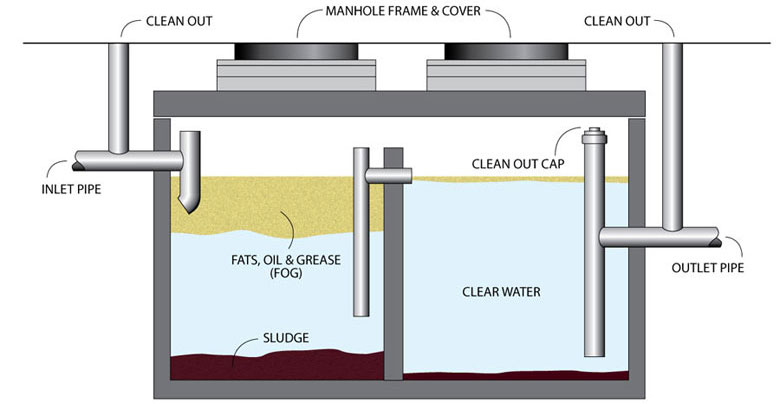
Used cooking oil (UCO) is a recoverable resource. When managed and collected correctly, UCO becomes feedstock for renewable diesel and sustainable aviation fuel (SAF), keeping fats, oils, and grease (FOG) out of sewer systems and landfills.
How Often Should You Change Fryer Oil? A Short Answer by Operation Type
High-Volume Restaurants Operations running commercial fryers at full capacity with heavy frying of chicken, fish, and breaded items typically need to change fryer oil daily or every one to two days. Fast food restaurants and busy restaurant concepts with dedicated fryer stations fall into this category.
Moderate-Volume Kitchens A mixed-menu restaurant with moderate fryer usage can often operate on a three-to-five-day cycle. Lower throughput means less cumulative heat exposure and fewer food particles contaminating the oil between changes.
Low-Volume Operations Food trucks and lower-volume establishments frying a limited menu may extend their oil change schedule to once a week or longer, provided they filter on a regular basis and actively monitor oil condition.
Operations with Proper Filtration Systems A commercial deep fryer equipped with a filtration system and operated by trained staff who filter daily can run longer between full oil changes while maintaining consistent food quality. Even with filtration, monitoring remains essential.
Key Factors That Impact Fryer Oil Change Frequency
Several variables determine how quickly cooking oil degrades in a commercial kitchen:
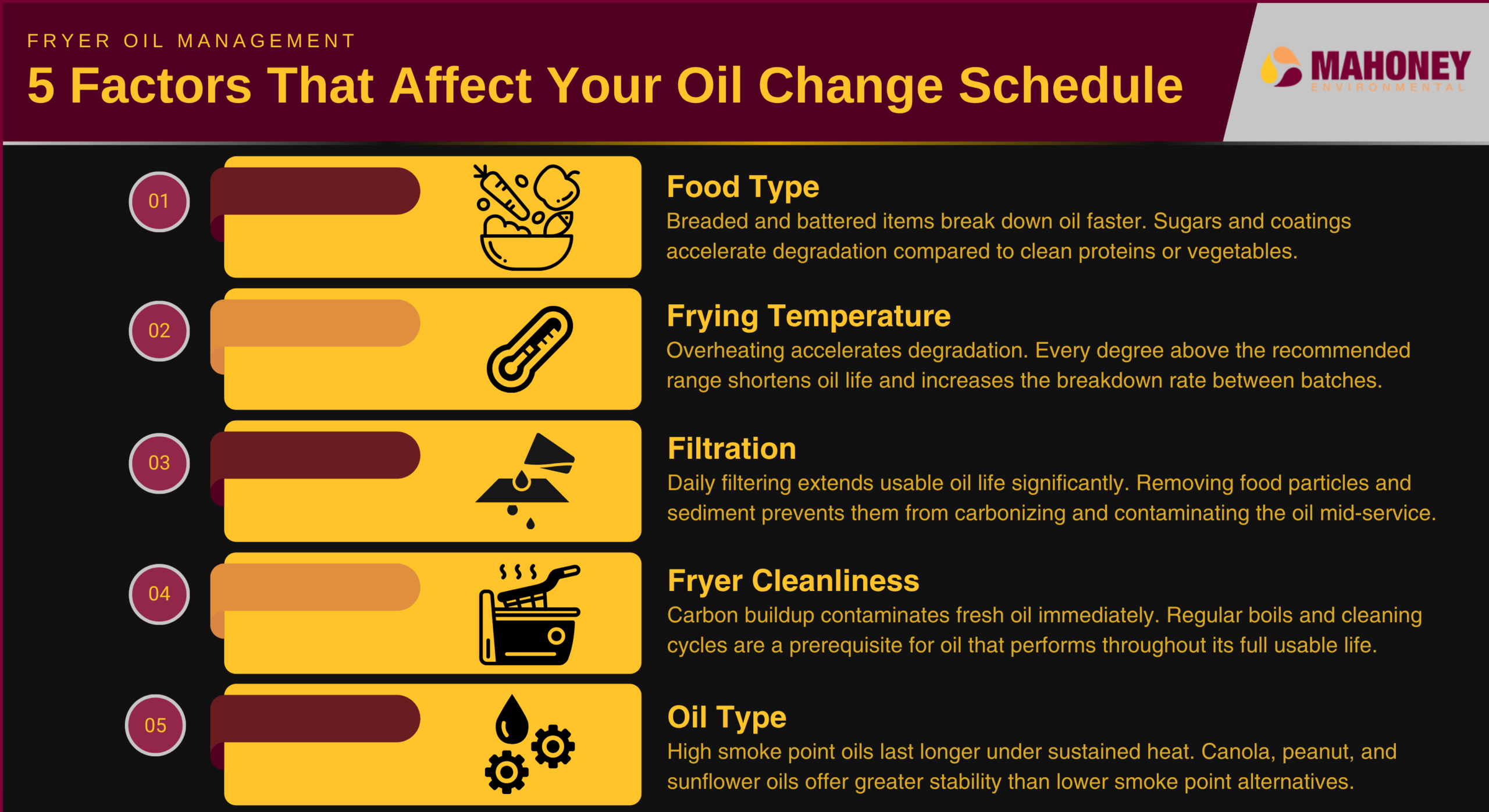
- Food type: Breaded and battered items release more debris and sugars into the oil, breaking it down faster than clean proteins or vegetables
- Frying temperature: Every degree above the recommended range accelerates chemical breakdown; overheating between batches is one of the most common and preventable causes of premature oil degradation
- Filtration: Daily filtration removes food particles and sediment before they carbonize, extending usable oil life significantly
- Fryer cleanliness: Carbon buildup on fryer walls and heating elements contaminates fresh oil immediately; regular boil-outs are a prerequisite for oil that performs consistently
- Oil type: High smoke point oils including canola oil, peanut oil, sunflower oil, and avocado oil hold up better under sustained heat than lower smoke point options; olive oil is rarely suited for commercial deep fryer use at sustained high temperature; beef tallow and vegetable oil each carry different stability characteristics depending on the application
Signs It’s Time to Change Fryer Oil
Scheduled changes matter, but observation matters just as much. These indicators signal that deep fryer oil has reached the end of its usable life regardless of schedule.
Visual Indicators
- Dark color: fresh oil is pale yellow; dark brown oil is degraded and should be replaced
- Excessive foam that does not dissipate quickly after food is added
- Oil smokes at a lower temperature than expected
Performance Issues
- Food cooks unevenly or requires longer cook times
- Off flavors or odors transfer to finished food
- Increased oil absorption produces heavier, greasier results
Any one of these signals should prompt an immediate oil change. Oil test strips provide a quick, inexpensive way to confirm degradation levels before service begins.
Best Practices to Extend Fryer Oil Life
A few consistent habits make a significant difference in how long each batch of deep fryer oil remains usable:
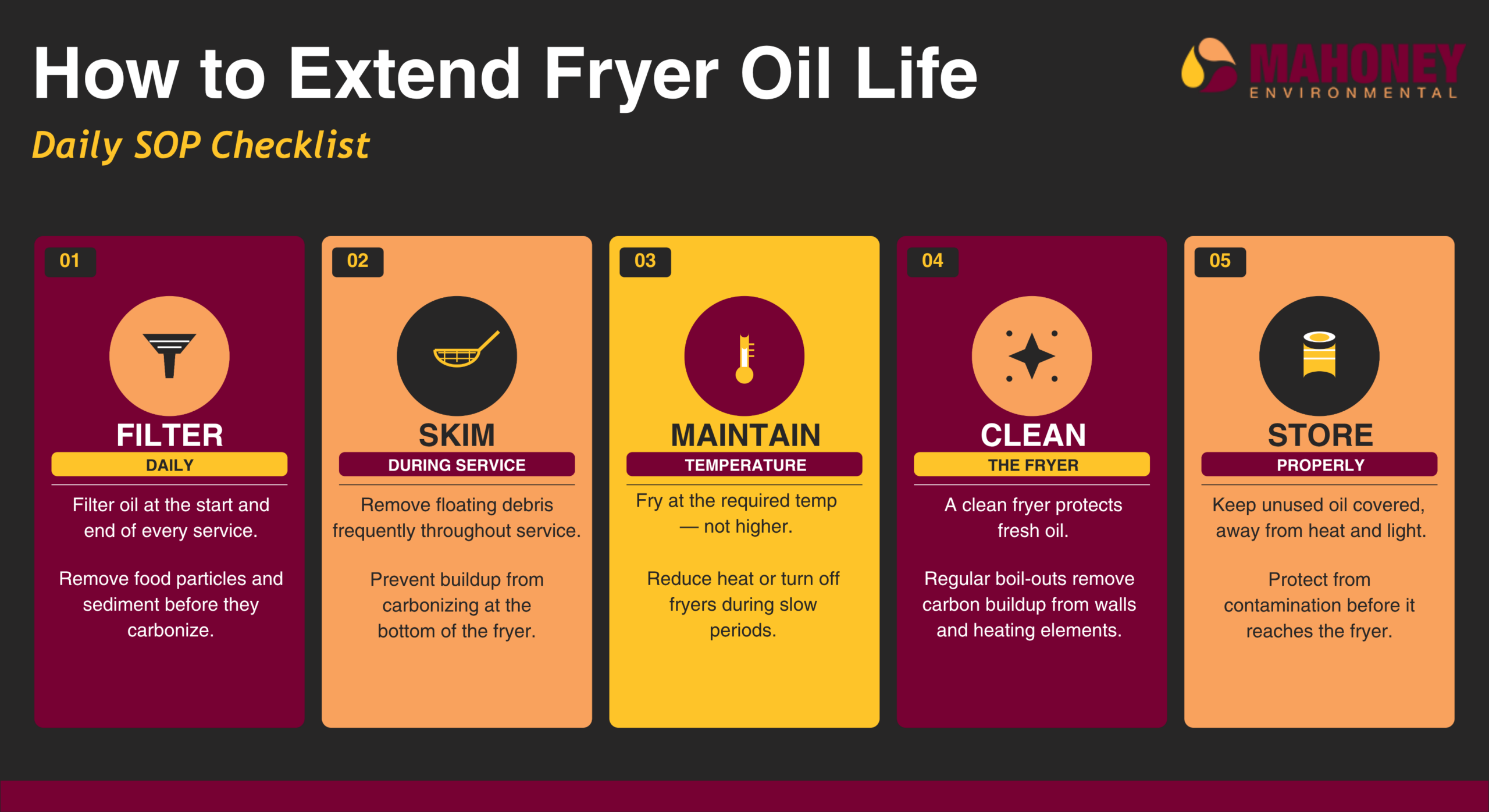
- Filter daily: Remove food particles and sediment at the start and end of every service; daily filtration is the single most impactful practice for extending oil life
- Control temperature: Operate at the temperature the food requires, not higher; reduce heat or turn fryers off during slow periods
- Skim frequently during service: Remove debris before it carbonizes at the bottom of the fryer
- Use dedicated fryers: Separate stations for fish, chicken, and french fries prevent cross-contamination and slow the breakdown of shared oil
- Train staff consistently: Protocols only work when every shift follows them; training should explain the operational and cost stakes, not just the steps
- Store new oil properly: Keep unused frying oil covered, away from heat and light, and protected from contamination before it reaches the fryer
Proper Disposal, Recycling, and Working with a UCO Collection Partner
Why Proper UCO Disposal Matters
Improper disposal of used cooking oil creates direct operational and regulatory risk. FOG is one of the most common contributors to municipal sewer system blockages, and non-compliance with local disposal regulations carries financial penalties for foodservice operations of any size. UCO should be transferred to secure, sealed, and clearly labeled storage containers — never poured down drains.
Recycling and the Circular Economy
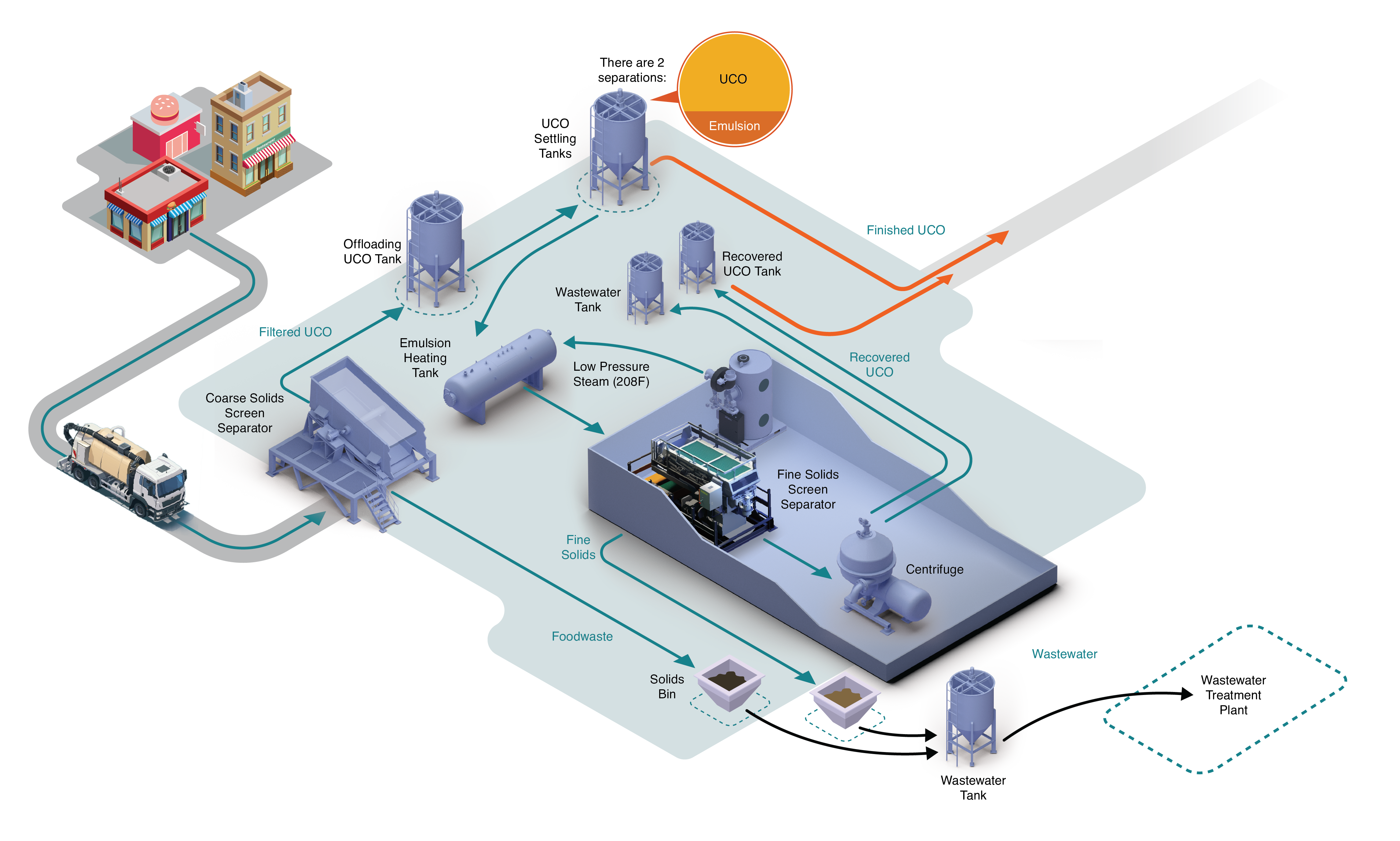
UCO collected through a structured recycling program becomes feedstock for renewable diesel and SAF, supporting a circular economy that puts commercial kitchen byproducts to productive use. Participating in UCO recycling also supports foodservice operators in demonstrating environmental responsibility to customers and supply chain partners.
Working with Mahoney Environmental
A professional UCO collection partner removes the complexity of oil and disposal management from kitchen operations. Mahoney Environmental professionals assess each operation individually and provide:
- Scheduled pickups timed to tank levels, eliminating overflow and missed collections
- Storage containers and tank systems sized to the specific operation, whether a food truck or a high-volume restaurant kitchen
- Chain of custody records, disposal logs, and documentation support for health department inspections and internal compliance tracking
Managed UCO collection reduces staff workload, keeps the kitchen running smoothly, and ensures that used cooking oil is handled correctly from storage through final recycling.
Build a Fryer Oil Management Process That Works for Your Kitchen
There is no universal fryer oil change schedule. What every operation shares is the need for a structured process: consistent filtration, trained staff, proper storage, and a reliable UCO collection partner. Getting oil management right protects food quality, reduces operating costs, and keeps kitchens compliant.
Mahoney Environmental has supported foodservice businesses since 1953, providing UCO collection, storage systems, and scheduled pickup services tailored to the needs of each operation. Contact Mahoney Environmental to build a customized solution for your operation.
 Call Us Now (800) 892-9392