How to Solidify Cooking Oil for Safe Disposal
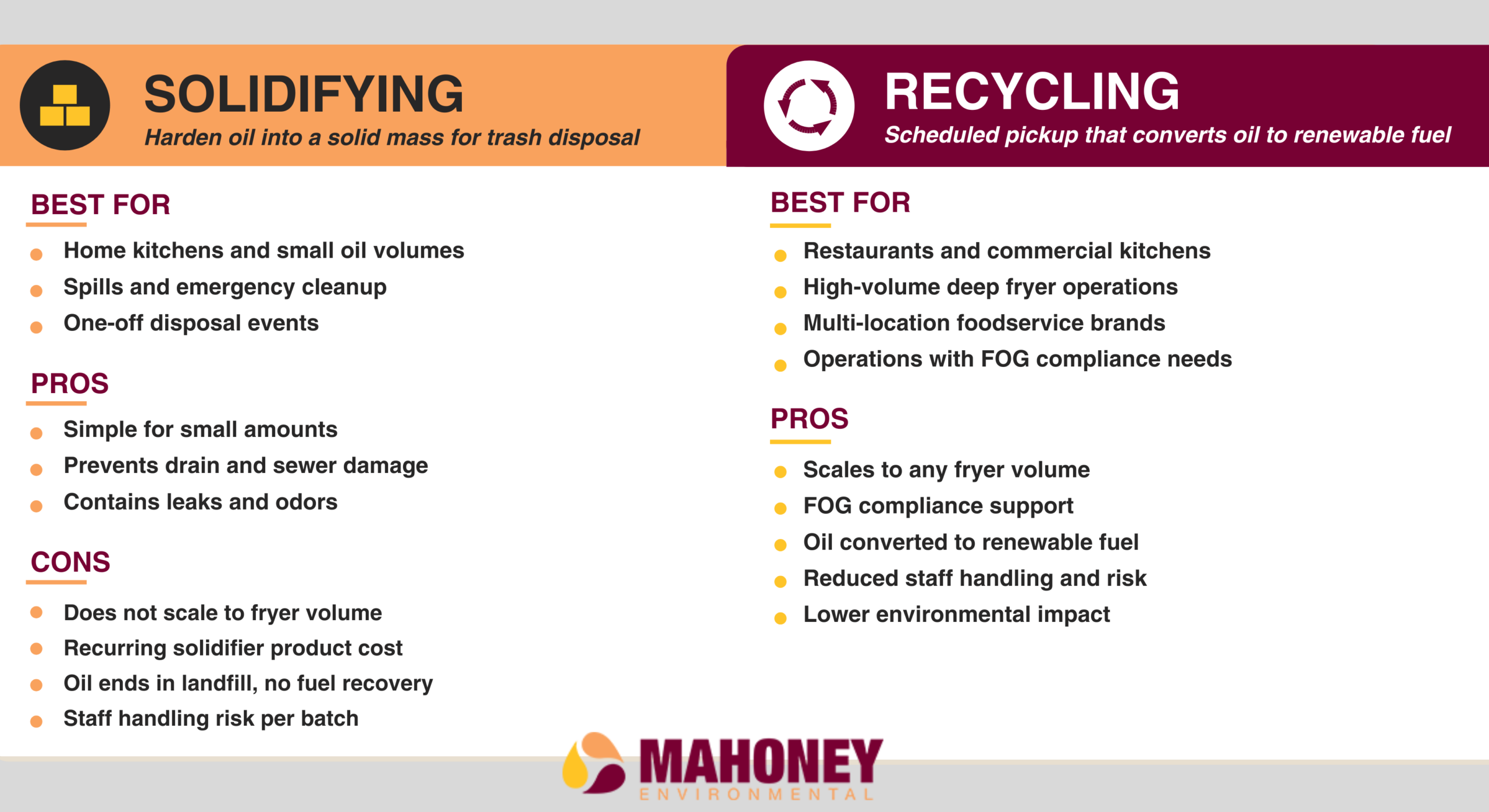
The Short Answer: Cooking oil is solidified by cooling it to a lower temperature, mixing it with absorbent materials, or adding a cooking oil solidifier that binds the fatty acid chains into a solid mass. Solidifying works for a small amount of leftover oil in a home kitchen. It is not a scalable disposal method for commercial kitchens. Foodservice operators should rely on scheduled used cooking oil recycling rather than hardening every batch from the deep fryer.
Need a volume solution? Schedule a used oil pickup with Mahoney →
Why Solidifying Cooking Oil Matters
Pouring liquid cooking oil down the kitchen sink, garbage disposal, or any drain is one of the fastest ways to damage plumbing and trigger sewer overflows. Oil cools inside pipes, hardens onto walls, and traps food particles until the system backs up. Municipalities fine foodservice operators for fats, oils, and grease (FOG) violations. The environmental damage from improper disposal extends into local waterways and treatment systems.
Solidifying is one of the various methods used to contain waste oil before disposal. It locks the oil into a solid state so it can be bagged, handled, and thrown out without leaks, spills, or pest attraction. For a home cook, solidifying is often the most practical approach. Commercial kitchens are better served by a professional recycling partner.
What Determines Whether Cooking Oil Solidifies on Its Own
Not every cooking oil hardens at the same temperature. The fatty acid composition of the oil determines whether it stays in a liquid state at room temperature or moves to a solid state without help.
Oils That Solidify Naturally
- Animal fats such as lard, tallow, and bacon grease harden at room temperature
- Coconut oil moves between liquid and solid state around 76°F
- Palm oil and other tropical vegetable fats reach a solid state without assistance
Oils That Stay in Liquid State
- Canola oil, vegetable oil, and peanut oil remain liquid oil under normal kitchen conditions
- Olive oil, including extra virgin varieties, stays liquid because of its high content of monounsaturated fats
- Most deep-frying oils used in commercial kitchens fall into this category
Methods for Solidifying Cooking Oil
There are several ways to turn liquid cooking oil into solid oil for easy disposal. The right method depends on oil type, volume, and whether the kitchen is residential or commercial.
Method 1: Cool and Refrigerate in a Freezer-Safe Container
This is the simplest approach for a home cook working with a small amount of leftover oil.
- Allow hot oil to cool in the pan until it reaches room temperature
- Pour the cooled oil into a freezer-safe container or sealed container
- Place in the refrigerator or freezer until fully hardened
- Scoop the solidified oil into the trash and wipe the container clean
Never pour hot oil into a thin plastic container or plastic bottle. The heat warps or melts the plastic and creates a leak hazard during transfer.
Method 2: Absorb with Paper Towel or Household Materials
Absorbent materials work well for very small volumes of used oil.
- Mix cooled oil with sawdust, flour, or sand until fully saturated
- Wrap the saturated material in a paper towel or newspaper
- Seal the wrapped waste in a bag before tossing in the trash
This method suits home cleanup but does not scale to commercial kitchen volume. It also sends all of the oil’s energy value to landfill with no recovery.
Method 3: Commercial Cooking Oil Solidifier Products
A cooking oil solidifier is a polymer powder or plant-based oil hardener added directly to warm oil. The powder dissolves, binds the fatty acid chains, and hardens the liquid into a removable solid mass.
- Add the oil solidifier to warm (not hot) oil per product instructions
- Stir until the polymer powder fully dissolves
- Allow the mixture to cool until it forms a firm block
- Lift the solid oil out of the container and discard
Most commercial solidifier products rely on food-grade polymer powder or thickeners that function similar to xanthan gum. They offer an effective solution for spills and occasional cleanup. The subscription price of a continuous product supply adds up quickly for any high-volume deep fryer operation.
Method 4: Freezing Leftover Oil in a Disposable Container
A middle ground between absorbent methods and commercial solidifier products.
- Pour cooled liquid cooking oil into a lined, disposable freezer-safe container
- Freeze until fully hardened
- Discard the entire container in the trash
This approach works only for small volumes. It should never be used for deep fryer oil at commercial scale.
How to Solidify Cooking Oil Safely
Hot oil causes serious burn and fire risks if handled incorrectly during the hardening process. Kitchens should follow these safety rules every time.
Wait for the Oil to Cool
- Never add solidifier or absorbent to hot oil straight from the deep fryer
- Allow the oil to reach a lower temperature that is safe to handle
- Confirm the oil is warm but not smoking before any treatment
Keep Water Away from the Process
- Hot water and hot oil create dangerous splatter when combined
- Dry all containers and tools before contact with oil
- Do not rinse oil residue into the drain, kitchen sink, or garbage disposal
Use the Right Containers
- Transfer cooled oil into a sealed container rated for the oil’s temperature
- Avoid thin plastic bottle packaging for anything above room temperature
- Label every sealed container to prevent confusion with fresh oil stock
Can Commercial Kitchens Solidify Used Cooking Oil at Volume?
Technically yes, but it is not practical. A single deep fryer holds 30 to 50 pounds of oil. Solidifying that volume after every changeout creates several operational problems.
- Per-batch cost of an oil hardener product scales poorly against fryer output
- Staff time spent hardening, lifting, and bagging adds recurring labor cost
- Solidified oil sent to landfill removes the energy value from the waste stream
- Heavy solid blocks create lifting and handling injury risk for staff
- No portion of the oil is recovered for renewable fuel production
For most foodservice operators, solidifying belongs in the emergency response toolkit. It handles spills, leaks, and end-of-life cleanup. It is not a substitute for a professional used cooking oil recycling program.
What Solidifying Cooking Oil Does Not Solve
Hardening oil for disposal addresses the immediate handling problem. It leaves several operational gaps unresolved.
- Solidified oil still ends up in a landfill unless routed through a recycler
- The shelf life and energy content of the oil are lost in the process
- Ongoing product costs continue with every batch
- Sustainability goals and FOG compliance standards are not met through landfill disposal
- Staff continue to handle heavy waste products on a recurring schedule
For foodservice, the effective solution is a managed collection program that routes used cooking oil into renewable fuel production rather than the dumpster.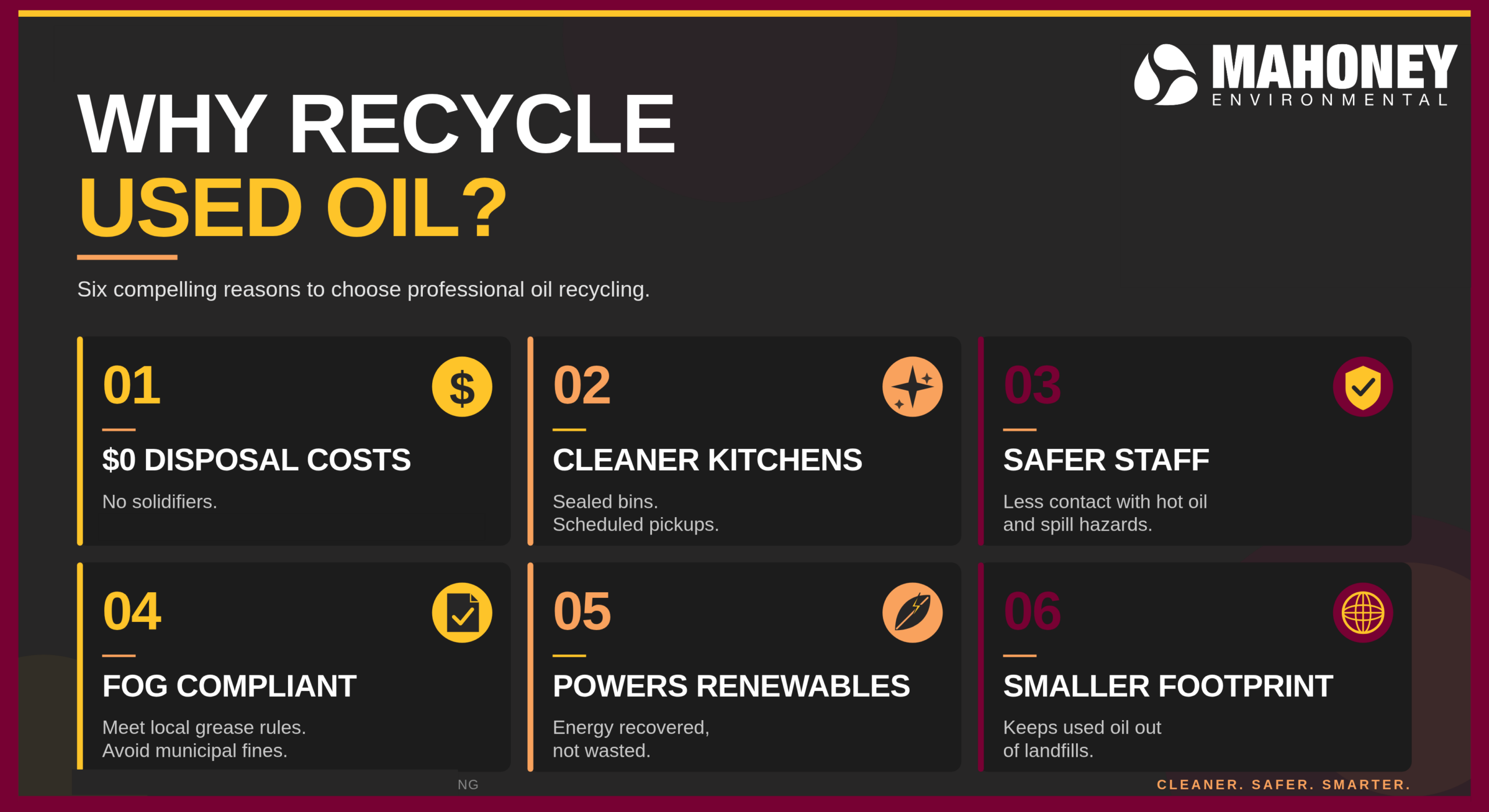
The Better Alternative: Used Cooking Oil Recycling
Solidifying addresses a symptom. Recycling addresses the system. A professional UCO recycling program handles spent oil at commercial volume and converts it into raw material for renewable fuel and sustainable aviation fuel (SAF).
Benefits of routing used oil through a recycler:
- No per-disposal solidifier cost
- Cleaner storage areas with sealed containers and scheduled pickups
- Reduced staff exposure to hot oil, waste oil, and spill hazards
- FOG compliance support and lower risk of municipal fines
- Energy value of the oil recovered for renewable fuel manufacturing
- Lower environmental damage compared to landfill disposal
How Mahoney Environmental Supports Cooking Oil Disposal
Mahoney Environmental® provides customized used cooking oil collection systems sized for each foodservice operation. Our professionals assess fryer volume, workflow, and storage needs to deliver:
- Containers rated for safe transfer of hot oil and used oil
- Scheduled pickups matched to output, so oil is never sitting past its shelf life
- Cleaner storage areas with reduced handling risks for kitchen staff
- Responsible recycling of used cooking oil into renewable products
- Documentation support for FOG compliance and sustainability reporting
With a Mahoney program in place, operators skip the solidifier step entirely for routine fryer oil and reserve it for spills and cleanup only. Contact Mahoney Environmental today to build a cooking oil management program that fits your operation.


 Call Us Now (800) 892-9392