Denver, Colorado
Restaurant Cooking Oil Collection And Recycling
At Mahoney Environmental, we provide reliable restaurant grease pickup and disposal services across Denver, Colorado.

Every Denver commercial kitchen turns out used cooking oil and grease, and both have to leave the building on a dependable schedule to keep service running and your compliance records current. Mahoney Environmental has handled that work for foodservice operators since 1953.
We pick up used cooking oil (UCO), clean grease traps, and install the equipment that manages both for commercial kitchens across the Denver metro area. As a licensed EPA recycler, we document every gallon we collect and refine it into renewable diesel and sustainable aviation fuel (SAF). One account covers the fresh oil coming in, the used oil going out, and the grease trap in between.
Denver’s FOG Rules and What They Mean for Your Kitchen
Denver treats fats, oils, and grease (FOG) as a compliance issue, not only a maintenance one. Its Department of Public Health and Environment (DDPHE) and Metro Water Recovery run a FOG program that expects every food service establishment to keep:
- A properly sized grease trap or grease interceptor approved by the city
- Pump-outs at least every 90 days, or sooner once FOG and solids reach a quarter of the trap’s capacity
- Cleaning records and hauler documentation on hand for inspection
A kitchen that cannot produce a current record risks fines or closure. A slow drain, foul odor, or backup during service usually means the trap passed that quarter-full mark weeks earlier.
Our Denver routes serve the full range of commercial kitchens:
Used Cooking Oil Pickup and Recycling in Denver
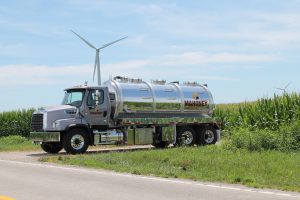
Fryer oil wears out on a timeline set by your menu, not the calendar. Once it is spent, it should go into a sealed container until pickup rather than an open bucket where it can spill or get skimmed. Our driver pumps the UCO straight from your container into the truck, so nobody on staff carries hot oil across a wet floor. The load goes to a Mahoney facility, gets screened to pull out food particles and solids, and moves on as feedstock for renewable fuel.
As a licensed EPA recycler, we report the gallons collected from your kitchen for audits, compliance filings, and sustainability tracking. Every D
enver collection program covers:
- Right-sized scheduling: Pickups timed to your fryer output, not a fixed date
- Container monitoring: Level checks that keep your tank from topping off between visits
- Licensed transport and processing: EPA-licensed hauling from your back door to a Mahoney plant
- Equipment setup and service: Storage and handling systems we install and maintain
- Gallon reporting: Documented volumes for audits, filings, and sustainability reports
A licensed used cooking oil recycling partner also ends the search for a collection center or drop-off location, and your spent oil is recycled into s renewable diesel and sustainable aviation fuel (SAF) rather than becoming waste.
Grease Trap Cleaning and Maintenance for Denver Kitchens
A grease trap is the last stop before your wastewater reaches the Denver sewer system. Baffles hold the flow back long enough for grease to float, food solids to sink, and the cleaner water in the middle to pass out through the outlet pipe. The trap only holds what it separates. Once it fills past roughly a quarter of its depth, grease rides out to the sewer lines and the plumbing system behind it starts to clog. Our page on how grease traps work covers the mechanics in more detail.
Consequences of a Neglected Grease Trap
- A backup that floods the kitchen floor mid-shift
- Odors near the dish area that drift into the dining room
- A failed health inspection and a sanitation citation
- Emergency pump-outs charged at emergency rates
- Fines for a gap in your cleaning record
Our Denver Grease Trap Service Covers:
- Scheduled pumping: Intervals matched to your trap size and how fast your menu fills it
- Full pump-out and repair: Removal of built-up FOG, food waste, and solid waste, plus fixes to baffles, lids, and worn parts
- Rodding and jetting: Clearing drain lines and sewer lines that have started to close
- Grease interceptor service: Maintenance for the larger outdoor units under high-volume kitchens
- Grease trap inspections: A written condition report every visit that catches potential problems and plumbing issues early
- Emergency response: Around-the-clock coverage when a clog or overflow threatens service
- Compliance support: Documented service records and condition reports for your inspection file
How Often Should a Denver Kitchen Clean Its Grease Trap?
Denver sets the floor at every 90 days, and the trap often calls for service sooner. The 25 percent mark is the one to watch. Once grease and settled solids fill a quarter of the trap, it stops separating cleanly and needs to be pumped. A fryer-heavy menu hits that mark faster than a bakery or a corporate cafeteria, and a small indoor unit fills faster than a large outdoor interceptor.
Two habits stretch the time between visits. Scrape food waste into the trash cans before dishes hit the sink, and keep cooking oil out of the drainage system entirely. A grease trap holds waste but does not treat it the way a septic tank treats what it receives. It stores what it catches until our vacuum trucks empty it.
Cooking Oil Containers and Automated Systems Built for Denver
Most back-of-house burns happen while someone carries hot oil from the fryer to a container. Mahoney designs and installs equipment that removes that trip, with outdoor options built for a climate where oil and grease firm up fast in winter.

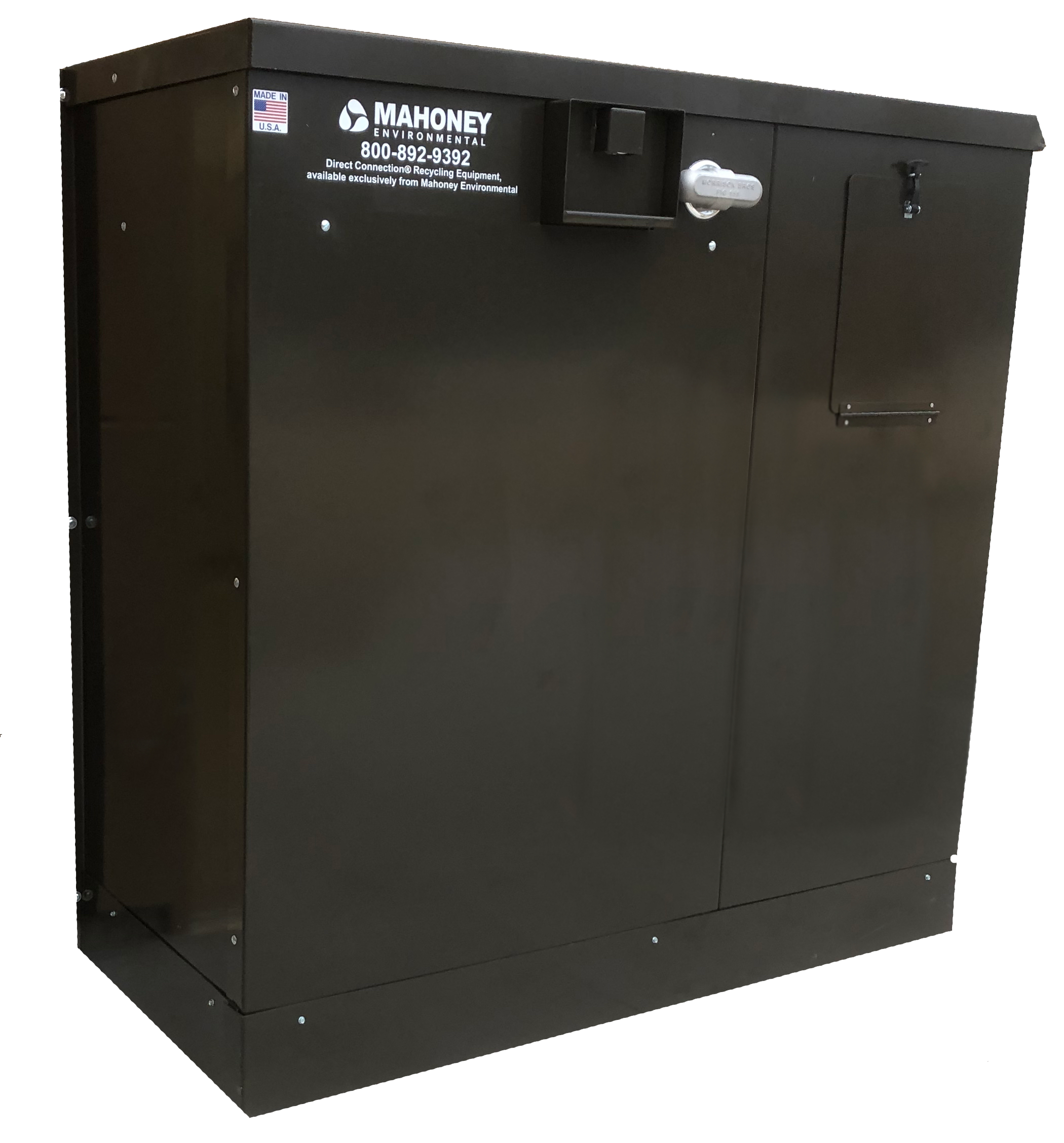
- Direct Connection Recycler System: A dedicated line runs from your fryers to indoor or outdoor storage. A lever or switch moves the oil, with no buckets and no hand-carrying.
- Indoor System: A storage tank sits inside, piped to the fryer bank, with a portable filter machine that cleans the oil and stretches fry life.
- Heated Outdoor Bulk Container: Insulated and heated so used oil stays fluid through a Denver winter, with anti-theft locks, a screen over the fill point, and a UCO level sensor. (Available in select markets.)
- Standard Storage Systems: Sealed bulk containers with screened openings, sized for kitchens that deposit oil by hand.
- Custom Equipment: Tanks, piping, and controls engineered around a kitchen layout that nothing off the shelf will fit.
Standard options include the MES Inside 183, MES Inside 352, DC 48, and DC 72, plus caddies and shuttles for moving oil between the fryers and the storage tank. The outdoor containers use ported access instead of an open lid, helping reduce the risk of unauthorized oil removal. Mahoney also runs a grease theft program with our customers and local law enforcement.
Why Denver Operators Stay with Mahoney
On-the-ground service: We run Denver-area routes and work under the same DDPHE and Metro Water Recovery rules your inspector checks against.
Since 1953: Over seven decades in foodservice, focused on this one line of work.
Full chain of custody: Equipment, collection, processing, and finished fuel all stay in-house, with no third-party hauler in the middle.
Scheduling you can plan around: Technicians arrive on time, which keeps tanks under capacity and traps under the 25 percent line.
Emergency coverage: Traps fail on their own schedule, so someone answers around the clock.
Schedule Cooking Oil and Grease Trap Service in Denver
Used cooking oil pickup, grease trap cleaning, and the equipment behind both come from one provider on one schedule. Call (800) 892-9392 and our Denver team will size a service plan to your kitchen’s volume, hours, and compliance calendar. You can also contact us online to start.
Request a Quote | Schedule Service (Current Customers) | Contact Us
Mahoney Environmental serves Denver, Aurora, Lakewood, Centennial, Littleton, Englewood, Arvada, Westminster, Thornton, Boulder, and the surrounding Front Range communities.
Call Us Now (800) 892-9392