Fats, oils, and grease (FOG) are the greasy byproducts of cooking that clog drains, grease traps, and sewer lines when they cool and harden. Restaurants control FOG with grease traps, good kitchen habits, and used cooking oil recycling to avoid backups, fines, and shutdowns.
Grease does not look like a threat when it is hot. It pours down the drain and disappears. Minutes later, it cools inside your sewer pipe, sticks to the walls, and starts to build. Over a few weeks, that buildup becomes a blockage that pushes sewage back into your kitchen or out into the street. For a food service establishment, that means a closed kitchen, cleanup costs, and a likely visit from the city.
What is FOG (Fats, Oils, and Grease)?
FOG stands for fats, oils, and grease. It covers anything greasy that comes off food during cooking and cleanup. Common sources in a restaurant kitchen include:
- Cooking oil and fryer oil
- Meat fat and drippings
- Dairy products like butter, cream, and cheese
- Salad dressing, sauces, and gravies
- Food scraps rinsed off plates and pans
When these go down the drain warm, they flow fine. Once they cool, they turn solid and cling to the inside of your sewer pipe.
Why is FOG a Problem for Restaurants?
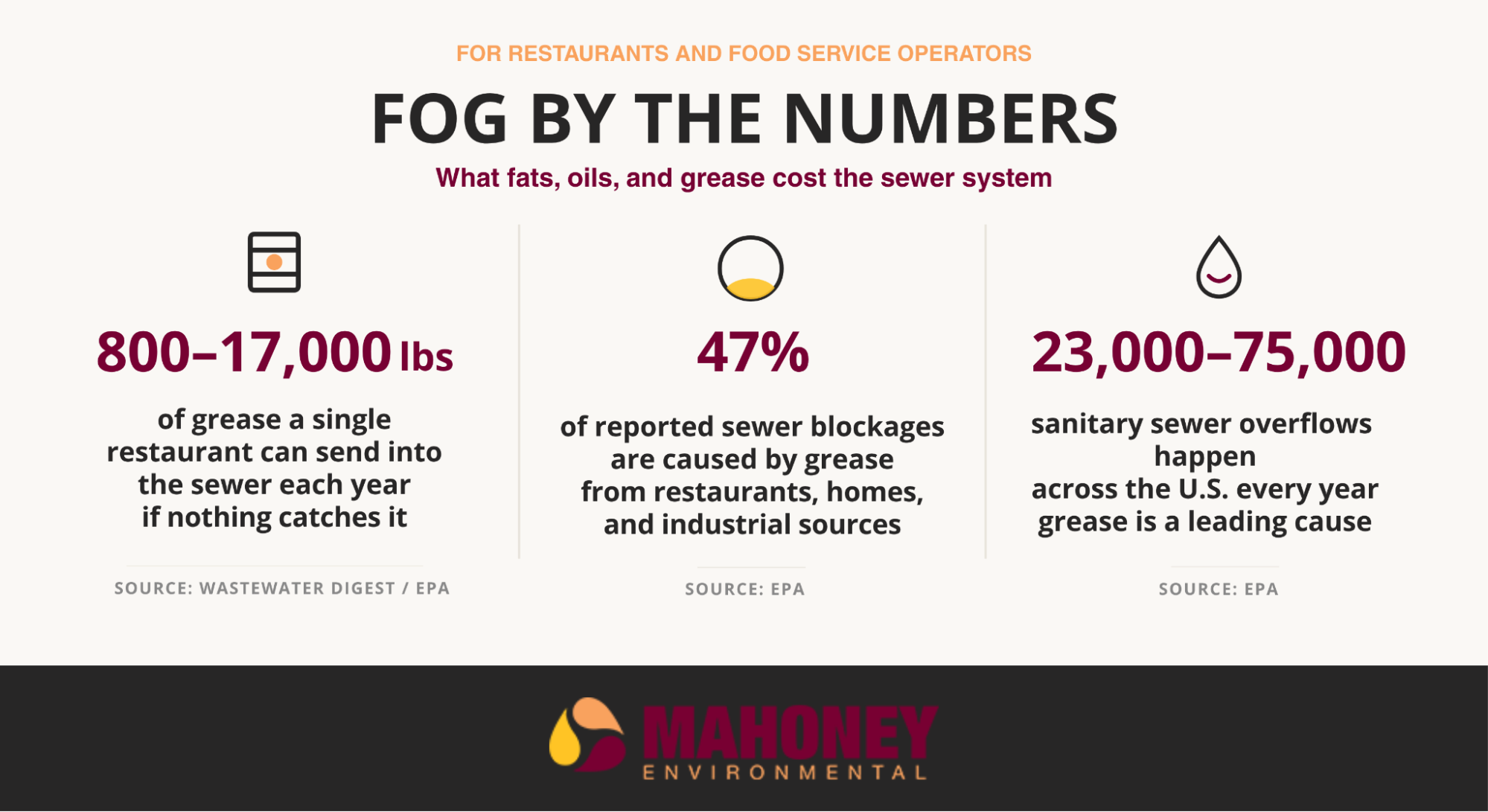
FOG is the top cause of sewer trouble in the country. The EPA reports that grease from restaurants, homes, and industrial sources is the most common cause, about 47 percent, of reported sewer blockages.
What FOG Does to Your Sewer Lines
When grease hardens inside sewer lines, it narrows the pipe and traps food scraps and other debris. That leads to:
- Sewer backups into your kitchen and dining room
- Sanitary sewer overflows that release untreated wastewater into streets and waterways
- Sewer pipe corrosion and costly repairs
- Public health risks from raw sewage and bacteria
A single restaurant can send 800 to 17,000 pounds of grease into the sewer system each year if nothing catches it. That is why nearly every city tracks FOG from food service establishments.
The Scale of Sewer Overflows
The scale is large. The EPA estimates that 23,000 to 75,000 sanitary sewer overflows happen across the country every year, and grease is a leading cause. For your restaurant, the risk is closer to home. A single grease blockage in your sewer line can flood floor drains with raw sewage during a dinner rush. Cleanup, lost service hours, and possible fines from the city add up fast. Sewage backups and sewage spills cost far more than the routine grease trap cleaning that prevents them.
Where FOG Comes From in Your Kitchen
Most FOG starts during normal food preparation. The biggest sources are:
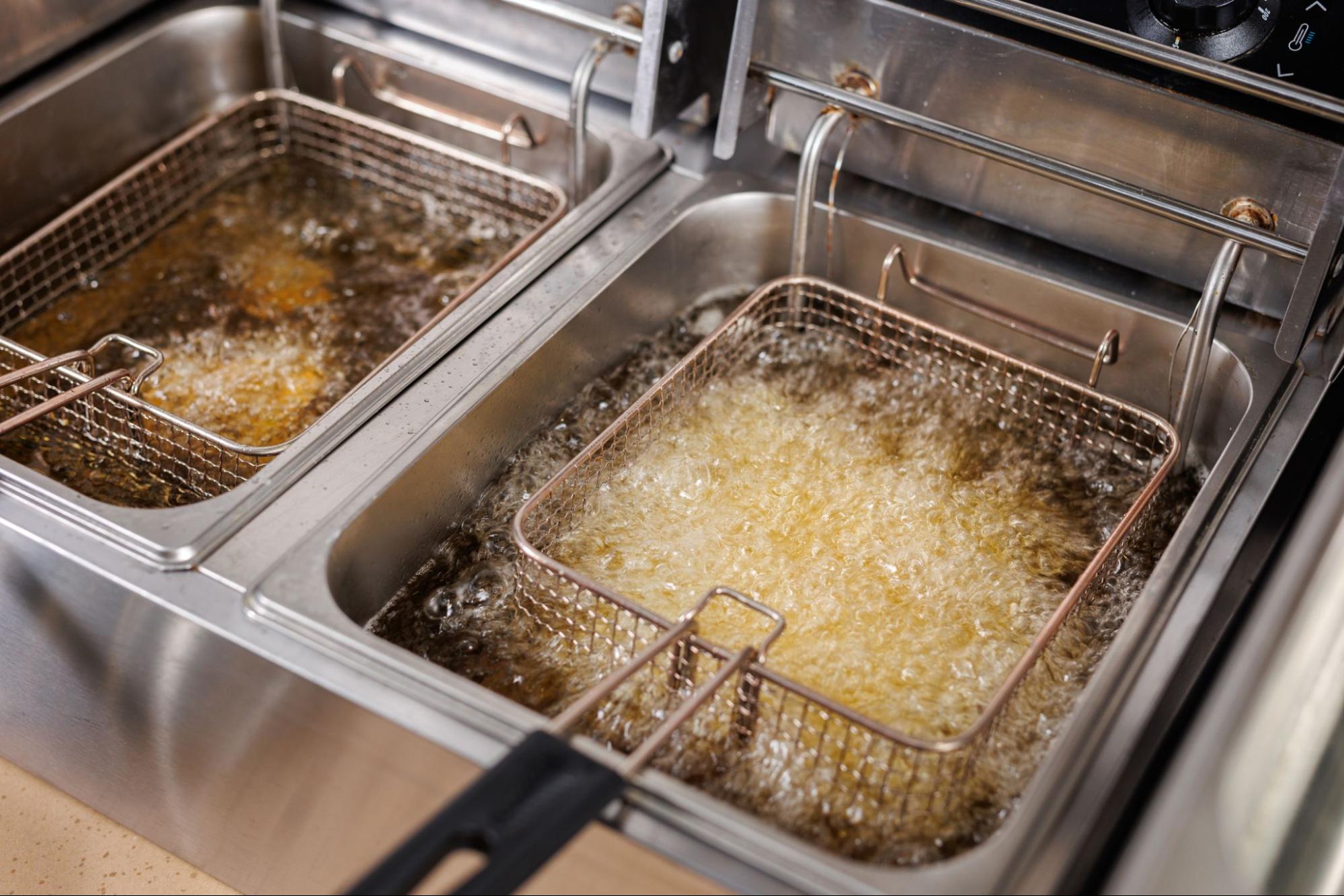
- Deep fryers and used cooking oil
- Grills and meat fat
- Pots, pans, and dishes scraped into the sink
- Dishwashers rinsing greasy plates
A garbage disposal does not fix the problem. It grinds food waste into smaller pieces, but the grease still flows into your sewer lines and hardens downstream. Scraping food scraps into the trash before washing keeps a lot of FOG out of your drain.
How Grease Traps and Grease Interceptors Work
A grease trap is a grease removal device that sits between your sink and the sewer. Wastewater flows in and cools. Grease floats to the top, solids sink to the bottom, and cleaner water passes through to the sewer system.
Grease Trap vs. Grease Interceptor
- A grease trap is the smaller unit, often indoors under a sink.
- A grease interceptor is the larger underground version for high-volume kitchens.
Both are grease-control devices required by most cities for any food service establishment. You can see how grease traps work and how Mahoney handles grease trap cleaning on a set schedule.
How Often to Clean a Grease Trap
The common standard is the 25 percent rule: clean the trap when grease and solids reach one-quarter of its total depth. For most restaurants, that means cleaning every one to three months. A busy kitchen may need it more often.
Signs Your Grease Trap Needs Cleaning
- Slow drains
- Odors near sinks or floor drains
- Grease showing in the trap or its line
Skipping cleanings lets accumulated grease escape into the sewer, which is how grease blockages and sewer backups start. A maintenance log helps you track each cleaning and stay ready for inspection.
FOG Programs and Compliance
Many cities run a FOG program through their wastewater system. The city’s FOG program sets rules for grease control devices, cleaning schedules, and record keeping for every food service establishment. Restaurants, grocery stores, hotels, and correctional facilities all fall under these rules.
What a FOG Program Requires
A typical FOG program asks you to:
- Install and maintain an approved grease trap or grease interceptor
- Keep a maintenance log of every cleaning
- Submit records, often through an online portal
- Pass periodic inspections
Following these best management practices lowers your maintenance costs and keeps you clear of fines and sewer spill penalties.
The Best Ways to Keep FOG Out of Your Drains
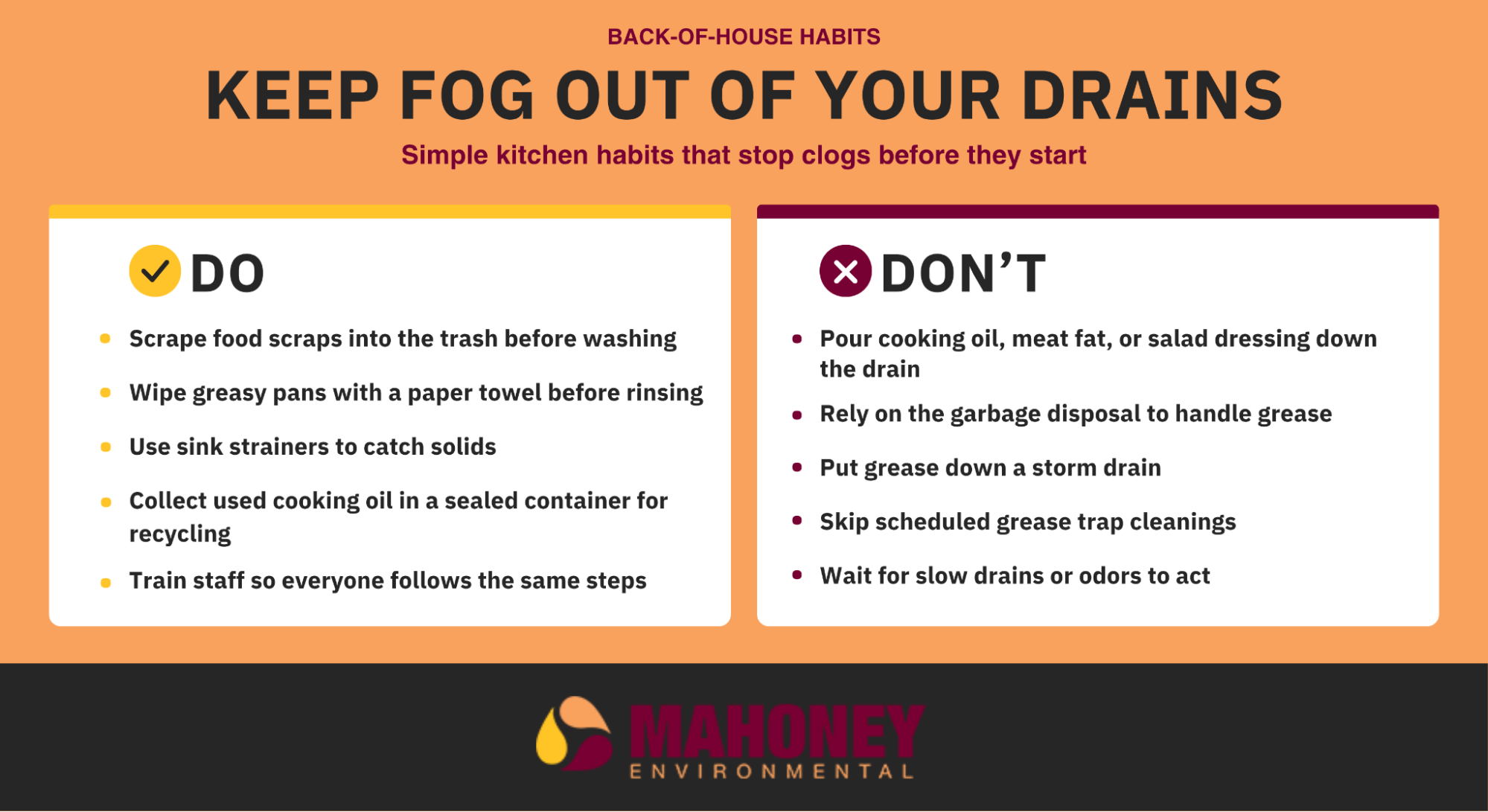
Good back-of-house habits stop most problems before they start:
- Never pour cooking oil, meat fat, or salad dressing down the drain
- Scrape food scraps and food waste into the trash before washing
- Wipe greasy pans with a paper towel before rinsing
- Use sink strainers to catch solids
- Collect used cooking oil in a sealed container for recycling
- Never pour grease into a storm drain, which runs untreated to local waterways
- Train staff so everyone follows the same steps
These steps cut FOG buildup, protect your sanitary sewer connection, and keep your kitchen running.
What Happens to Your Used Cooking Oil After Pickup
Used cooking oil (UCO) does not have to be a waste. A licensed recycler collects it and turns it into renewable fuel like renewable diesel and sustainable aviation fuel (SAF), so it leaves your kitchen as a problem and comes back as something useful. Setting up scheduled pickup keeps that oil out of your drains and off your hands.
Keep Your Kitchen Clear of FOG
FOG is a normal part of cooking, but it does not have to clog your drains or shut down your kitchen. Catch grease before it enters your sewer lines, clean your grease trap on schedule, keep a maintenance log, and recycle your used cooking oil. Those few habits prevent backups, protect public health, and hold down your maintenance costs.
Mahoney Environmental has spent 70+ years taking grease and used cooking oil off the hands of food service operators. We clean grease traps, deliver fresh oil, and recycle UCO into renewable fuel through a coast-to-coast network serving 90,000+ customers. One scheduled pickup keeps a backup from ever starting.
Ready to get grease off your plate? Contact Mahoney Environmental or call (800) 892-9392 to set up grease trap cleaning and used cooking oil recycling for your restaurant.

 Call Us Now (800) 892-9392