The Short Answer: Choose a used cooking oil collector based on pickup reliability, the equipment they put in your kitchen, the paperwork they hand back, and what happens to the oil after it leaves. Most used cooking oil companies will quote you a rebate, but service consistency is what actually costs or saves you money over a year.
Switching collectors is rarely about price. It is about the container that overflowed on a Saturday, the pickup that never showed, or the driver nobody at your restaurant recognized.
Restaurant grease is a valuable commodity now, which is why there are more companies in cooking oil collection than there used to be. Some run their own trucks and their own processing. Some broker the load to whoever is buying that week.
That difference shows up in your back-of-house long before it shows up on an invoice.
What a Used Cooking Oil Collector Does
A collector handles used cooking oil (UCO) from the moment it leaves your fryer until it reaches a renewable fuel producer. Most of the job is unglamorous.
- Installs and maintains the storage container or tank
- Picks up on a schedule matched to your frying volume
- Hauls the oil to a processing facility
- Screens, heats, and refines it into raw material for fuel
- Provides documentation showing where it went
Spent fryer oil, mostly vegetable oil once it has been through a fryer, is called yellow grease in the trade. It is separate from brown grease, which is the material that collects in your grease trap and requires grease trap cleaning rather than oil collection. Some providers bundle both recycling services. Many handle only one.
What to Look For in Used Cooking Oil Companies
Rebate rates move with the market. These five things decide what the service is actually worth to you.
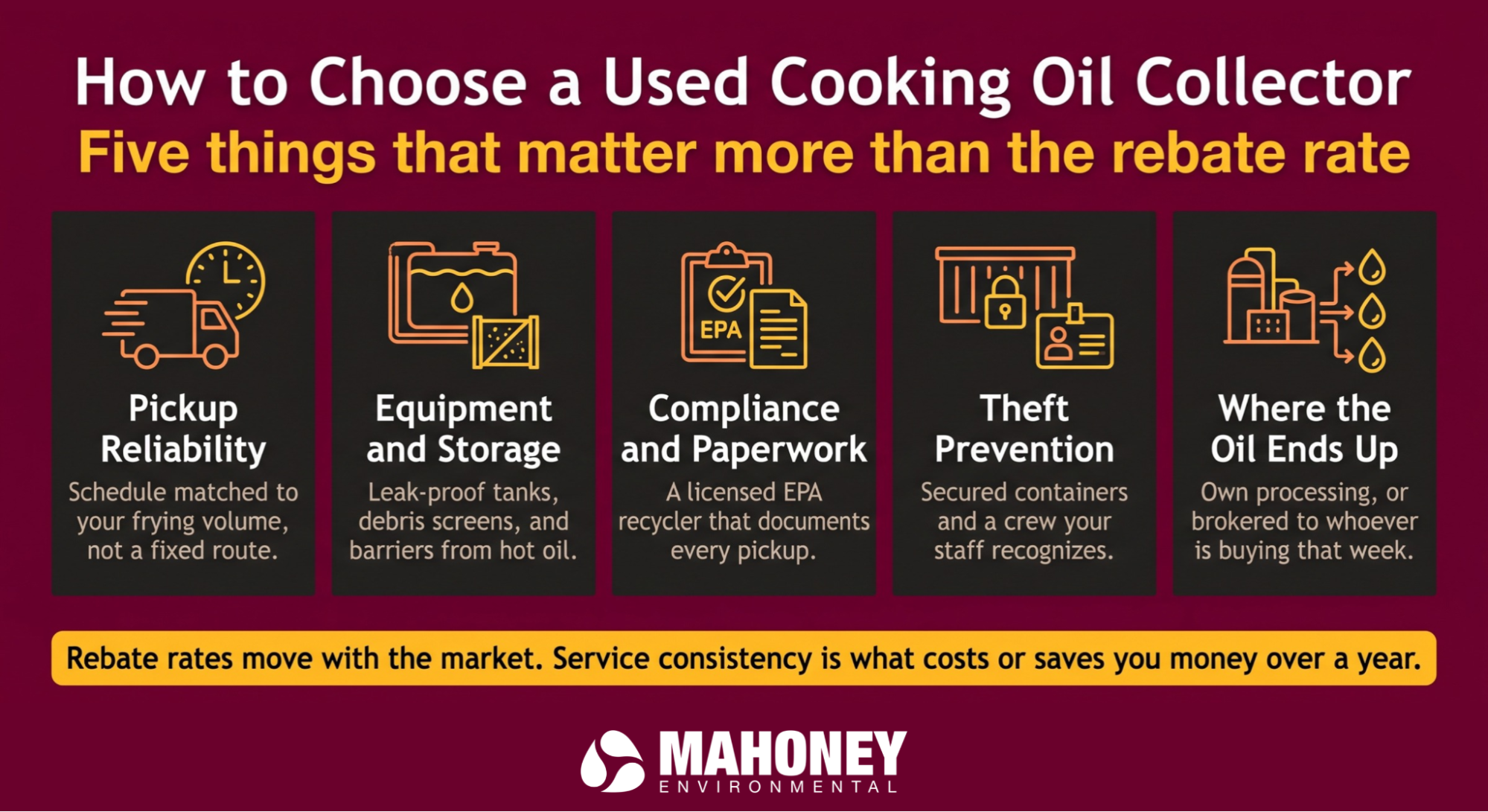
Pickup Reliability
Reliable service is the whole product. A missed pickup means an overflowing container, a slick back dock, and somebody on your staff improvising.
Ask how the collection route is built and how pickup frequency gets set. A provider that monitors your usage and adjusts the schedule is managing the account. One that shows up every 30 days regardless is running a route and hoping it fits.
Equipment and Storage
The container matters more than operators expect, because it is what your staff touches every shift.
- Bulk storage tanks should be leak-proof, with a screen under the lid to catch debris and a barrier that keeps employees away from hot oil
- Automated systems pump oil from the fryer to storage so nobody carries it, and good ones can be retrofitted into an existing kitchen
- Outdoor containers need to be sited where a truck can reach them without blocking your deliveries
Ask who owns the equipment, who services it, and what happens if it fails. Our guide on how to store used cooking oil covers what good storage looks like day to day.
Compliance and Paperwork
Pouring cooking oil down the drain is prohibited almost everywhere, and health inspectors do ask how yours leaves the building.
A collector should be a licensed EPA recycler and should give you documentation after service. Keep it with your other back-of-house records. If a provider cannot produce proof of what happened to your oil, you have no answer when somebody asks.
Theft Prevention
Used cooking oil theft is a known problem in the industry. Thieves pose as recyclers, sometimes in look-alike trucks, and pump out containers overnight.
Ask what a provider does about it. Secured enclosures, marked trucks, and a crew your staff recognizes all help. Our page on grease theft covers what to watch for and what to do when it happens.
Where the Oil Ends Up
This is where used cooking oil companies differ most, and it is the question fewest operators ask.
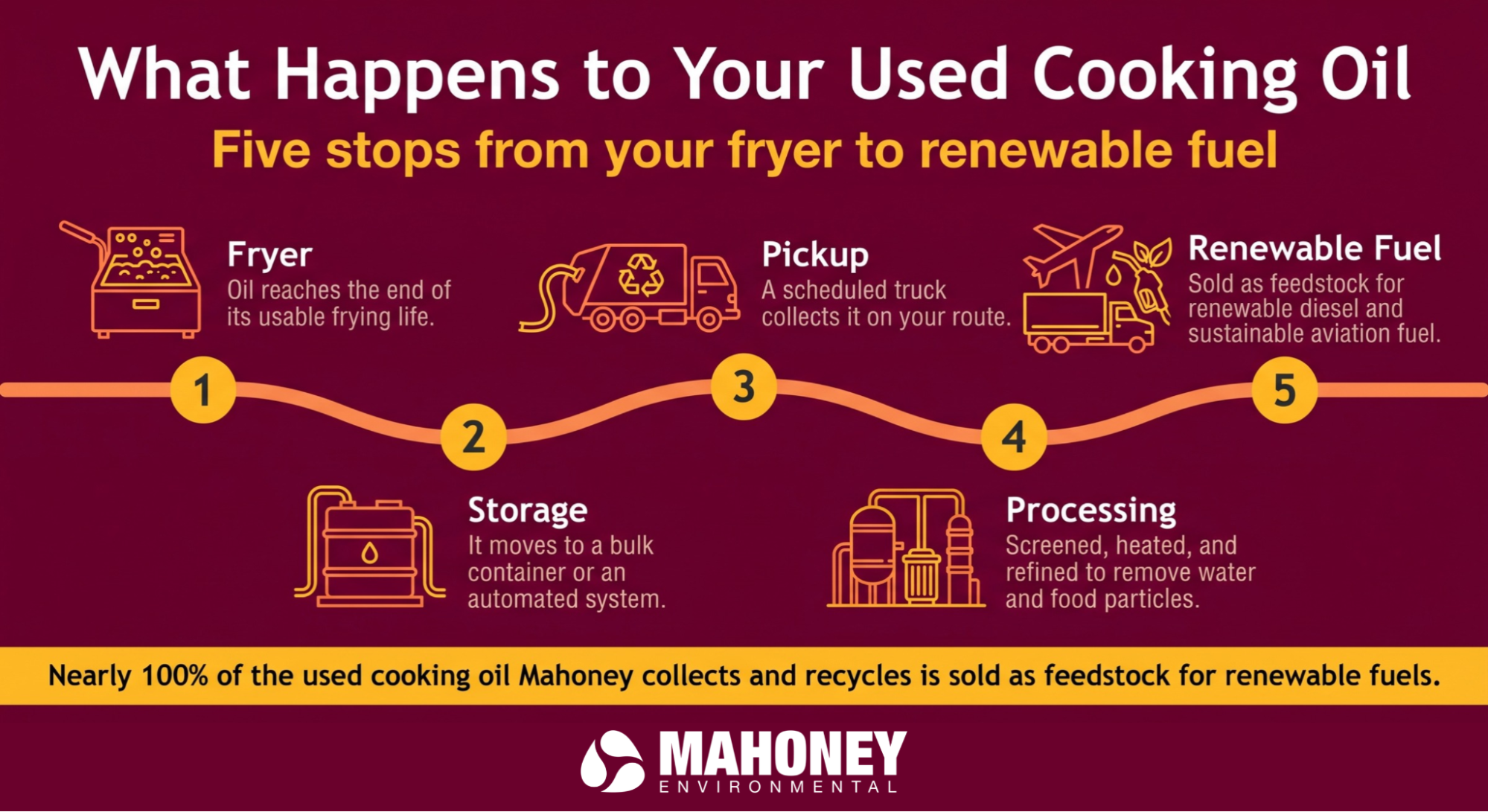
Collected oil has gone to animal feed and industrial lubricants for decades. The growth now is in clean fuel. UCO is a feedstock for renewable diesel, biodiesel producers, and sustainable aviation fuel (SAF), all of which displace fossil fuel in transportation fuel markets and carry lower greenhouse gas emissions than the petroleum they replace. It is a working example of a circular economy, since the waste oil leaving your kitchen comes back as fuel.
A collector that owns its processing has a shorter supply chain and more control over what happens to your oil. A broker does not.
Questions to Ask Before You Sign
- Do you own your trucks and your processing, or do you sell the load on?
- How is my pickup schedule set, and who adjusts it?
- Who owns and maintains the storage container?
- What documentation do I get after each pickup?
- How is the rebate calculated, and how often does it change?
- What is the contract length and the exit clause?
- Do you also handle grease trap service, or is that a separate vendor?
Where Operations Get Stuck
Independent Restaurants
A single local restaurant has the least leverage and usually the least attention. Service tends to be fine until it is not, and one missed pickup is a bigger problem when there is no second location to lean on. Ask if independents get the same route priority as chain accounts.
Grocery Store Kitchens
Grocery is harder than it looks. Deli, bakery, and hot bar all produce oil at different rates, volume swings with the season, and the back dock is already busy with freight. Scheduling grease collection around receiving windows takes a provider who will actually plan it.
Multi-Site Operations
Chains run into inconsistency. Different locations end up on different schedules with different containers, and nobody has one view of it. Consolidating under one provider with national coverage usually fixes more than it costs.
UCO Collection FAQs
Do you get paid for used cooking oil?
Most operators do get paid for used cooking oil, through a rebate tied to volume and the current market for yellow grease. Rates move, so ask how often yours is recalculated and if the contract locks it.
Can one company handle both oil collection and grease trap cleaning?
Some companies handle both oil collection and grease trap cleaning, though many do not. Using one provider for both means one schedule, one invoice, and one point of contact when something goes wrong.
What happens to used cooking oil after pickup?
After pickup, used cooking oil is screened, heated, and refined to remove water and food particles, then sold as raw material to renewable fuel producers. Most of it becomes renewable diesel or sustainable aviation fuel.
Is recycling used cooking oil actually better for the environment?
Recycling used cooking oil keeps waste oil out of sewers and turns it into renewable energy rather than leaving it as waste. Fuels made from it generally produce lower greenhouse gas emissions than petroleum fuels, which is why airlines and fleets with climate change commitments are competing for the feedstock. For a kitchen already paying to have the oil hauled, it is a sustainable solution with a positive impact that costs nothing extra.
Get Your Used Cooking Oil on a Schedule
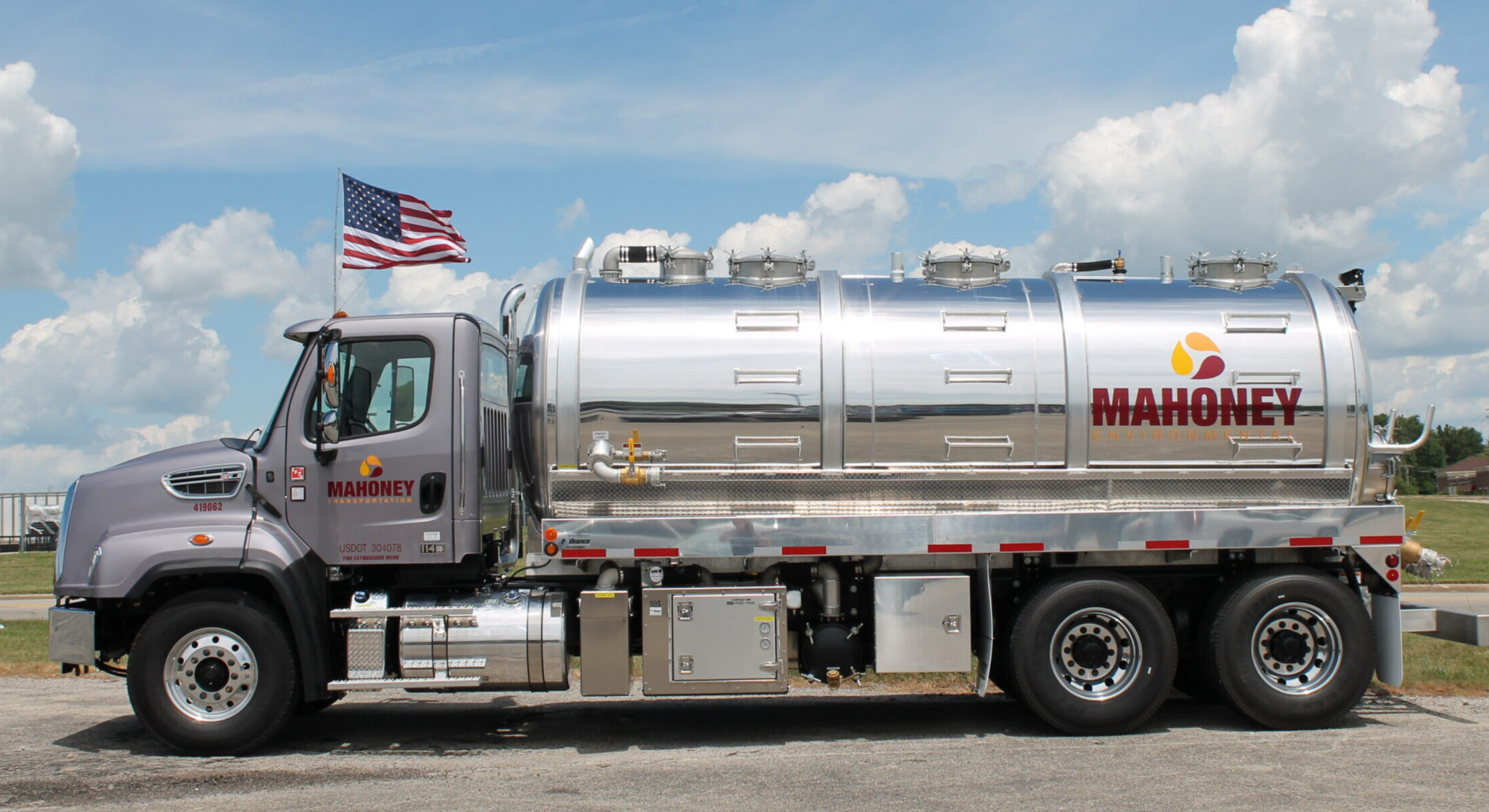
The collector worth having is the one you stop thinking about. Mahoney Environmental has done that job for commercial kitchens since 1953, and we now serve more than 90,000 food establishments nationwide as a licensed EPA recycler.
We manage used cooking oil recycling end to end, including equipment installation, scheduled pickup, and processing. Nearly 100 percent of the UCO we collect and recycle is sold as feedstock for renewable fuels such as sustainable aviation fuel. Mahoney holds dual ISCC certifications under the EU and CORSIA programs, a voluntary scheme that verifies our collected oil as genuine waste and residue for clean fuel production. As part of Neste since 2020, that vertical integration means your oil moves through one supply chain and comes back as renewable diesel and SAF.
Call (800) 892-9392 or contact us to set up a pickup schedule built around your kitchen’s volume.


 Call Us Now (800) 892-9392