The Short Answer: A grease trap keeps fats, oil, and grease (FOG) out of your pipes, which prevents backups, foul odors, and the fines that come with them. It also keeps your kitchen compliant with local codes and cuts the surprise repair bills that clogged lines create.
Every commercial kitchen sends grease down the drain, and grease does not play well with pipes. It cools and hardens inside the line until the flow chokes down to nothing. A grease trap sits between your sinks and the sewer line and catches that FOG before it causes trouble. The payoff shows up in three places operators care about: fewer plumbing issues, lower maintenance costs, and one less thing to worry about during an inspection. Good grease trap maintenance also keeps your kitchen operations running without the surprise of a backed-up drain mid-service.
What Does a Grease Trap Do?
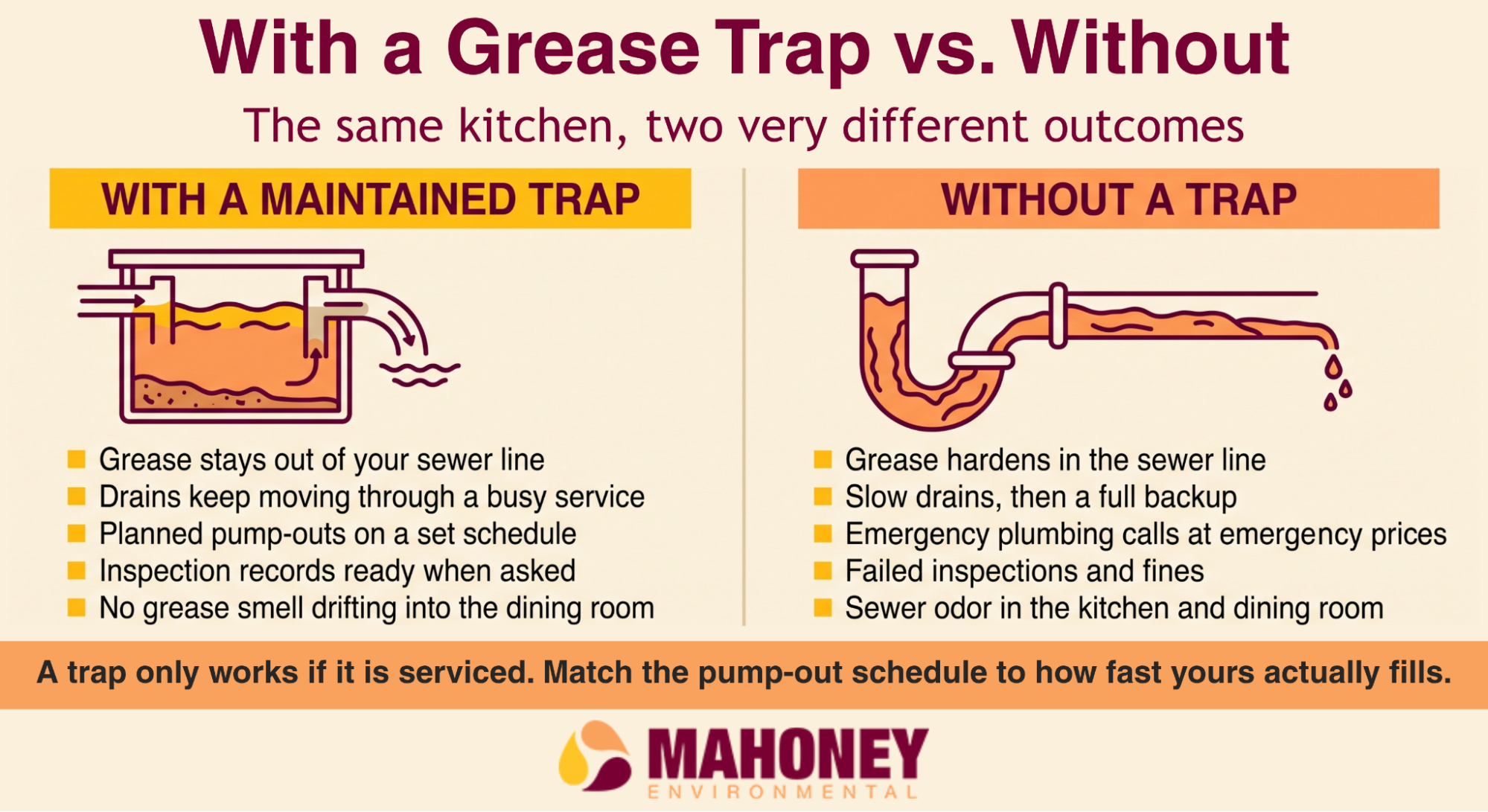
A grease trap is a plumbing device that slows down the wastewater leaving your kitchen. As the water sits for a moment, FOG floats to the top, and food particles sink to the bottom. The cleaner water in the middle flows on to the sewer system.
That simple job matters more than it sounds. Grease is the single biggest threat to a kitchen’s drainage system. The EPA has found that grease from restaurants, homes, and industry is the most common cause of sewer blockages, at 47 percent of reported cases. A single restaurant can send thousands of pounds of grease toward the sewer in a year. The trap is what stops yours from adding to that.
The Benefits of Using a Grease Trap
Here is where a working trap pays off, starting with the problems operators care about most.
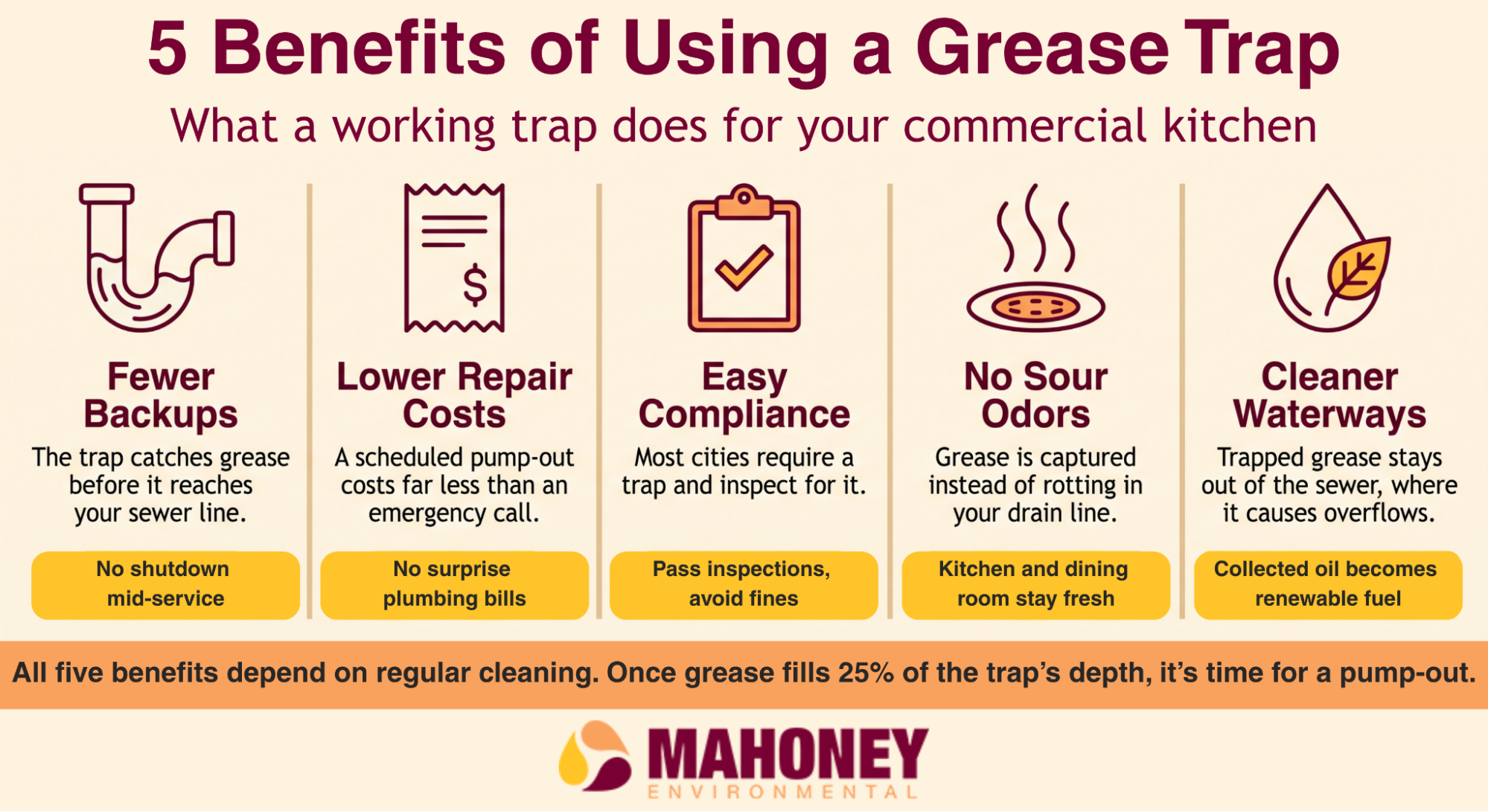
1. Fewer Sewer Backups and Plumbing Issues
FOG buildup is what turns a working drain into a slow one, then a clogged one. A grease trap catches the grease before it reaches your sewer line, so the water keeps moving.
- No grease hardening inside your pipes
- Fewer slow drains during a busy service
- Far lower odds of a backup that shuts the kitchen down
A backup during dinner rush is one of the worst things that can happen back-of-house. The trap is the cheapest insurance against it.
2. Lower Maintenance Costs and Fewer Costly Repairs
Clearing a grease-clogged sewer line is not cheap, and an emergency repair costs more than routine grease trap cleaning ever will. A trap moves the grease into one spot you can service on a schedule instead of letting it collect out of sight in your plumbing system.
- Planned pump-outs instead of emergency calls
- No repeated snaking of the same clogged line
- Less wear on your drainage system over time
- Better operational efficiency with fewer service interruptions
3. Regulatory Compliance and No Costly Fines
Most cities require food service establishments to run a grease trap or interceptor, and they inspect for it. Local regulations set the rules on sizing, installation, and cleaning frequency. A maintained trap keeps you on the right side of those rules.
- Passes health and plumbing inspections
- Avoids costly fines tied to FOG discharge
- Keeps your certificate and permits current
Skipping the trap or letting it fail is a fast way to draw a violation. Proper grease trap maintenance keeps that off your plate.
4. No Unpleasant Odors in the Kitchen
Grease that sits in your pipes rots and smells. When FOG is captured in a trap on a regular cleaning schedule, it does not linger in the drain line long enough to stink up the kitchen or the dining room. Customer satisfaction starts with a space that does not smell like a sewer.
5. Environmental Responsibility
Keeping FOG out of the sewer system is good for more than your kitchen. Grease that reaches the sewer contributes to blockages and overflows that send raw sewage into local waterways. A grease trap keeps your operation from adding to that problem, which is the kind of environmental responsibility that also reflects well on your business.
There is a bonus here. The grease and used cooking oil (UCO) that comes off your food preparation lines does not have to be wasted. Proper disposal through a recycler turns it into renewable fuel, which makes a back-of-house problem into something useful.
How Do You Keep a Grease Trap Working?
A grease trap only delivers these benefits if it is maintained. A neglected trap fails the same way an absent one does. The upkeep is simple.
Clean It on a Schedule
The standard trigger is the 25 percent rule. Once grease and solids fill a quarter of the trap’s depth, it needs cleaning. For most kitchens, that means professional grease trap cleaning every one to three months, though a high-volume kitchen may need more frequent pump-outs.
Keep Up With Routine Inspections
Routine inspections catch small problems before they grow. Check the trap between services, watch for slow drains, and note how fast it fills so you can set the right cleaning frequency.
Work With a Grease Trap Service
A grease trap service handles the pump-outs, keeps the records inspectors want to see, and sets the interval around your actual volume. A good service provider also tracks the environmental regulations that apply in your area so you do not have to. That is easier and cheaper than reacting to a backup after the fact.
Do You Really Need a Grease Trap?
For a commercial kitchen, yes. Between local regulations that require one and the plumbing issues that follow without one, a grease trap is the effective solution for keeping FOG out of your drainage system. The only real question is how big it should be and how often it needs service, and a grease trap service can answer both.
The Bottom Line for Your Kitchen

A grease trap earns its place fast. It keeps FOG out of your pipes, which means fewer backups, lower repair costs, easy regulatory compliance, and no sewer smell drifting into your dining room. All of that depends on regular maintenance, so the trap stays ahead of the grease instead of falling behind it.
That upkeep is the part worth handing off. Mahoney Environmental has cleaned grease traps for commercial kitchens for decades, and we do the messy part so your team can stay focused on service. We pump the trap, log the visit for your inspector, and match the timing to how fast yours actually fills. The same trucks handle your used cooking oil recycling, so one call covers both sides of your back-of-house grease.
Not sure how often your trap needs service, or want someone reliable on the schedule? Call Mahoney at (800) 892-9392 or reach us through our contact page.

 Call Us Now (800) 892-9392