The Short Answer: A grease trap smells because the fats, oil, and grease (FOG) and food particles trapped inside break down and release hydrogen sulfide, the same rotten-egg gas you smell from a sewer. That smell almost always means the trap is overdue for cleaning.
Walk into a commercial kitchen and catch a whiff of rotten eggs near the sink, and the grease trap is usually the culprit. The smell is not just unpleasant. It tells you decomposition is happening, and left alone, it turns into slow drains, backups, and complaints from staff and customers. The good news is that a smelly grease trap is one of the easier kitchen problems to fix, and simple to prevent once you know the cause.
What Causes Grease Trap Odor?
A grease trap does one job. It holds back FOG and food solids so they do not reach the sewer line. Everything it catches sits in warm, still water, which is close to a perfect setup for decomposition.
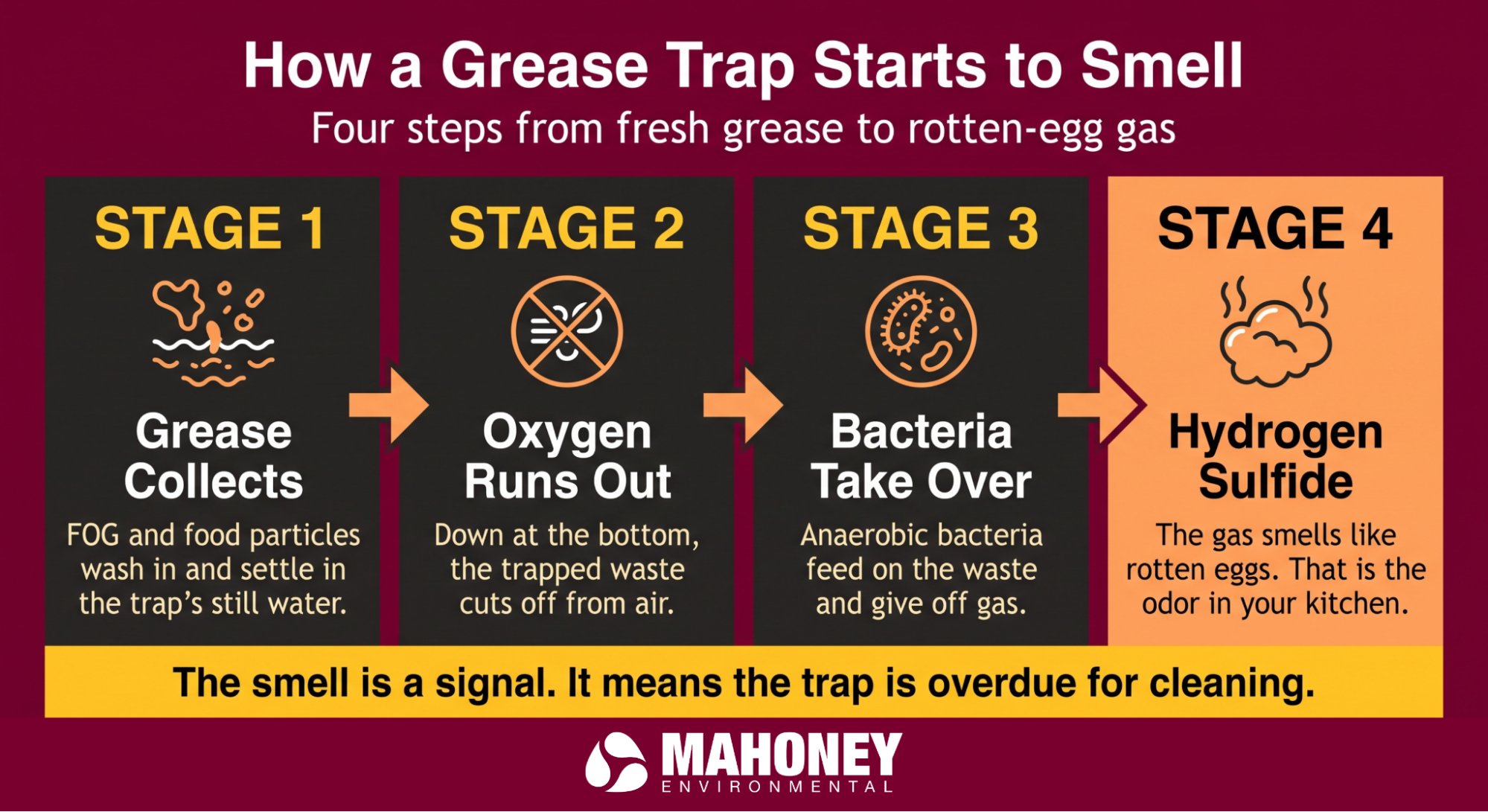
Here is the chain of events behind the smell:
- Food particles and grease collect inside the trap
- With no oxygen reaching the bottom, anaerobic bacteria take over
- Those bacteria feed on the organic waste and give off gas
- The main gas is hydrogen sulfide, which smells like rotten eggs
Other gases add to it. Decomposing food and organic solids give off sour and rancid notes, and some traps also release ammonia. The longer the organic matter sits, the stronger the odor gets, until the smell is hard to ignore.
Why Hydrogen Sulfide Is the Main Offender
Hydrogen sulfide is the gas your nose picks up first. People notice it at very low levels, which is why even a lightly neglected trap can stink up a room. It is the same sewer gas that comes off a septic tank and travels the sewer system, so the smell reads as raw sewage in your food establishment even though it is coming from under your sink.
Common Reasons a Grease Trap Smells Bad
Not every smelly grease trap has the same cause. These are the usual ones.
The Trap Is Overdue for Cleaning
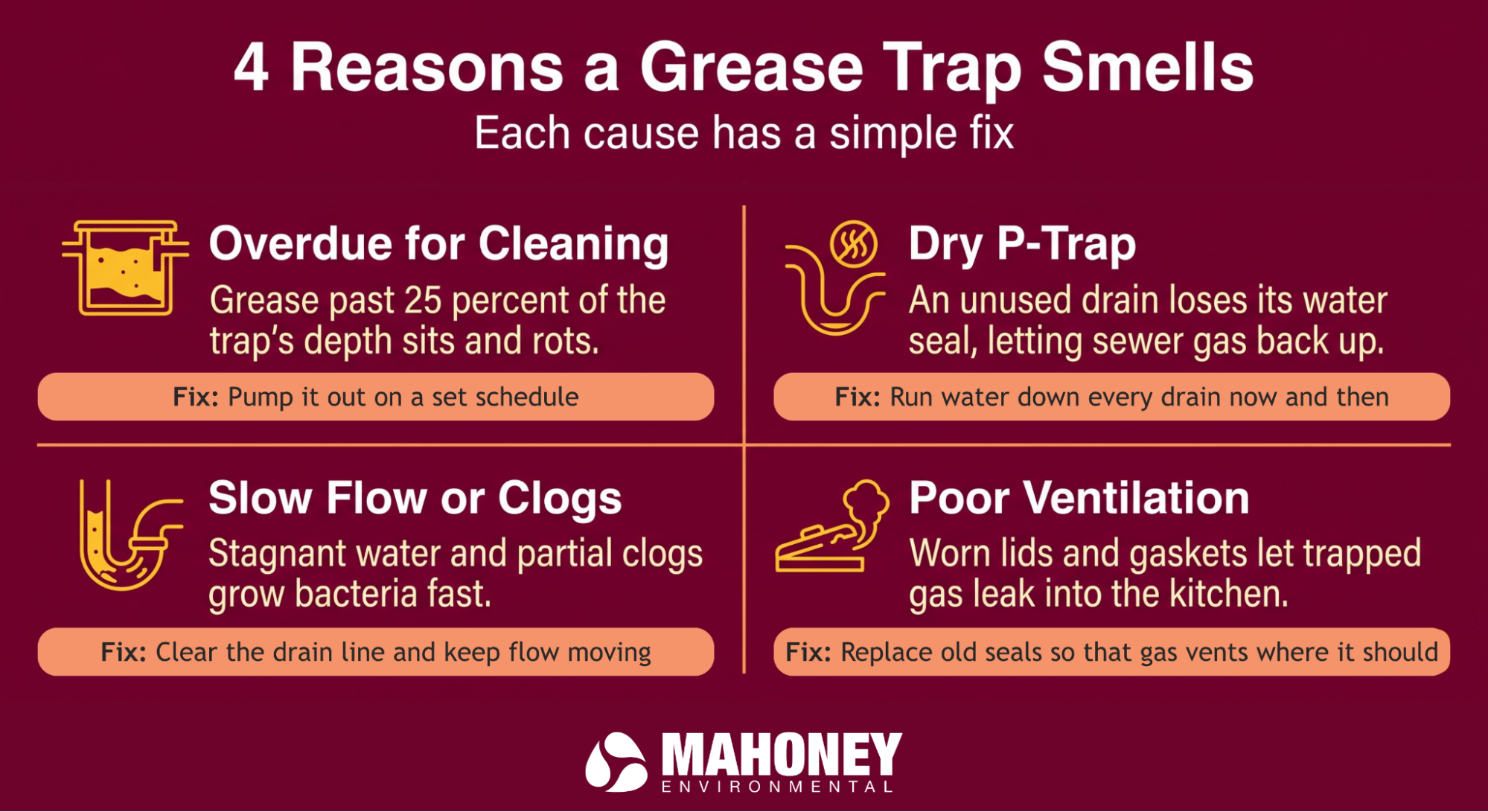
This is the most common reason by far. Once a trap fills past about 25 percent of its depth with grease and solids, the waste sits too long and decomposition speeds up. The 25 percent mark is the standard trigger for grease trap cleaning.
The P-Trap Has Dried Out
Every drain has a P-trap, a curved section of pipe that holds a little water to block sewer gases. If a floor drain or fixture goes unused, that water evaporates, and the seal is gone. Sewer gas then flows straight back up into the kitchen. Running water down every drain now and then keeps the seal full.
Slow Flow and Partial Clogs
When water moves through the trap too slowly, residue settles and stagnates. Stagnant water grows bacteria fast, and a partial clog in the drain line makes it worse. Backups push the smell right back into the room.
Poor Ventilation
A trap that cannot vent properly traps its own gas until it escapes through the lid or a seal. Old covers and worn gaskets let that gas leak into the kitchen even when the unit sits under a cabinet.
How Do You Get Rid of Grease Trap Smell?
Most odor problems trace back to buildup, so the fixes center on removing it and keeping it from returning.
- Clean the trap: A full pump-out removes the decomposing FOG and food waste at the source. This is the fix that actually solves the problem rather than covering it.
- Flush drains with hot water: Running hot water through the system helps move light grease along, though it will not clear a trap that is already full.
- Refill dry P-traps: Pour water down any drain or floor drain that sits unused so the seal blocks sewer gases again.
- Check the lid and gaskets: Replace worn seals so gas vents where it should instead of into the kitchen.
- Scrape plates before washing: Less food waste down the drain means less organic matter for bacteria to feed on.
A Word on Grease Trap Cleaners
Enzyme and bacteria products, sold as a grease trap cleaner, can help break down organic matter between services. They are a bridge, not a cure. They do not empty a full trap, and they do not replace regular cleaning. Skip harsh chemical drain openers, which can damage the trap and the plumbing system without fixing the buildup.
How Often Should You Clean a Grease Trap?
The right schedule depends on how much grease your kitchen produces, but a few rules of thumb apply.
- The 25 percent rule: Clean the trap once grease and solids reach a quarter of its depth. This is the standard most local regulations point to.
- Every 1-3 months for most kitchens: A typical grease trap needs professional cleaning on that cadence. A busy fast-food restaurant may need it more often.
- Larger interceptors, less often: An outdoor grease interceptor holds more, so it usually goes about three months between pump-outs.
Regular maintenance is what keeps the interval working, and your grease management company can set it based on your volume. Proper maintenance on a set schedule beats frequent cleaning done in a panic after the smell starts. Staying on a cleaning schedule is the difference between a trap that works quietly and one that announces itself every time the kitchen heats up.
Why Regular Cleaning Pays Off
Keeping to a schedule does more than control the smell:
- Prevents slow drains and backups that halt service
- Keeps you clear of fines tied to local regulations
- Avoids costly repairs to the trap and the plumbing system
- Keeps the odor out of your dining room
The Bottom Line for Your Kitchen
A grease trap smells because trapped FOG and food waste break down and release hydrogen sulfide, the rotten-egg gas that signals a trap overdue for service. The fix is rarely complicated. Clean the trap on schedule, keep your P-traps full, and handle worn seals before they leak. Do that, and the smell stays gone.
When the trap needs a real cleaning rather than a quick patch, that is where a grease management partner earns its keep. Mahoney Environmental has served commercial kitchens since 1953, and grease trap cleaning sits alongside used cooking oil (UCO) recycling as one of our core services. We set the interval around your actual grease load, so the trap stays ahead of the smell instead of chasing it.
Dealing with a grease trap odor that will not quit, or want to get on a regular cleaning schedule? Call (800) 892-9392 or reach us through our contact page.

 Call Us Now (800) 892-9392