The Short Answer: Restaurant grease trap compliance means sizing your grease trap correctly, cleaning it on the schedule your local sewer authority sets, and keeping records that prove you did it. Most food service establishments pump every 30 to 90 days and keep the paperwork on site for inspectors.
Nobody thinks about the trap until the dish pit drains slowly on a Friday night, or until an inspector shows up asking for two years of pumping records that nobody kept.
The rules are not complicated, but they are scattered. There is no national grease trap code for restaurants, so what applies to you comes from your city or county sewer department, and it can differ from the town next door.
The basics hold up almost everywhere, though. Size the trap for your kitchen, clean it before it fills past a set point, log every service, and keep the paperwork ready for whoever asks.
What Compliance Actually Requires
A grease trap is a plumbing device that sits in a commercial kitchen’s plumbing system, downstream of food preparation sinks, dish machines, and floor drains. Wastewater slows down inside it. Fats, oil, and grease (FOG) float, food particles sink, and what carries on into the wastewater collection system has far less grease in it.
Most local FOG programs want some version of the following:
- A properly sized unit, based on fixture counts or peak flow rate. Plenty of cities approve the unit before you buy it, and our guide on how to calculate the right grease trap size walks through both methods.
- A set cleaning schedule and service by a permitted hauler, with written records kept on site.
- Access for inspection, meaning lids someone can reach and a unit not buried under a stack of dunnage.
Why the Rules Exist
Grease that gets past a trap does not disappear. It cools, it hardens inside the sewer lines, and that grease buildup is a widely cited contributor to sewer blockages, backups, and overflows.
The EPA estimates that at least 23,000 to 75,000 sanitary sewer overflows happen in the United States every year, and lists pipe blockages among the causes. When a sanitary sewer system overflows, untreated sewage can reach streets, storm drains, and waterways. That is a public health problem, and an expensive one.
For a restaurant owner, the math is simpler. One backup, counting cleanup and the nights you cannot serve, usually costs more than years of regular cleaning.
Why Local Regulations Vary So Much
Federal rules set the floor and leave the details alone. The EPA’s National Pretreatment Program prohibits discharging solid or viscous pollutants in amounts that cause obstruction in a public treatment system, and each municipality writes its own ordinance to carry that out.
So two restaurants ten miles apart can be working from different pumping intervals, record retention periods, and fines. Call your local sewer or pretreatment department and get your requirements in writing. One phone call settles it.
How Often Should You Clean a Grease Trap?
Most commercial kitchens land in the 30 to 90 day range. Regular maintenance on a set interval is also easier to defend to an inspector than service that happens whenever somebody notices a smell.
- Indoor hydromechanical traps hold less and fill faster, so weekly to monthly service is common.
- Outdoor grease interceptors hold more and usually get serviced every one to three months.
- High-volume restaurants and kitchens running a garbage disposal need the short end of the range.
Capacity drives the interval, and our breakdown of grease traps vs grease interceptors covers the difference. If your commercial facility runs both, track grease trap maintenance separately for each. They rarely fill at the same rate.
The 25 Percent Rule
A lot of ordinances skip the calendar and use a fill threshold, commonly requiring cleaning once grease and solids reach one-quarter of the total liquid depth.
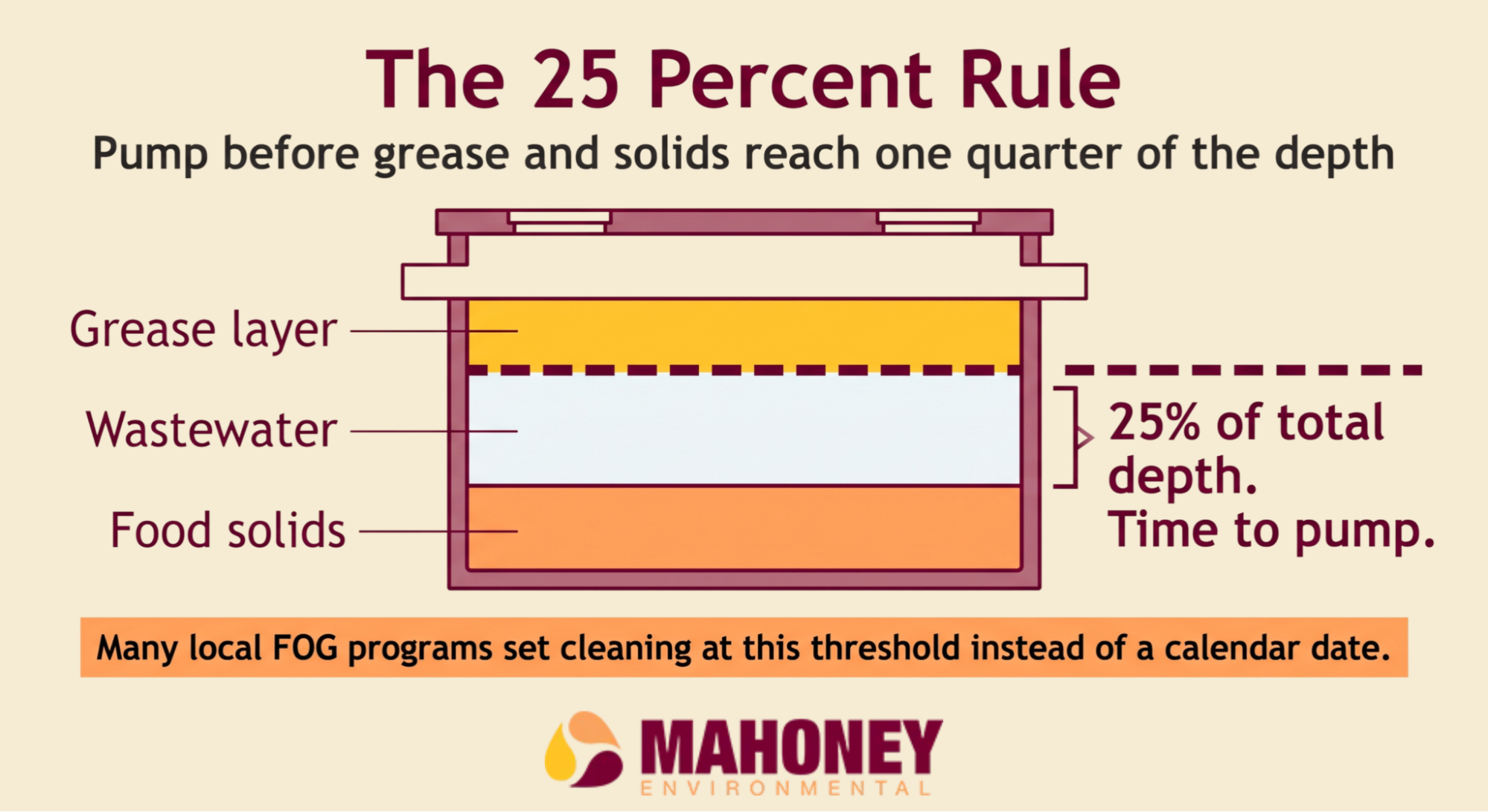
Worth checking your schedule against that. A trap hitting 25 percent in six weeks leaves you out of compliance for half of every quarter. Measure it once or twice, and you will know your kitchen’s actual interval.
What Records Do Inspectors Ask For?
Documentation is where well-run kitchens get written up. Your trap can be spotless and you still fail on regulatory compliance because the file is thin. Keep these where a manager can put hands on them in two minutes:
- Service manifests showing date, volume removed, and hauler information
- The hauler’s permit or license
- A maintenance log of in-house checks and measurements between pumpings
- Trap specifications, including size, model, and any city approval
- Correspondence with the sewer authority, including notices and how you resolved them
Retention periods vary, and three years is common. Keep a binder and a digital copy, because inspectors have a habit of arriving on the day the manager with the keys is off.
What Happens During an Inspection
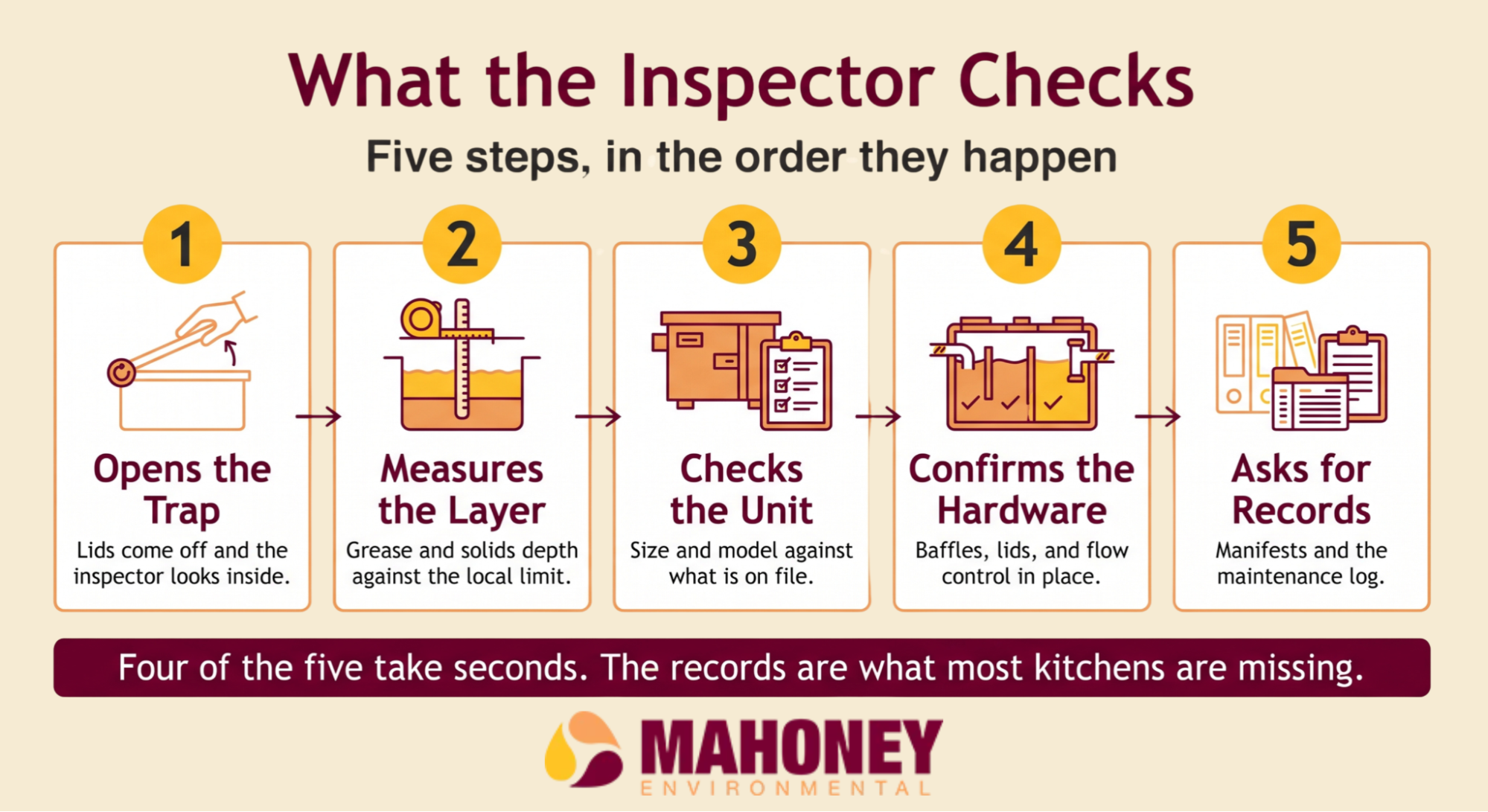
Inspections are short and fairly predictable. An inspector opens the trap, measures the grease and solids layer, checks the unit against what is on file, confirms the baffles and lids are in place for proper operation, then asks for your records.
Common Reasons Kitchens Fail
- Grease depth over the local threshold on the day of the visit
- No records, or records with months missing
- A trap too small for the fixtures tied into it
- Missing or damaged baffles, lids, or flow control devices
- Lids blocked by storage, pallets, or equipment
Compliance by Facility Type
Every food service facility works from the same playbook, and most also sit under health and safety regulations that overlap with the sewer rules. What changes is the obstacle.
- Small independents: nobody owns the task, so service slips the week the kitchen gets slammed.
- Chains: each location answers to a different ordinance, so intervals drift apart.
- Hotel kitchens: banquet and room service volume swings hard, which makes a fixed calendar schedule unreliable.
- Airport concessions: access windows are restricted and haulers need badging, so after-hours service takes planning.
- Stadium kitchens: heavy loads on event days and almost nothing in between, so volume beats time as the trigger.
Daily Habits That Support Compliance
Most of what keeps a trap inside the limits happens in daily operations, long before anything hits the drain. Good grease disposal habits stretch the interval between pumpings, which is money back in your pocket.
- Scrape plates and pans into the trash so food waste and fat stay out of the sink.
- Dry wipe greasy cookware and put strainers on every sink compartment.
- Keep used cooking oil out of the drain and in a dedicated collection container.
- Keep dairy products out of the disposal. Cream, butter, and cheese all add fat to the wastewater system.
- Train new hires the same way every time. Grease handling drifts with turnover.
Unpleasant odors around the dish area are usually the first sign a trap is overdue, and our article on why grease traps smell gets into those foul odors. Effective grease management is these habits plus a service schedule. Neither covers for the other.
Grease Trap Compliance FAQs
Who is responsible for grease trap compliance, the tenant or the landlord?
Responsibility for grease trap compliance usually sits with whoever holds the discharge permit or the food service license, typically the restaurant operator. Lease language can shift who pays, so read the lease and confirm with your sewer authority.
Can grease trap additives replace pumping?
Additives generally cannot replace pumping. Many FOG ordinances prohibit enzymes and emulsifiers outright, since they tend to move grease further down the sewer lines rather than take it out.
What happens if you fail a grease trap inspection?
Failing a grease trap inspection usually starts with a correction notice and a deadline, followed by fines or surcharges if you miss it. Repeat violations escalate from there, and some cities publish per-day penalties.
Put Your Grease Trap Service on a Schedule
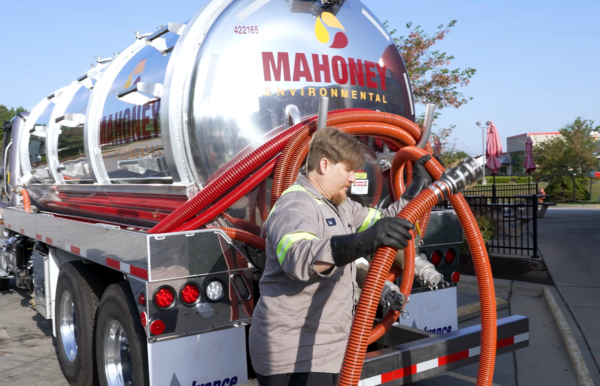
Compliance gets a lot simpler once cleaning runs on a recurring schedule and the records show up without anyone chasing them. That is the job Mahoney Environmental has done for commercial kitchens since 1953, and we now serve more than 90,000 food establishments nationwide.
Our grease trap cleaning service covers indoor traps and outdoor interceptors, scheduled maintenance, rodding and jetting of sewer lines, 24/7 emergency response, and inspection and history reports after every visit. Used cooking oil (UCO) goes out on the same route and comes back as renewable diesel and sustainable aviation fuel (SAF).
Call (800) 892-9392 or contact us to build a cleaning schedule around your kitchen’s volume, so compliance stops competing with the smooth operation of your kitchen.

 Call Us Now (800) 892-9392