Restaurant supply chain news in 2026 centers on three pressures: tariffs driving up food prices, persistent labor shortages across food distribution, and rapid adoption of supply chain software to manage the volatility. Together, they are reshaping how restaurant owners, restaurant managers, and restaurant operators plan, purchase, and protect margins.
This guide covers the current state of the restaurant supply chain, the biggest supply chain challenges facing the food industry today, and the best practices U.S. operators are using to build more resilient supply chain operations.
The Current State of the Restaurant Supply Chain
The restaurant supply chain in 2026 is more stable than it was two years ago, but far less predictable than pre-2020 norms. According to industry reporting from Restaurant Dive, food costs are expected to rise again this year, with beef leading the pressure and tariffs hitting various imports across the food supply chain.
Expert Market research cited by the Food Institute found that 76% of operators say rising ingredient costs are cutting into profits, and many cite supply chain volatility as a major obstacle. For many restaurant managers, the day-to-day reality is higher food prices, longer lead times from distribution centers, and less predictable delivery windows from logistics providers.
The bottom line: today’s supply chain issue is driven by tariffs, geopolitical tension, and structural labor gaps across the food supply chain, not a single disruption event. That means solutions have to be structural too.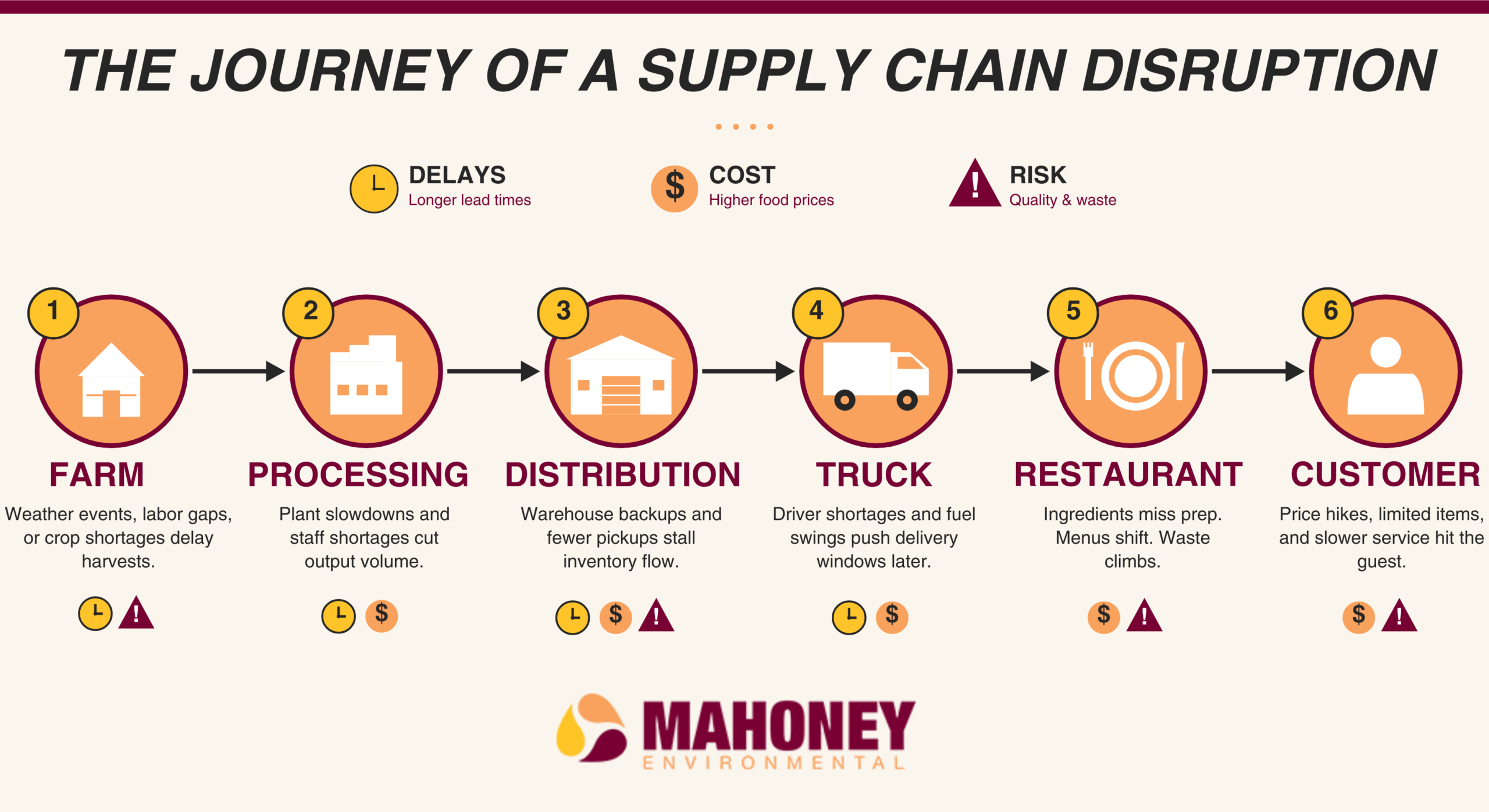
Top Supply Chain Challenges Facing Restaurants Today
Four forces are putting the most pressure on restaurant supply chain operations right now: cost volatility, labor shortages, equipment and raw materials delays, and perishable goods risk. Each one affects food prices, inventory levels, and customer orders in measurable ways.
Rising Food Prices and Tariff Pressures
Tariffs on imported goods have pushed up the cost of ingredients and supplies for restaurants. Imported produce, seafood, specialty oils, and paper goods have all seen volatile pricing. Restaurant operators are re-engineering menus around more profitable prime costs, trimming portions, and negotiating harder with food producers to protect margins.
Quick-service restaurant chains that buy in massive quantities can often absorb these costs better than independent restaurants or a new restaurant still building volume. Small operators feel the squeeze first, and many are passing increases to customers through menu price adjustments.
Persistent Labor Shortages
Labor shortage pressure continues to ripple through every layer of the food supply chain, from farms and processing plants to trucking fleets and distribution centers. The U.S. Bureau of Labor Statistics reports that the accommodation and food services sector still posts elevated turnover, and staffing gaps in trucking, warehousing, and food distribution remain a top bottleneck for restaurant operators.
Key labor-related supply chain impacts include:
- Slower unloading and routing at distribution centers
- Delivery delays from logistics providers and third-party carriers
- Reduced pickup frequency for waste streams, including used cooking oil
- Higher costs passed along from food producers and the livestock supply chain
- Fewer drivers available for last-mile food distribution in rural and suburban markets
Equipment and Raw Materials Delays
Restaurant owners planning expansions, renovations, or equipment replacements should expect longer lead times on key kitchen assets. Stainless steel, refrigeration components, and specialty fryers remain sensitive to global raw materials availability and shipping capacity.
Being proactive is the single best defense:
- Order replacement parts before you need them
- Pre-qualify backup vendors
- Avoid waiting until a critical piece of equipment fails.
If your preferred model is backlogged, adaptability matters more than brand loyalty during a supply chain crunch.
Perishable Goods and Food Waste
Perishable goods like produce, dairy, and proteins are the most exposed to supply chain disruption. A delayed truck or a rerouted shipment can turn inventory into food waste within hours. Poor visibility into inventory levels makes this worse, because kitchens either over-order to stay safe or under-order and run out mid-service.
Tightening the link between customer orders, par levels, and real-time inventory data is the most effective way to reduce both stockouts and waste.
How Advanced Technology Is Reshaping Restaurant Supply Chain Management
Supply chain software, data analytics, and traceability tools are now essential infrastructure for restaurant supply chain management. The National Restaurant Association and industry analysts consistently point to technology adoption as the single biggest lever for operational efficiency in 2026.
Supply Chain Software and Real-Time Visibility
Modern restaurant supply chain software gives operators a live view of stock, orders, and deliveries across every location. When point-of-sale data links directly to a distributor’s ordering system, restocking becomes close to automatic.
Core capabilities to look for include:
- Real-time inventory tracking across multiple units
- Automatic reorder triggers based on par levels and sales velocity
- Integration with accounting, POS, and kitchen display systems
- Supplier performance dashboards and delivery tracking
- Alerts for price changes, stockouts, and substitution risks
A restaurant chain uses this visibility to coordinate supply chain operations at scale, while independent restaurants can replace spreadsheets with a lightweight tool and save hours each week.
Data Analytics and Demand Forecasting
AI-powered data analytics now forecast demand based on weather, local events, holidays, and historical customer orders, flagging potential stockouts or delivery delays before they happen. Food companies plan to invest in AI and digital supply tracking systems in 2026, continuing a wave of adoption that cuts food waste, protects margins, and improves customer satisfaction.
FSMA 204 and Traceability
The U.S. FDA’s Food Traceability Rule under FSMA 204 requires better record-keeping for high-risk foods moving from farm to fork. Compliance is heavy lifting, but it also produces cleaner data, faster recalls, and stronger supplier accountability across the food supply chain.
Best Practices for Strengthening Your Restaurant Supply Chain
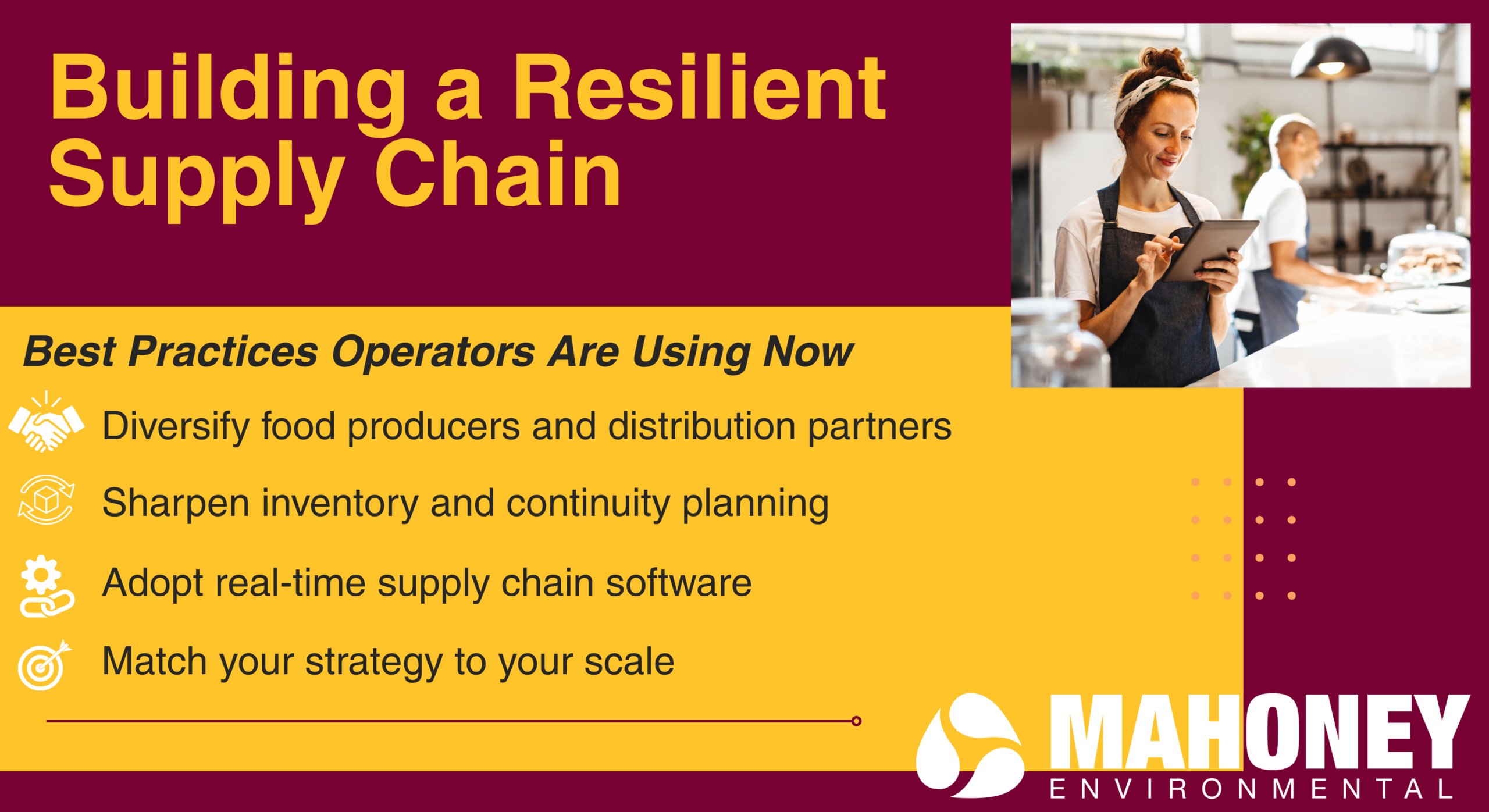
The most resilient restaurant operators in 2026 diversify suppliers, tighten inventory management, and plan for disruption before it hits. These best practices apply whether you run a single location or a national restaurant chain.
Diversify Food Producers and Distribution Partners
Single-source relationships are the fastest path to a supply chain crisis. When a natural disaster or labor disruption hits one supplier, restaurants with no backup lose revenue first.
Strengthen your sourcing with:
- Two qualified suppliers for every critical ingredient
- Relationships with local food producers, regional distributors, and supply chain expert exchange networks
- Backup contacts at grocery store and supermarket chain suppliers for commodity items
- Secondary logistics providers on file and ready to call
Sharpen Inventory Management and Continuity Planning
Inventory management sits at the center of restaurant supply chain management. Too much stock drives food waste; too little causes stockouts and stressed teams.
Strong practices come down to:
- Consistent counts of high-value and perishable goods with clear par levels
- First-in, first-out rotation in every walk-in and dry storage area
- Invoice audits against deliveries to catch short-counts and overcharges
- A 48 to 72 hour backup supply of shelf-stable essentials for storms, wildfires, or trucking disruptions
- A written continuity plan covering alternate sourcing for top ingredients and staff communication protocols
Match Your Strategy to Your Scale
Independent restaurants and restaurant chains face the same supply chain issues but respond differently. Independent restaurants and a new restaurant just opening should lean on local food producers, affordable cloud-based supply chain software, and menu flexibility so one ingredient shortage does not stop service.
A quick-service restaurant chain or multi-unit operator should centralize purchasing data, pre-qualify regional backup suppliers, and invest in advanced technology for forecasting and distribution center coordination.

Partner with Mahoney Environmental to Simplify One Part of Your Supply Chain
While you focus on managing food prices, inventory levels, and staffing, Mahoney Environmental takes one recurring piece of your back-of-house operations off your plate entirely. Since 1953, we have helped restaurants, grocery store supermarket chain kitchens, stadiums, and hotels across the U.S. manage their used cooking oil and grease trap needs on a reliable, scheduled basis.
Our services support smoother kitchen operations every day:
- Used cooking oil collection and recycling on a schedule that fits your volume, with oil recycled into renewable fuel
- Grease trap cleaning and maintenance for indoor and outdoor traps to prevent odors, backups, and code violations
- Cooking oil containers and automated systems designed and installed for your specific kitchen layout
- Fresh cooking oil delivery to keep fryers stocked without last-minute scrambles
Supply chain disruption may be the defining story of the restaurant industry in 2026, but your used cooking oil service does not have to be part of it. Mahoney Environmental delivers consistent pickups, responsive customer service, and a partnership built on 70-plus years in the business.
Call Mahoney Environmental today at 800-892-9392 or contact us online to build a cooking oil program your kitchen can count on.

 Call Us Now (800) 892-9392