The Short Answer: Grease trap sizing comes down to flow rate. Measure the volume of every fixture draining into the trap, convert that number to gallons per minute, then match it to a unit rated at or above the result.
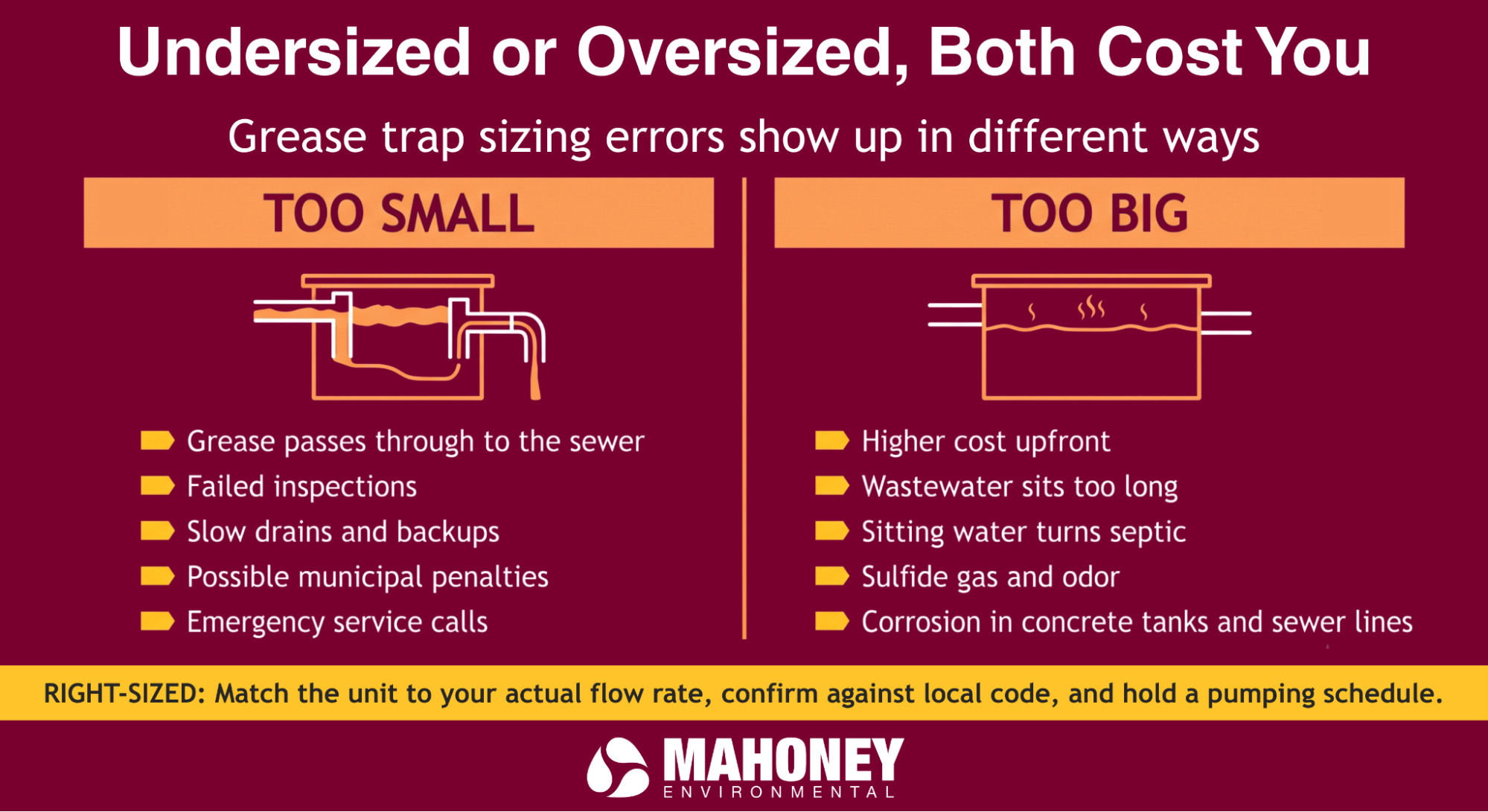
Sizing errors surface quickly. An undersized trap pushes fats, oil, and grease (FOG) straight through to the sanitary sewer system, which means failed inspections and eventually a backup in your pipe runs. The stakes are not theoretical. EPA reporting has identified grease as the most common cause of sewer blockages, at 47% of reported cases. Oversized units cost more upfront, and the waste can sit long enough to turn septic. The math is simple arithmetic that most restaurant operators can run in about ten minutes.
Two Types of Traps, Two Different Scales
Before any math, identify which unit you are sizing. This distinction causes more errors than the calculations do.
Indoor grease traps, also called hydromechanical grease interceptors, sit under a sink or nearby in the kitchen. They are rated by flow rate in gallons per minute, tested and rated under PDI Standard G-101. Common sizes run 10, 15, 20, 25, 35, 50, 75, and 100 GPM.
Gravity grease interceptors sit outside, usually underground, and are rated by gallon capacity. Common sizes run 300, 500, 750, 1,000, 1,500, and up.
A “20” and a “1,000” are not on the same scale. One describes how fast water moves through the unit; the other how much the tank holds. Note also that under the Uniform Plumbing Code, a gravity interceptor cannot be installed inside a building where food is handled, so larger operations put those units outdoors.
How to Calculate Flow Rate
Both device types start from the same number, which is the peak flow coming off your fixtures. Here is the standard method.
Step 1: Measure Each Fixture
Take the interior length, width, and depth of every fixture in inches. A three-compartment sink gets measured per compartment, then added together.
Step 2: Convert to Gallons
Multiply length by width by depth, then divide by 231. That gives you the fixture volume in gallons.
Step 3: Apply the Fill Factor
Nobody fills a compartment to the rim, and dishes displace water. Multiply by 0.75, the standard fill factor, to get the volume that actually drains.
Step 4: Divide by Drain Time
Divide that number by the drainage period, which is one or two minutes depending on your code. One minute is the conservative choice and gives you the higher flow rate.
The result is your flow rate in gallons per minute. Round up to the next available unit size. Never round down.
A Worked Example
Take one sink compartment measuring 24 inches long, 24 inches wide, and 12 inches deep.
- 24 × 24 × 12 = 6,912 cubic inches
- 6,912 ÷ 231 = 29.9 gallons
- 29.9 × 0.75 = 22.4 gallons of working volume
- 22.4 ÷ 2 minutes = 11.2 GPM
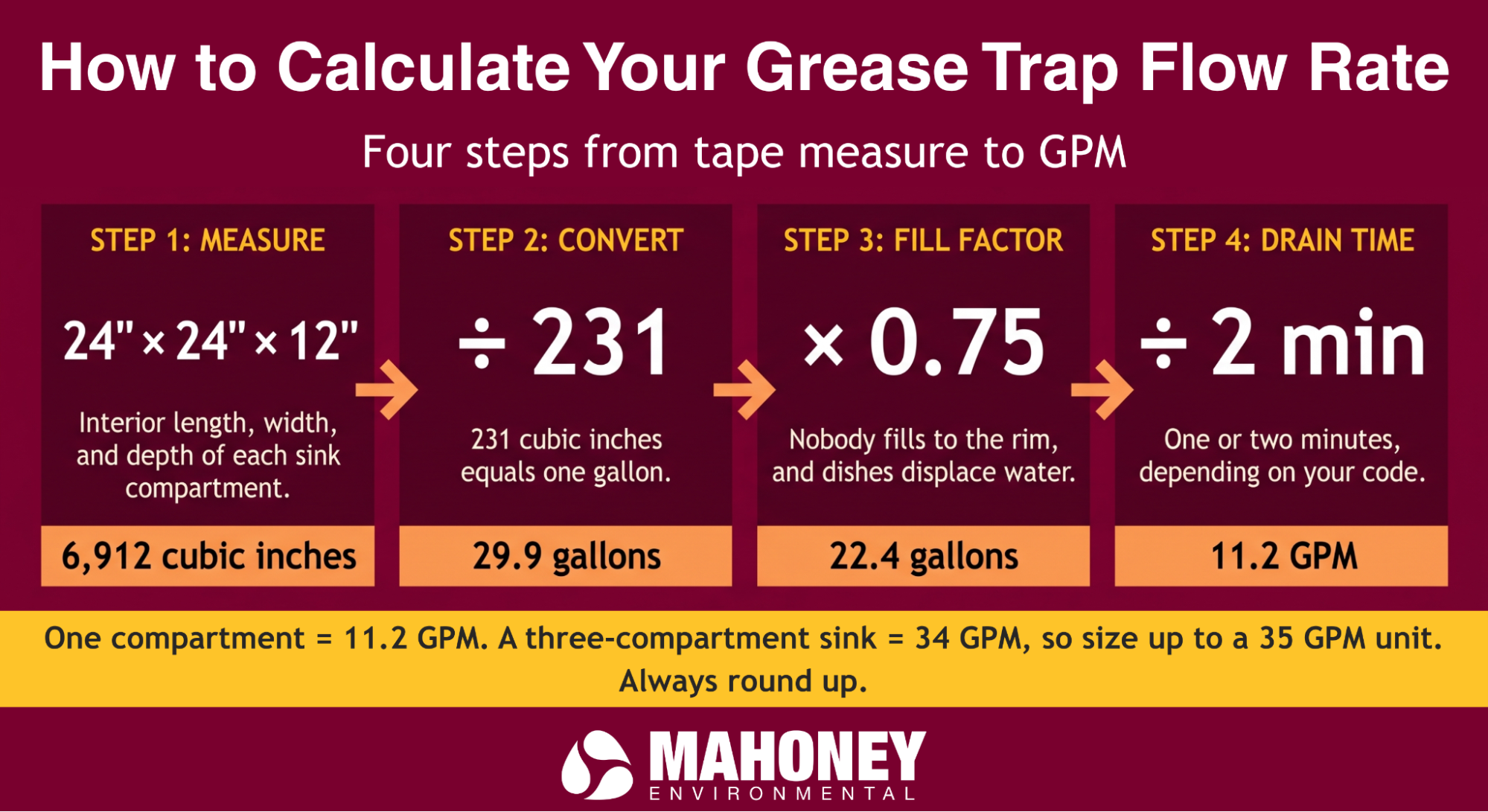
For a three-compartment sink, that comes to roughly 34 GPM total, which puts you at a 35 GPM unit. Add a pre-rinse sink or a food preparation sink on the same line, and the total climbs toward 50.
Sizing an Outdoor Interceptor
Gravity units use retention time instead. The standard is a 30-minute retention time, so total flow rate multiplied by 30 gives you minimum gallon capacity.
A kitchen running 25 GPM needs 750 gallons. At 50 GPM, you are looking at 1,500. The Uniform Plumbing Code sets 300 gallons as the floor for these units regardless of how small the operation is.
Many jurisdictions size gravity interceptors off drainage fixture unit tables instead of raw flow rate. Your construction plans examiner will tell you which method applies.
What Counts Toward Your Total
Sizing errors usually trace back to fixtures left off the list. Include everything on the grease waste line:
- Three-compartment sink, counting each compartment
- Pre-rinse sink and food prep sinks
- Dishwasher, which typically runs 15 GPM
- Mop sink and floor sink
- Any floor drain in the cooking or prep area
- Wok stations and tilt skillets
Leave off restroom fixtures and any drain that carries no grease. Those belong on the sanitary line, not through the trap.
One item requires care. A garbage disposal should not discharge into a grease interceptor. Ground food solids overwhelm the unit and fill the solids compartment fast. Many jurisdictions prohibit the connection, and others allow it only with a larger unit to compensate. Check before you plumb it.
Where Kitchens Get It Wrong
Sizing for the Equipment You Have Today
Kitchens change. A sandwich shop that adds a fryer two years from now will send far more grease down the same drain line, into a trap sized before that fryer existed. Size for the equipment you expect to run, not only what is in the kitchen on installation day.
Forgetting the Solids Compartment
The first compartment catches solid material before water moves toward the outlet. That compartment fills on its own schedule, separate from grease. A unit sized only on liquid volume will need pumping far sooner than the owner planned.
Assuming Bigger Is Always Safer
An oversized interceptor holds wastewater too long. Sitting water loses its oxygen and starts to rot, which produces sulfide gas. That gas smells, and over time it eats away at concrete tanks and the sewer lines downstream. Match the size to the load instead of buying the largest unit available.
Skipping the Flow Control Device
Indoor units need a flow control fitting on the inlet. It meters water into the trap at a steady rate, so grease has time to separate and float. Without one, a sink draining all at once shoves grease through the unit and out to the sewer system before it can be captured.
Your City Code Has the Final Say
Everything above reflects standard practice under the Uniform Plumbing Code. Your local authority can and often does require something different.
City code may set its own minimum size, require a longer retention time, or mandate an outdoor interceptor for any food service establishment above a certain seat count. Some jurisdictions also require a licensed plumber to stamp the sizing calculation before permits are issued.
Best practice is simple. Run your numbers, then call the plumbing inspector or sewer authority before you buy anything. A ten-minute phone call is cheaper than replacing a trap that fails inspection.
Getting Your Number Right
Measure every fixture on the grease line, convert to gallons per minute, and round up to the next size. Indoor units are rated by flow while outdoor interceptors are rated by gallon capacity. Local code beats any general formula, so confirm your number before you buy. Getting it right at grease interceptor installation saves your facility from slow drains and emergency calls later.
Sizing is only the start. Even a correctly specified grease trap fails once the compartments fill, which is why the pumping schedule matters as much as the number on the spec sheet.
That is the part Mahoney Environmental handles. We have served commercial kitchens since 1953, and grease trap cleaning sits alongside used cooking oil recycling as one of our core services. We set the pumping interval around your actual load rather than a generic calendar.
Have a size in mind and want a second opinion before you buy? Or already have a unit that needs a service schedule? Call (800) 892-9392 or send us the details through our contact page, and we will tell you what your kitchen actually needs.

 Call Us Now (800) 892-9392