A grease trap and a grease interceptor do the same job, separating fats, oils, and grease (FOG) from your wastewater before it reaches the sewer. The difference is size and flow. A grease trap is the smaller under-sink unit for lower-volume kitchens, while a grease interceptor is the larger in-ground unit built for high-volume kitchens.
Grease and water do not mix, and the sewer system is where that turns into your problem. Wastewater from a commercial kitchen carries FOG from sinks, dishwashers, and floor drains. When that grease cools, it hardens inside the sewer line and causes blockages, sewage backups, and sanitary sewer overflows. Most cities require a grease retention device for any food service establishment to stop FOG at the source.
What a Grease Interceptor Does
A grease interceptor is a pretreatment device that sits between your kitchen drains and the sewer. It slows wastewater down so grease can separate before the water continues to the sanitary sewer system. Without one, FOG flows straight into the sewer pipes and hardens downstream.
Both the small under-sink unit and the large in-ground tank are grease retention devices that do the same basic job. The difference is how much they hold and how fast they can handle flow.
A Quick Note on Terminology
Plumbing code has moved away from the term grease trap. Under the modern plumbing code, both devices are types of grease interceptors:
- A hydromechanical grease interceptor (HGI) is what most people still call a grease trap. It is the smaller unit that uses baffles, flow control, and air entrainment to separate grease quickly inside a compact tank.
- A gravity grease interceptor (GGI) is a larger in-ground tank that relies on gravity and longer holding time to separate grease.
How Grease Traps and Grease Interceptors Work
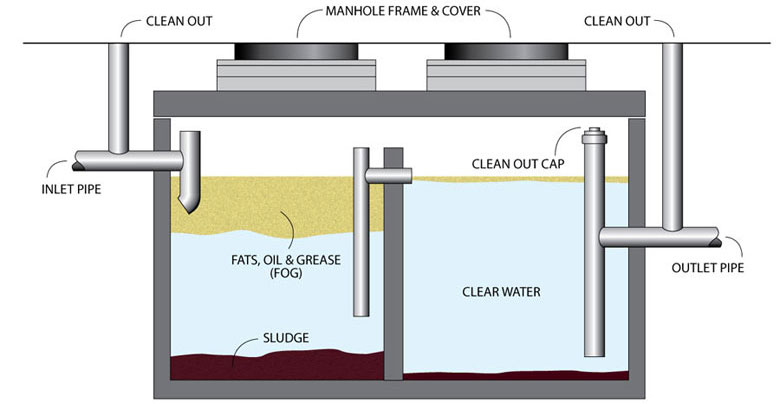
The science is the same in both units. Grease is lighter than water, so it floats. Solids are heavier, so they sink.
- Wastewater flows in from your sinks and equipment.
- The water cools and slows down inside the tank.
- FOG rises and collects at the top.
- Food scraps and solids settle to the bottom.
- Cleaner water in the middle passes out to the sewer system.
A hydromechanical grease interceptor speeds this up with flow control and baffles, which is how it separates grease in a smaller tank.
The Main Differences
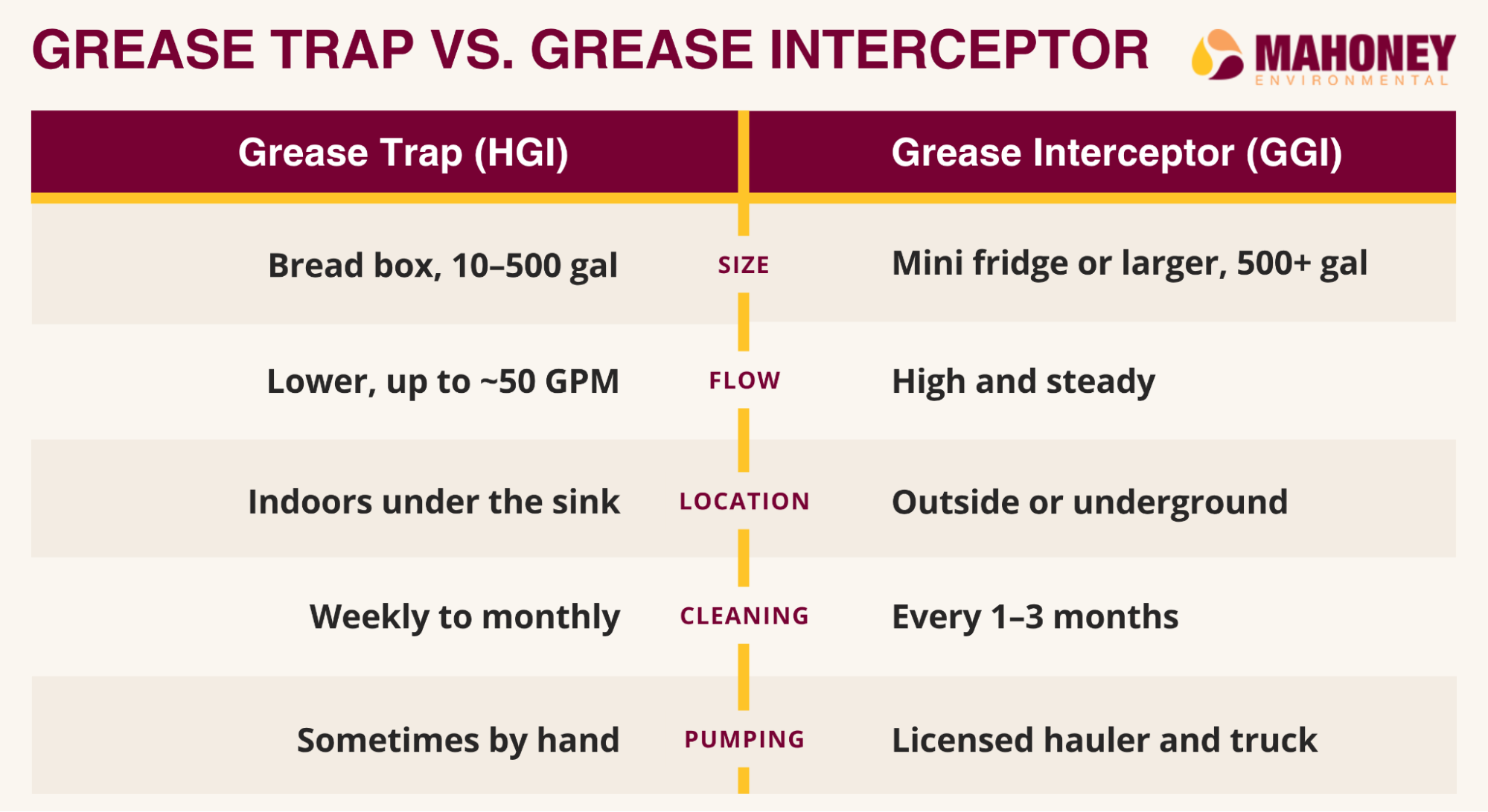
Both protect your drain line, but they are built for different kitchens. Here are the main differences.
Size and Grease Capacity
- Grease trap (HGI): about the size of a bread box, usually 10 to 500 gallons.
- Grease interceptor (GGI): about the size of a mini fridge or larger, usually 500 gallons and up.
A grease interceptor holds far more grease, which is why high-volume kitchens need one.
Flow Rate
- Grease trap: suited to lower-flow kitchens, often rated up to around 50 gallons per minute.
- Grease interceptor: built for the steady, high flows of large kitchens above that range.
Your fixtures and peak flow decide which side of that line you fall on.
Location
- Grease trap: installed indoors, beneath the kitchen sink or on the floor near the fixtures it serves.
- Grease interceptor: installed outside or underground, away from where customers sit, since the unit can give off odors.
Local code may set rules for where a grease interceptor can go.
Cleaning Schedule
- Grease trap: cleaned more often because it fills fast, often weekly to monthly.
- Grease interceptor: cleaned less often because of its size, often every one to three months.
Both follow the same trigger, covered below.
Material
- Grease trap: steel, plastic, fiberglass, or PVC. A rusted or cracked unit cannot be repaired and has to be replaced.
- Grease interceptor: concrete, fiberglass, or PVC, built to hold up to outdoor conditions for years.
Pumping and Cleaning
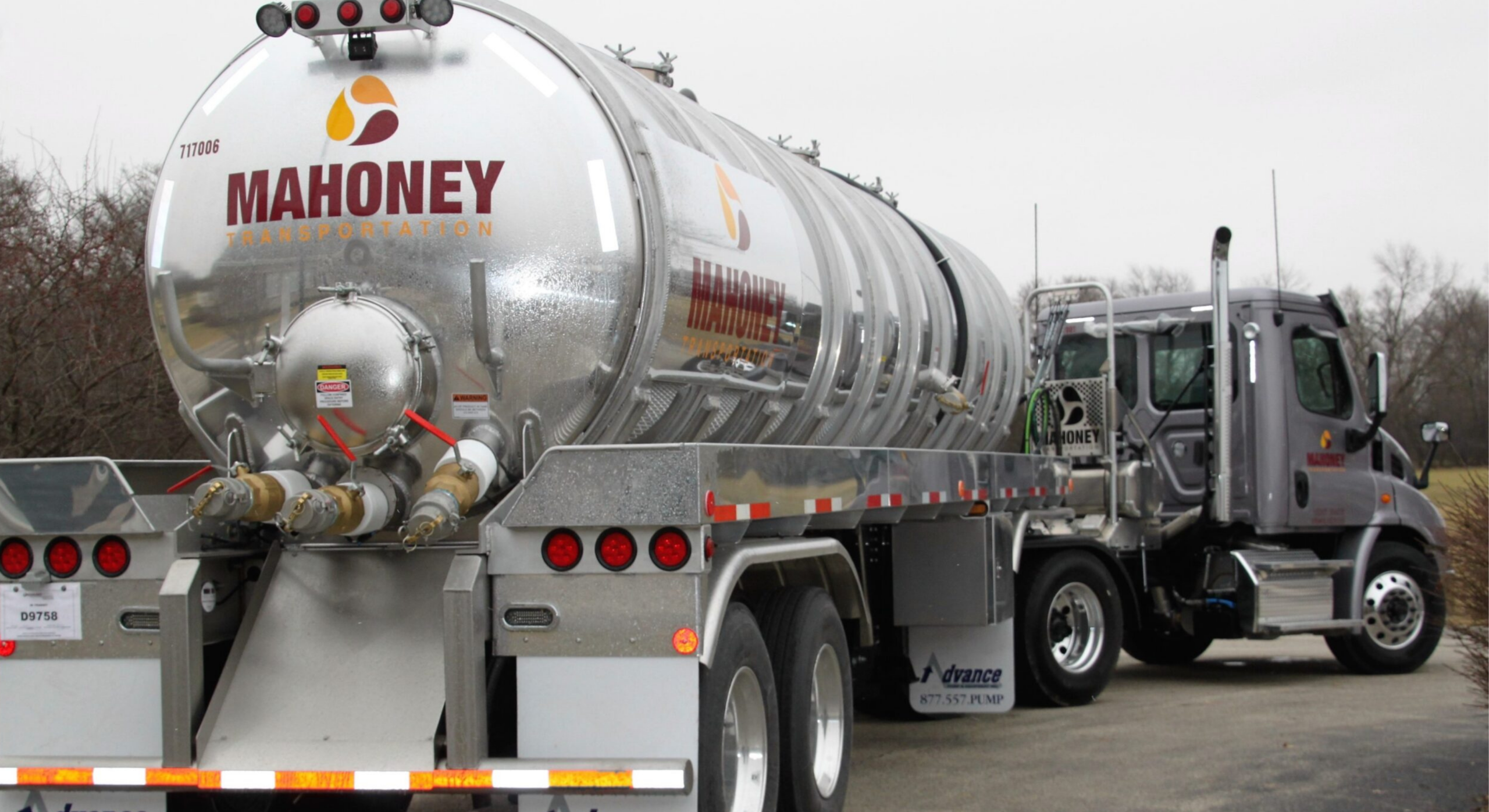
A grease trap can sometimes be cleaned by hand. A grease interceptor needs a licensed liquid waste hauler. The hauler runs a large hose that pumps grease from the unit into a tank truck, then disposes of it properly. Your waste hauler can also keep the records your city wants to see.
When to Clean a Grease Trap or Interceptor
Both follow the 25 percent rule. When grease and solids reach one-quarter of the tank’s total depth, the unit is considered full and needs to be pumped out. Past that point, grease starts escaping into the sewer, which is how blockages and sewage backups begin.
Watch for these signs between cleanings:
- Slow drains
- Odors near sinks or floor drains
- Grease showing in the unit or its line
Work with your grease management company on a set schedule rather than waiting for warning signs. A maintenance log keeps you ready for inspection.
Sizing a Grease Interceptor
Sizing is set by your local plumbing code, and getting it right matters for performance and for the approval letter you need from the city. Two common methods are used.
- Drainage fixture unit (DFU) method. Each connected fixture has a DFU value. You add up the DFU values of the fixtures that drain into the unit to find the size.
- Flow rate method. You find the peak flow in gallons per minute, then multiply by a set retention time, often 30 minutes for a gravity grease interceptor under the International Plumbing Code, to land on the grease capacity you need.
Only fixtures that discharge FOG connect to the interceptor: three-compartment sinks, mop sinks, dishwashers, food waste grinders, and floor drains. A hand wash sink and restroom waste usually stay on the sanitary waste line and do not run through the grease interceptor. Adding a garbage disposal or food waste grinder raises solids loading and means more frequent cleaning.
Cities often require a sample port on the outlet so inspectors can test what leaves the unit. Some local formulas also factor in kitchen square footage or seat count. Confirm the sizing calculation and placement with your local code before you buy, because many municipalities now require a gravity grease interceptor for any new restaurant regardless of fixture count.
Which One Does Your Kitchen Need?
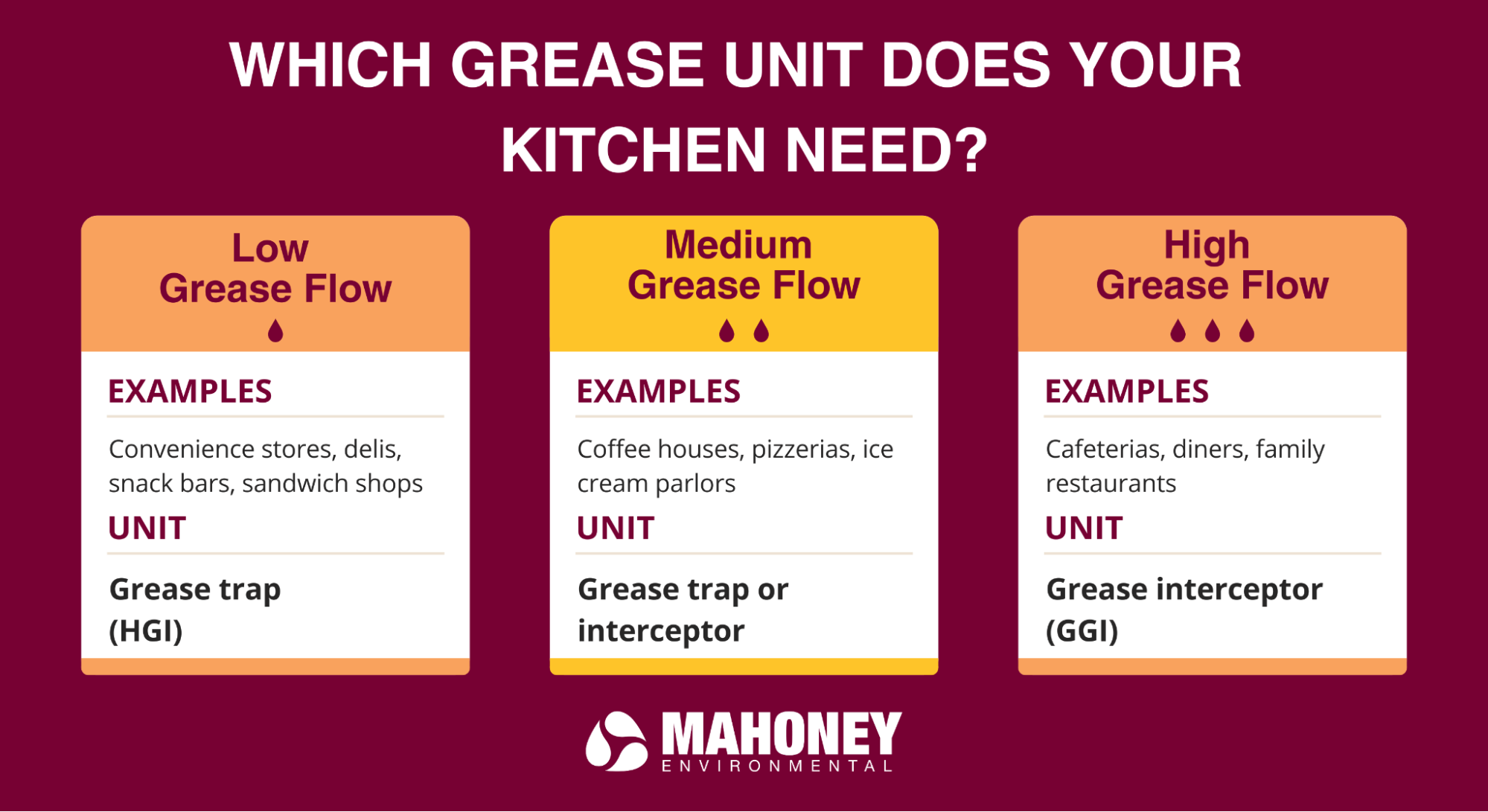
The right choice comes down to how much grease you produce and what your local code requires. A rough guide by grease output:
- Low grease flow: convenience stores, delis, snack bars, sandwich shops.
- Medium grease flow: coffee houses, pizzerias, ice cream parlors.
- High grease flow: cafeterias, diners, family restaurants.
Lower-flow kitchens often run a hydromechanical grease interceptor under the sink. Higher-flow kitchens, or any new build in cities that require it, need a gravity grease interceptor outside. Interceptors are not limited to food service, either. A vehicle maintenance facility uses a similar interceptor to keep oil out of the sewer. When you are unsure, custom equipment sized to your kitchen takes the guesswork out.
Why Grease Traps and Grease Interceptors Matter
A working grease interceptor protects more than your own kitchen. It keeps FOG out of the wastewater collection system, which protects the sanitary sewer and the wastewater treatment plant downstream.
- Prevents sewage backups that flood your kitchen and force a shutdown
- Reduces sanitary sewer overflows that send untreated wastewater into streets and waterways
- Protects public health and the local environment, including nearby rivers and streams
- Keeps you compliant with your city’s FOG program and its best management practices, which helps you avoid fines
Grease is the most common cause of sewer blockages, and a single hardened clog can put untreated wastewater into streets and waterways. Staying ahead of the amount of FOG leaving your kitchen with the right pretreatment system and a regular cleaning schedule costs far less than a backup or a fine.
Grease Trap and Interceptor Service From Mahoney
Both a grease trap and a grease interceptor do one job: separate FOG from your wastewater so it never reaches the sewer. The right unit comes down to your kitchen’s flow, your fixtures, and your local plumbing code. Whichever you run, cleaning on the 25 percent rule keeps it working and keeps you compliant.
Mahoney Environmental has handled grease for commercial kitchens since 1953. We provide grease trap cleaning on a set schedule, used cooking oil (UCO) recycling, and custom equipment sized for kitchens of any size, backed by a coast-to-coast network serving 90,000+ customers. If you are not sure whether your kitchen needs a hydromechanical or a gravity grease interceptor, our team can size the right unit to your fixtures and local code. One scheduled service keeps a backup from ever starting.
Need a grease trap or grease interceptor cleaned, sized, or serviced? Contact Mahoney Environmental or call (800) 892-9392 to set up service for your restaurant.
 Call Us Now (800) 892-9392