As warmer temperatures approach, commercial kitchens need a thorough cleaning checklist to maintain used cooking oil (UCO) containers. Proper maintenance ensures operational efficiency, reduces risks like spills and contamination, and supports compliance with safety regulations. Staying on top of these daily and monthly cleaning tasks protects equipment longevity, prevents costly repairs, and promotes a safer, more sustainable kitchen environment.
Why Spring & Summer Maintenance Matters
Spring and summer bring heavier service volumes, higher ambient temperatures, and added scrutiny from health inspectors. Both factors place pressure on UCO storage, grease traps, and fryers, making a structured restaurant kitchen cleaning schedule essential during these months.
Rising Temperatures, Rising Concerns
Warmer weather accelerates oil degradation inside storage tanks and indoor containers, increasing odors, attracting pests, and raising fire risk near fryers. Heat also speeds the breakdown of fats, oil, and grease (FOG) inside plumbing lines, which can lead to clogs and sewer backups. A consistent cleaning checklist helps foodservice operators reduce these seasonal hazards before they disrupt service.
Operational Efficiency
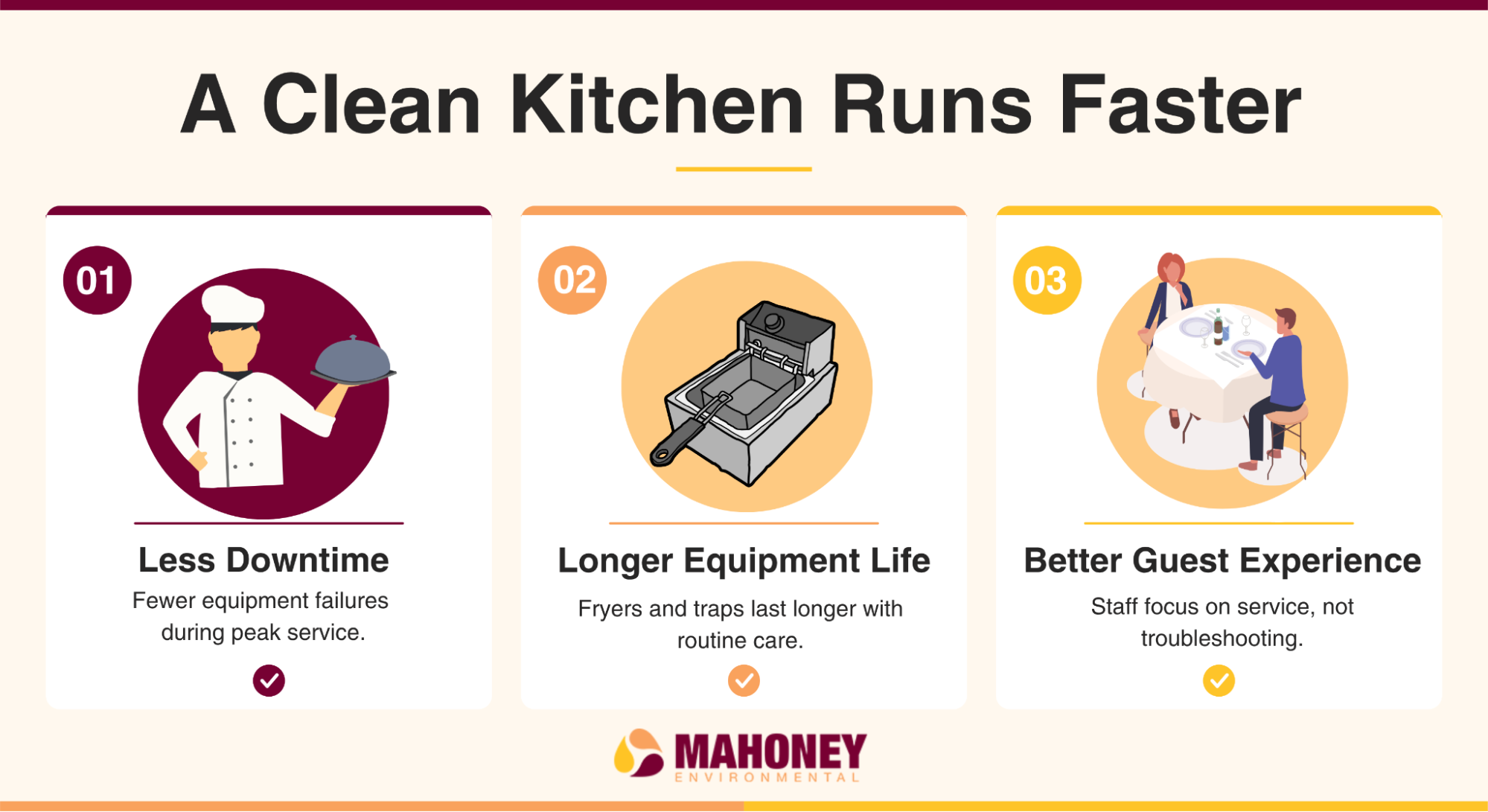
A clean kitchen runs faster. Regular cleaning routines around UCO containers, fryers, and grease traps reduce downtime, support equipment longevity, and keep service flowing during peak periods. When daily cleaning tasks are documented and assigned, staff spend less time troubleshooting and more time serving guests, which directly improves operational efficiency and customer satisfaction.
The Problem: Risks of Neglecting Used Cooking Oil Maintenance
Neglected UCO containers create safety, compliance, and cost problems that compound quickly in warmer months.
Safety Hazards
Overflowing or damaged UCO containers cause slip hazards, burn risks, and grease buildup near cooking lines. Loose lids, cracked drums, and unsecured storage areas put staff at risk and create conditions that can lead to foodborne illness if contamination spreads. A consistent cleaning task list and clear safety standards reduce these incidents and protect the entire commercial kitchen.
Environmental and Compliance Issues
Improper UCO disposal can trigger fines from local water authorities and complicate health inspections. Oil that breaks down in heat is more likely to leak into drains, contributing to FOG discharge and stormwater violations. Following a kitchen cleaning checklist that documents pickup schedules helps foodservice establishments meet hygiene standards and avoid regulatory penalties.
Increased Operational Costs
Skipping monthly cleaning and routine inspections leads to hidden costs: emergency plumbing calls, equipment failures, contaminated oil batches, and food waste. Each issue pulls budget and staff time away from service. A documented cleaning routine helps restaurant owners catch small problems early, protecting both margins and equipment longevity.
Step-by-Step Guide: How to Maintain Your Used Cooking Oil Containers
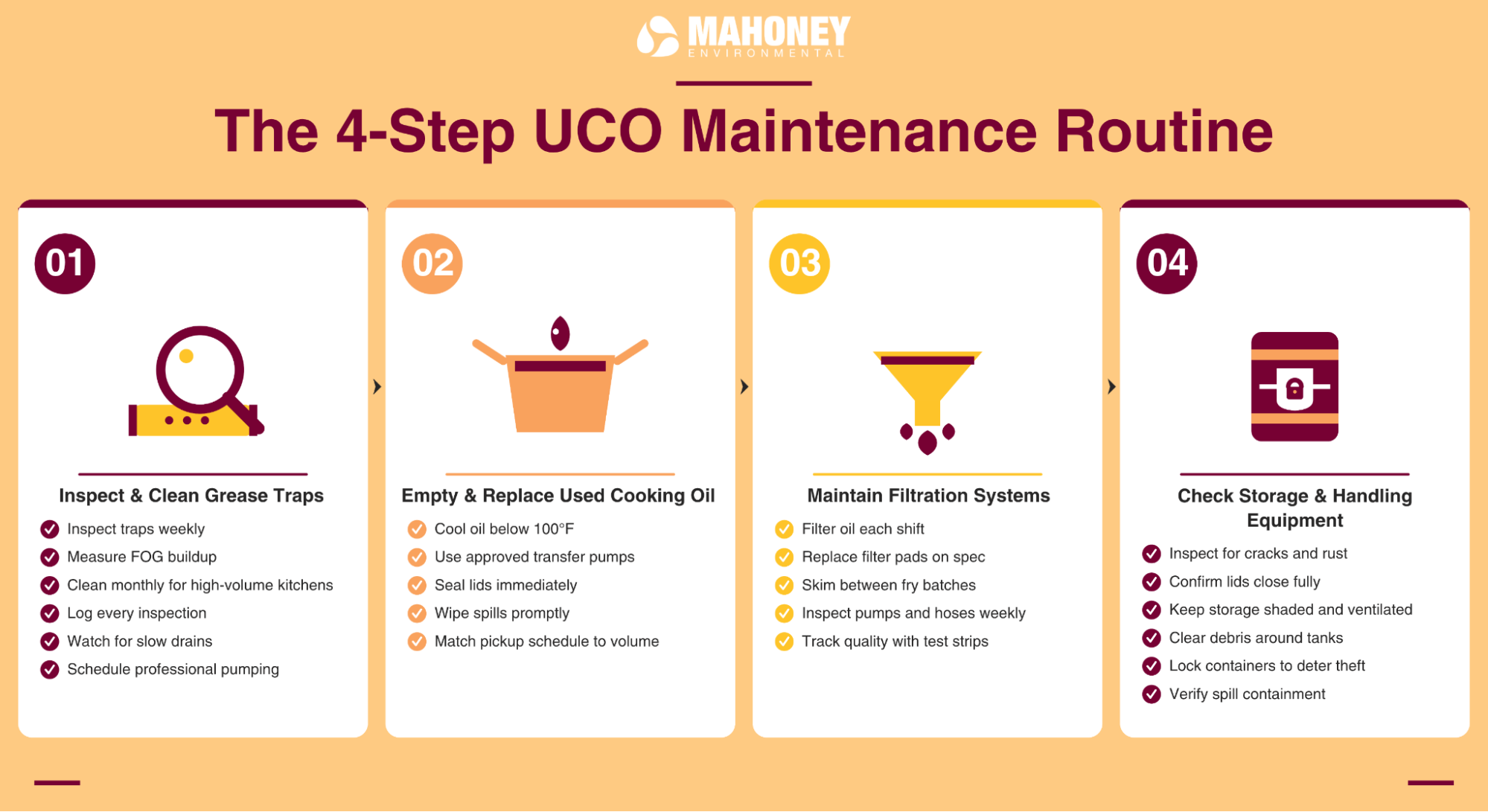
Step 1: Regular Inspection and Cleaning of Grease Traps
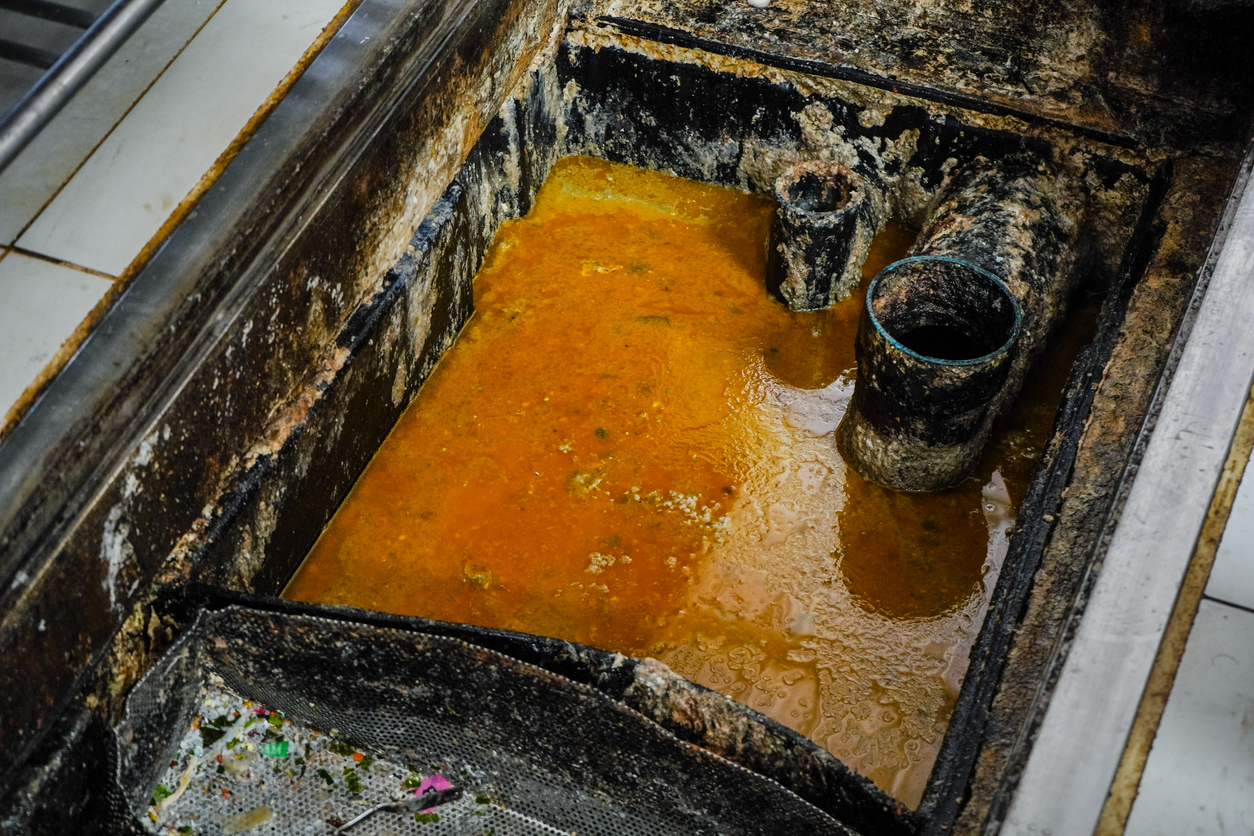
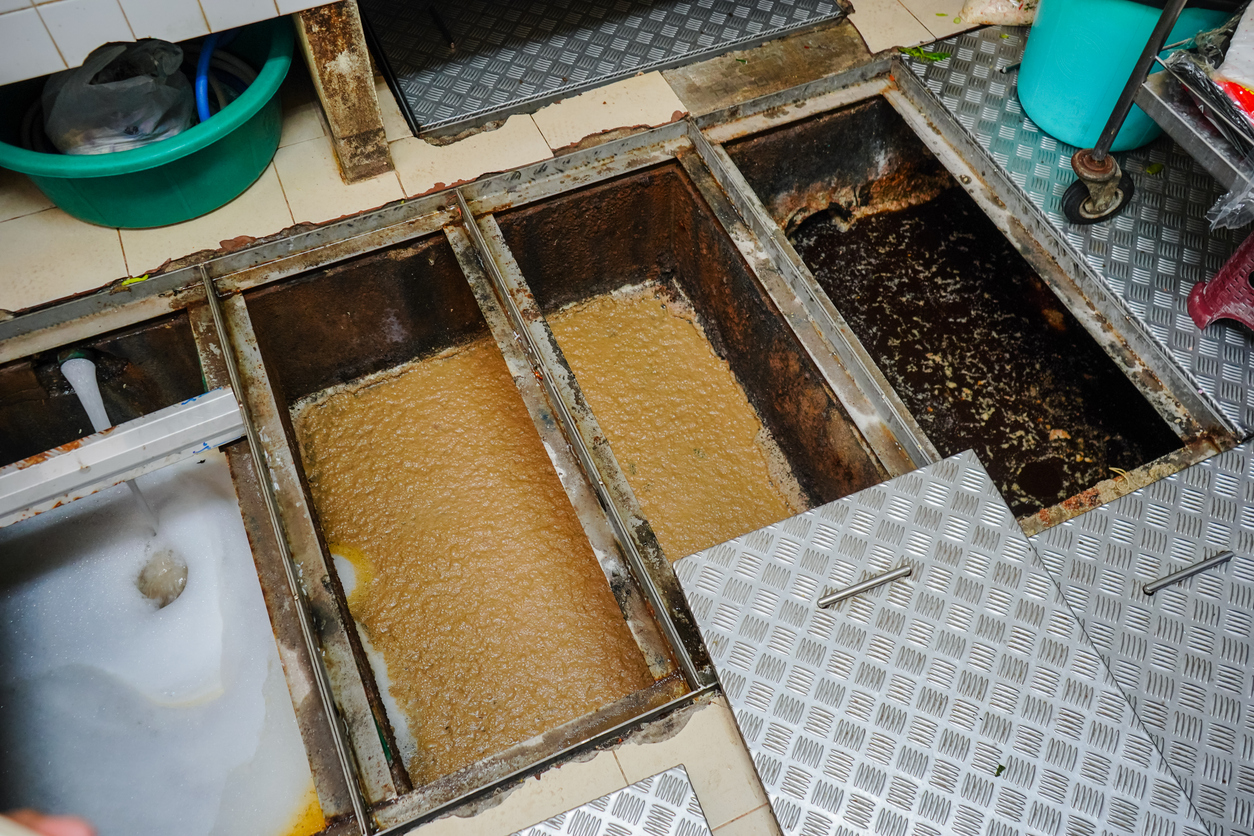
Inspect grease traps weekly during spring and summer, and clean them on a schedule that matches kitchen traffic. High-volume restaurants may need monthly cleaning, while smaller operations can extend intervals. Document every check on a cleaning checklist so staff can track buildup, identify recurring issues, and stay ahead of health inspections.
Quick checklist:
- Inspect traps weekly during peak season
- Measure FOG buildup at each check
- Clean monthly for high-volume kitchens
- Log every inspection and cleaning
- Watch for slow drains as an early warning
- Schedule professional pumping as needed
Pro Tip: Pair grease trap inspections with daily cleaning tasks at closing so issues are caught before the next service.
Step 2: Safely Empty and Replace Used Cooking Oil
Drain fryers only after oil has cooled to a safe temperature. Transfer UCO into a sealed indoor container or outdoor storage tank using approved equipment. Schedule pickups with Mahoney Environmental so containers never overflow, especially during summer months when oil volume increases and heat accelerates spoilage inside storage areas.
Quick checklist:
- Cool oil below 100°F before draining
- Wear heat-resistant gloves and aprons
- Use approved transfer pumps or caddies
- Seal lids immediately after transfer
- Wipe spills from floors and fryer exteriors
- Confirm pickup schedule matches oil volume
Step 3: Maintain Oil Filtration Systems
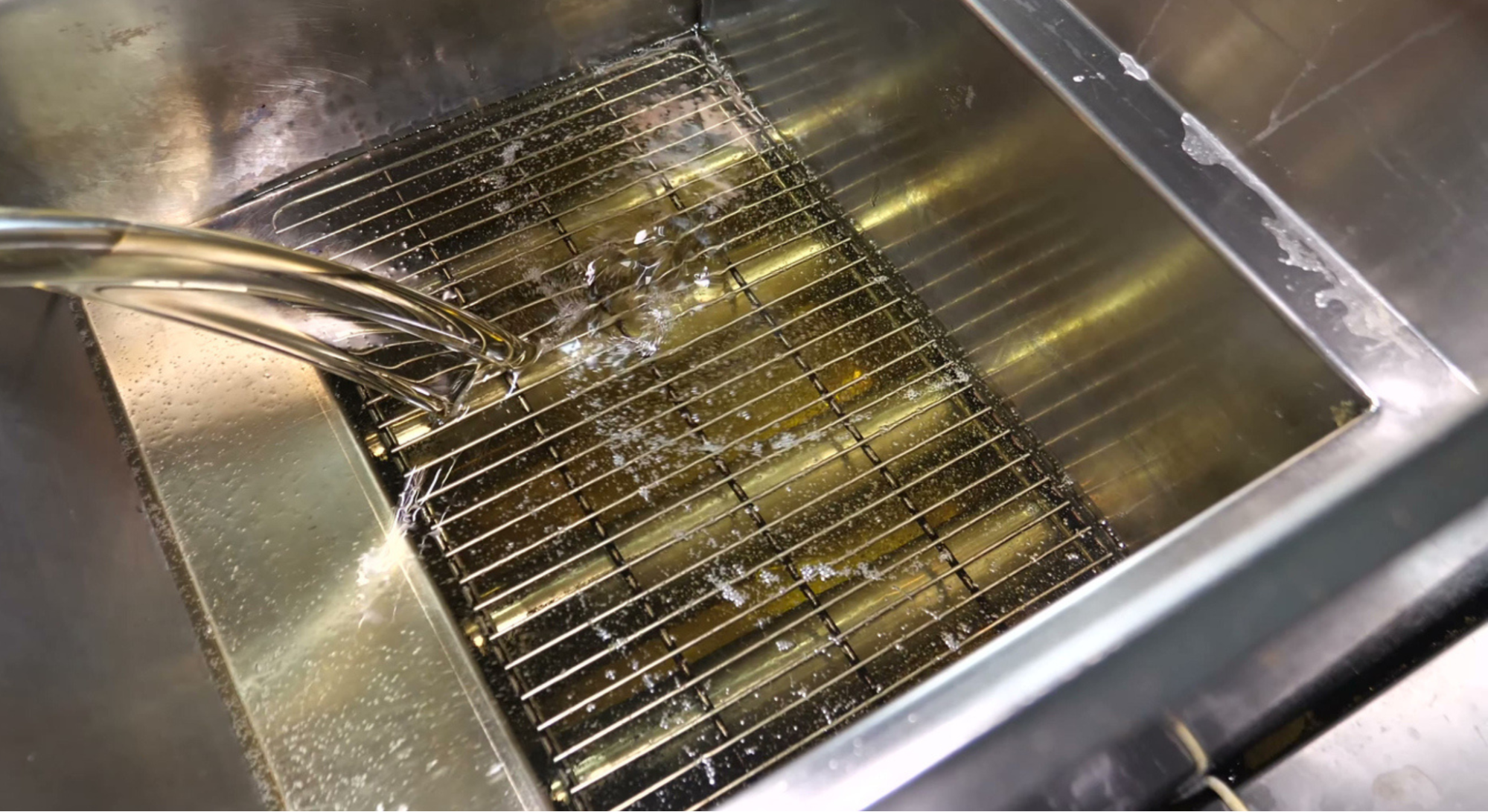
Clean filtration systems daily and replace filter media according to manufacturer guidance. Well-maintained filters extend fry oil life, reduce food particles in the cooking medium, and support consistent food quality. Build filter checks into weekly cleaning routines so equipment stays efficient and fryers continue producing reliable results through peak summer service.
Quick checklist:
- Filter oil at the end of each shift
- Replace filter pads per manufacturer specs
- Skim food particles between fry batches
- Inspect pumps and hoses weekly
- Track oil quality with test strips
- Document each filtration cycle
Step 4: Check Oil Storage and Handling Equipment
Inspect indoor and outdoor UCO containers for cracks, corrosion, and lid integrity. Keep storage areas dry, well-ventilated, and away from heat sources. Secured, labeled containers reduce theft risk and prevent cross-contamination. Regular checks support compliance with safety regulations and keep the storage area aligned with hygiene standards expected by health inspectors.
Quick checklist:
- Inspect containers for cracks and rust
- Confirm lids close fully and lock if equipped
- Keep storage areas shaded and ventilated
- Clear debris around outdoor tanks
- Lock or secure containers to deter theft
- Verify spill containment is in place
Best Practices and Controls for Efficient Used Oil Management
Control 1: Labeling and Tracking Oil Containers
Label every UCO container with contents, fill date, and pickup status to prevent mix-ups between fresh and used oil. Digital tools and tracking systems make it easier to monitor oil levels, schedule pickups, and document compliance. Clear labeling reduces operational mistakes and gives restaurant owners a verifiable record for audits and health inspections.
Control 2: Staff Training on Proper Oil Disposal
Train staff on UCO handling, fryer maintenance, and emergency spill response as part of regular cleaning routines. Reinforce protocols during onboarding and refresh quarterly. Written procedures, posted near fryers and storage areas, give kitchen teams clear, actionable steps for safe disposal, supporting both food safety and a safer working environment.
Why Work with a Professional Partner? Mahoney Environmental’s Tailored Solutions
Customized Service for Your Kitchen’s Needs
Mahoney Environmental designs UCO collection programs around each foodservice operator’s volume, layout, and schedule. Our professionals provide indoor containers, outdoor tanks, and scheduled pickups that match real kitchen demand. This tailored approach reduces overflow risk, supports compliance, and integrates cleanly into existing restaurant cleaning checklist workflows.
Efficiency and Peace of Mind
A reliable UCO partner removes uncertainty from waste oil management. Mahoney Environmental handles pickup scheduling, equipment maintenance, and documentation, so foodservice operators can focus on service and customer satisfaction. The result is fewer disruptions, cleaner storage areas, and a kitchen that consistently meets safety standards through every busy season.
Frequently Asked Questions
How often should grease traps be cleaned in summer?
Inspect weekly and clean every one to three months, depending on volume.
What temperature is safe for draining used cooking oil?
Below 100°F. Hot oil causes burns and can damage containers.
Does warm weather affect UCO storage?
Yes. Heat speeds oil breakdown and increases odor and fire risk.
What are the compliance risks of improper UCO disposal?
Fines, failed inspections, and stormwater violations.
How does regular cleaning improve kitchen efficiency?
It reduces downtime, extends equipment life, and prevents emergency repairs.
Who provides commercial UCO collection?
Mahoney Environmental offers nationwide pickup, equipment, and compliance support.
Stay Ahead of Spring & Summer Demands
A documented spring and summer cleaning checklist protects more than equipment. It protects staff, guests, and margins. By inspecting grease traps, maintaining filtration systems, training staff, and partnering with a trusted UCO recycler, foodservice establishments stay compliant, efficient, and prepared for peak service.
Contact Mahoney Environmental to build a tailored cleaning and pickup program for your commercial kitchen.

 Call Us Now (800) 892-9392