The Short Answer: Cooking oil filtration removes the food particles and sediment suspended in your oil, which keeps that oil usable far longer. Filter daily and use the right filter media: paper, mesh, or powder that traps debris, matched to your volume.
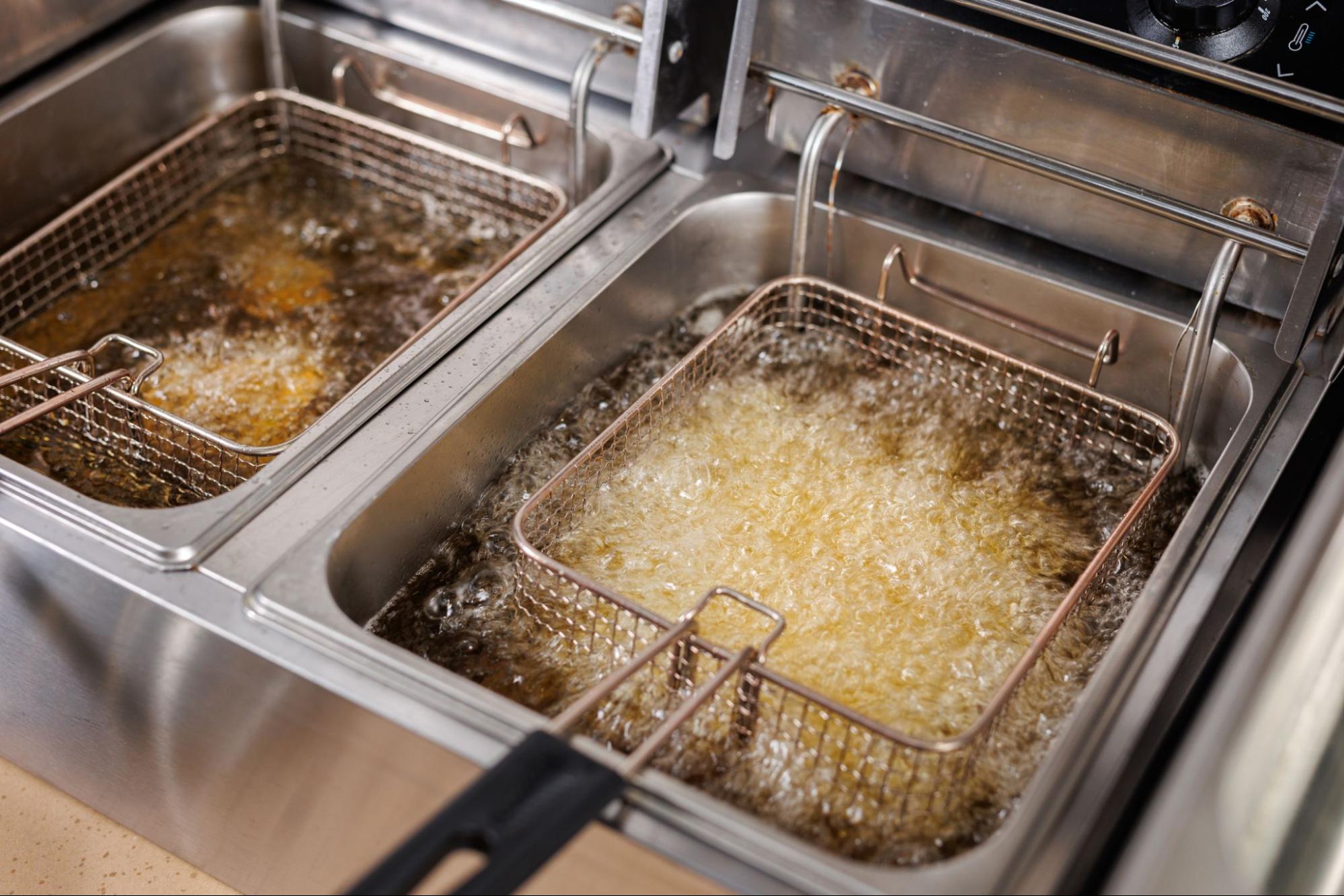
Fryer oil is one of the larger running costs in any high-volume kitchen. Drain a fryer too early and you discard oil that still has usable life in it. Most frying oil does not fail because it wears out. It fails because it gets dirty. Filtration removes the debris that accelerates that breakdown, so you purchase oil less often and hold food quality steady between changes.
What Breaks Fryer Oil Down
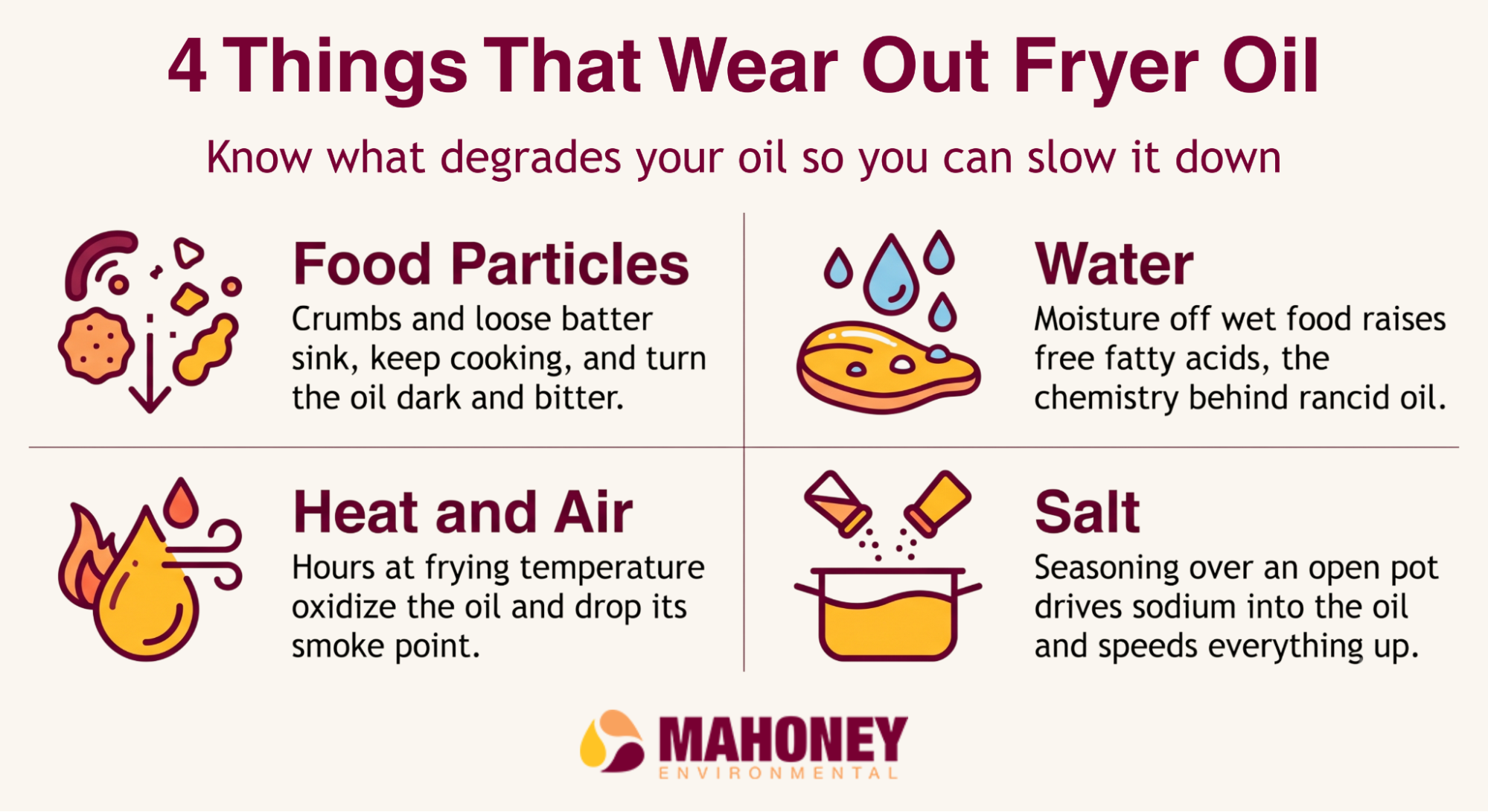
Hot oil degrades over the course of a shift. Four factors account for most of it.
- Food particles: Breading and batter sink and continue frying at the bottom of the pot. They darken the oil and turn it bitter.
- Water: Moisture from food reacts with hot oil and raises the free fatty acid level, a primary reason oil goes rancid.
- Heat and air: Long hours at high temperatures oxidize the oil.
- Salt: Salting food over an open fryer introduces sodium directly into the oil and speeds the process.
Fine particulates accumulate quickly. Debris that settles near the burner tubes or heat exchanger scorches and chars, which contaminates even the fresh oil you add. Fried food begins tasting off, the oil smokes at a lower temperature, and product quality declines. Filtration addresses the particle problem, and that is the variable you control.
What Filtration Does for Your Oil
Filtration passes your frying oil through a filter that captures suspended solids and allows the clean oil through. Removing that debris slows the chemical reactions that degrade oil. The results:
- Longer oil life
- Cleaner oil and more consistent food quality
- Lower annual oil spend
- Fewer smoke point and off-flavor problems
Treat filtration as fryer maintenance you can measure. A kitchen filtering on a set schedule gets substantially more service from the same oil than one filtering occasionally. Across a high-volume line, that produces real cost savings by the end of the month.
How to Filter Fryer Oil
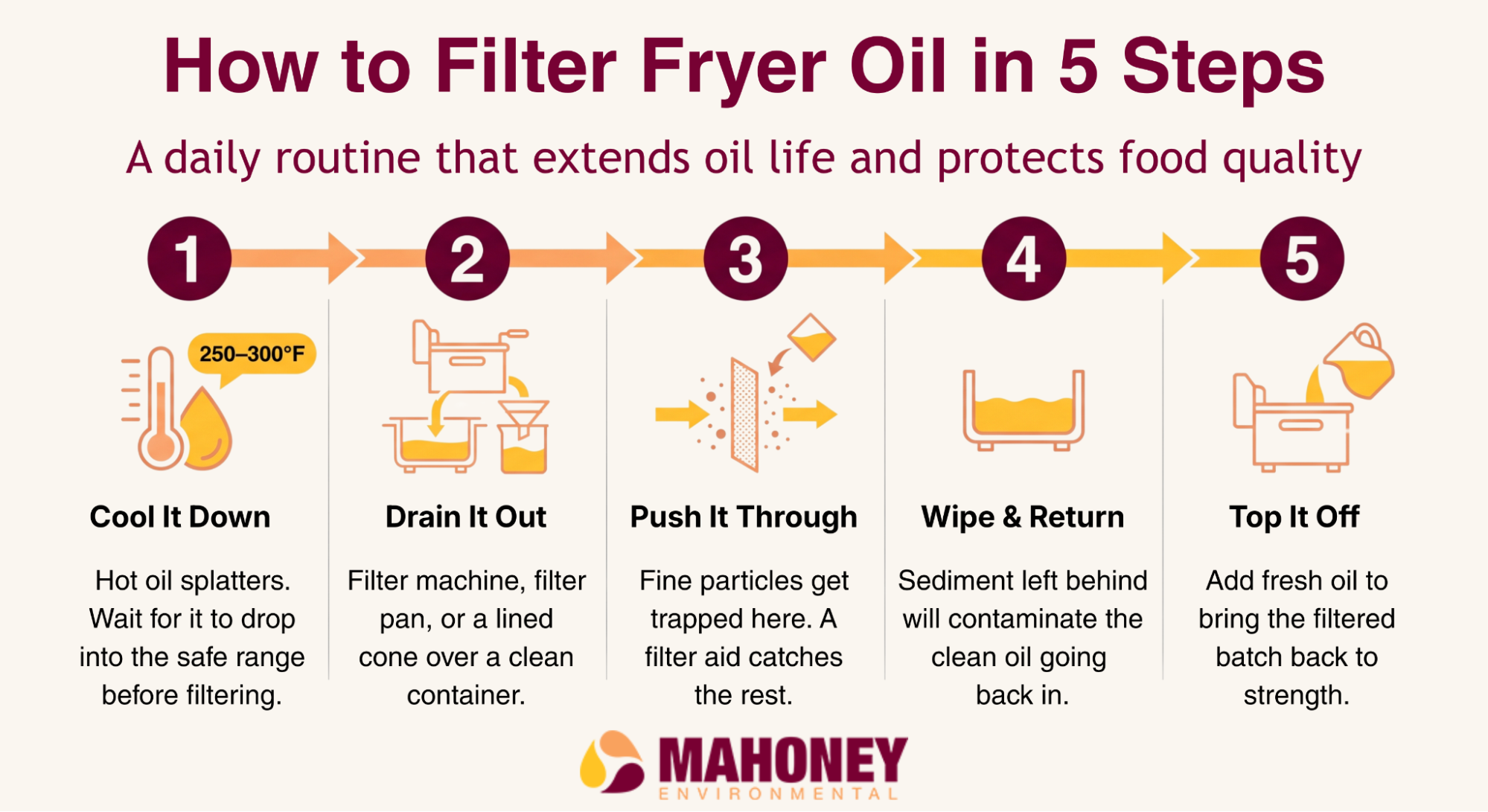
The routine is straightforward once staff have it down. Most commercial kitchens follow the same sequence.
- Cool the oil to a safe working range. Filtering oil at frying temperature is dangerous. Let it drop to roughly 250 to 300°F, warm enough to flow freely without splattering.
- Drain the oil into your filter setup. That may be a portable fryer oil filtration machine, a built-in filter pan, or a filter cone lined with a paper envelope over a separate container.
- Run it through the filter media. The media captures fine particles. Some systems add a filter aid or filter powder to capture particulate a standard filter misses.
- Clean the fryer, then return the filtered oil. Clear the sediment from the bottom of the fryer before the clean oil goes back in.
- Top off with fresh oil. Filtered oil plus a measured amount of new oil restores overall quality.
Larger kitchens rely on an electric fryer oil filter machine that automates most of these steps. Smaller operations manage with a coarse filter and a suitable filter cartridge.
Choosing the Right Filter Media
The filter media does the actual work, so match it to how heavily you fry. Common options:
- Filter cones and pads: A cone-shaped paper filter or flat pad. Inexpensive and simple to use, best suited to smaller fryers.
- Filter bags and cartridges: A filter bag or filter cartridge seated inside a machine, built for higher kitchen volume.
- Filter powder or filter aid: A fine powder that spreads across the filter and captures very fine particulates a plain screen cannot hold. Sold in single-use packets sized to your fryer.
- Stainless steel screens: A reusable coarse filter for the first pass. Effective on large debris, less so on fine particulates.
Select your filtration medium based on frying volume. A pizza shop frying wings a few times a day needs nowhere near the setup of a diner running french fries all day. When buying oil filters online, evaluate the specifications rather than the price, and treat any affiliate link promising outsized results with skepticism. A proven filter aid or oil stabilizer helps, though no additive substitutes for clean filter media and a daily routine.
How Often Should You Filter?
For most fryers, once daily is the minimum. Higher-volume operations filter more frequently.
Match Filtering to Your Volume
- Light use: once, at the end of the day.
- Steady use: once or twice per shift.
- Heavy use: every few hours.
Signs the Oil Needs Replacing
Oil has reached the end of its service life when filtration no longer improves it. A dark color that will not clear, persistent foaming, a smoky odor at normal frying temperatures, and food that tastes off all indicate the oil is spent rather than simply dirty. A free fatty acid test strip gives a measurable read on that decision instead of a visual guess.
A Note on Oil Type
Vegetable oil is the standard choice for most commercial fryers. Specialty products such as cold-pressed oil are formulated for dressings and finishing rather than deep frying, so keep those out of the deep fryer.
Handling the Oil You Cannot Save
Filtration extends oil life, but every batch eventually reaches the end of it.
Where Used Oil Should Not Go
Spent oil does not belong down a drain, in the trash, or in a household hazardous waste bin at a municipal drop-off site. That last one trips up operators who assume the oil is a regulated waste. It is not. Poured into a sink, it hardens in your pipes and coats the grease trap. Left standing in the back of the house, it becomes an odor and pest problem.
Recycling Turns It Into Fuel
Used cooking oil is a recoverable resource rather than waste. Collected and processed, it becomes renewable diesel and sustainable aviation fuel (SAF). Store spent oil in a sealed storage container or the bin your recycler provides, and let a scheduled pickup clear it on your regular collection day.
The Bottom Line for Your Kitchen
Filtration is the least expensive way to protect your fryer oil and the food coming out of it. Cool the oil, run it through filter media suited to your volume, and hold a daily schedule. Kitchens that stick to that routine buy oil less often, and the food stays consistent between changes.
When the oil is finally spent, Mahoney Environmental collects it. We have handled used cooking oil (UCO) recycling for commercial kitchens since 1953. As a licensed EPA recycler, we process that oil into renewable fuel through a coast-to-coast service network.
Ready to set up UCO recycling or fresh oil delivery? Call Mahoney at (800) 892-9392 or reach us through our contact page to build a schedule around your kitchen.

 Call Us Now (800) 892-9392