 Atlanta, Georgia

Used Cooking Oil Pickup and Recycling Services in Atlanta, GA
At Mahoney Environmental, we provide reliable restaurant grease pickup and disposal services across Atlanta, Georgia.

Grease and spent fryer oil build up fast in an Atlanta kitchen, and neither one waits for a convenient moment. Mahoney Environmental has picked up both for foodservice operators since 1953.
Our crews handle used cooking oil (UCO) collection, grease trap pumping, and the on-site equipment that keeps the two separate, serving commercial kitchens across the airport corridor, Buckhead, Midtown, Decatur, and the northern suburbs. We are a licensed EPA recycler; every gallon leaving your kitchen is weighed and recorded, and that oil is refined into renewable diesel and sustainable aviation fuel (SAF).
What Atlanta’s Grease Management Program Requires
Fats, oils, and grease (FOG) sit in the regulatory column here, not only the maintenance column. The City of Atlanta Department of Watershed Management administers a grease management program covering permits, maintenance, and monitoring for any food service facility discharging into the city sewer system. Three things need to be in place:
- A grease trap or interceptor sized for the kitchen and approved by the city, with existing units field-verified before plan approval
- Grease disposal through a permitted hauler, with manifests retained
- Pumping and cleaning records you can hand an inspector on the spot
Miss on the records and the exposure turns financial. Counties across the metro run their own FOG ordinances too, so a kitchen in Marietta or Alpharetta answers to a second set of local regulations. Slow drains, a foul odor at the dish pit, or wastewater coming up through a floor sink almost always trace back to a trap that filled past working capacity a while ago.
Atlanta-area kitchens on our routes include:
Used Cooking Oil Collection and Recycling in Atlanta
How quickly oil breaks down depends on what you fry and how often, which is why a standard pickup interval rarely fits. We set frequency against actual fryer output, so a high-volume kitchen off Peachtree may need weekly oil collection while a corporate cafeteria holds fine on a monthly route. When the truck arrives, the driver pumps the UCO out of your storage tank without anyone on staff touching it.
What we collect heads to a Mahoney processing facility for screening and refining, where water, food waste, and other contaminants come out before the oil becomes feedstock for renewable fuel. Worth stating plainly, used cooking oil is not hazardous waste and does not belong in a hazardous waste disposal stream or a dumpster bound for landfill waste. Proper handling before pickup protects its value, since water and debris in an open bucket drag the quality down.
Each Atlanta cooking oil collection program includes:
- Schedule built to volume: Pickup frequency based on fryer output instead of a default interval
- Tank level tracking: Monitoring so your storage tank never reaches capacity between visits
- Licensed hauling and processing: EPA-licensed transport from your back door to a Mahoney plant
- Equipment installed and serviced: Containers and handling systems we specify, set up, and maintain
- Gallon documentation: Reported volumes for audits, compliance filings, and sustainability reporting
Handing this to a licensed cooking oil collector clears the drop-off search off your list and keeps hot oil away from your staff. Frying costs tend to level out once filtration and storage are set up correctly, and the environmental impact is simple to report when the recycled oil comes back as renewable diesel and SAF instead of liquid waste.
Grease Trap Cleaning and Pumping for Atlanta Commercial Kitchens
Everything a grease trap does depends on slowing water down. Baffles inside the tank hold wastewater long enough for FOG to rise, solids to drop, and the cleaner layer between them to leave through the outlet pipe. Capacity is the limit. Once grease and settled solids take up roughly a quarter of the tank, separation stops working, FOG continues into the sewer line, and the plumbing upstream starts to close. Our page on how grease traps work gets into the details.
Consequences of a Neglected Grease Trap
- Wastewater on the kitchen floor in the middle of a dinner rush
- Odor around the dish area that carries into the dining room
- Sanitation findings written up at your next health inspection
- After-hours pumping billed at after-hours rates
- Penalties tied to a gap in your service record
What Our Atlanta Grease Trap Services Include
- Routine grease trap pumping: Intervals set by tank capacity and how fast your menu loads it
- Complete pump-out and repair: All FOG, food waste, and solids removed, plus work on baffles, lids, and worn hardware
- Rodding and jetting: Drain lines and sewer lines opened back up after buildup has narrowed them
- Grease interceptor service: Maintenance on the larger outdoor tanks behind high-volume operations
- Grease trap inspections: A written condition report at every visit, which surfaces plumbing issues before they stop service
- Emergency response: Around-the-clock crews for overflows, clogs, and sudden backups
- Compliance support: Service records and reports formatted for your inspection file
How Often Should an Atlanta Kitchen Pump Its Grease Trap?
Monthly to quarterly covers most operations, with the 25 percent threshold deciding the exact timing. Separation falls apart once grease and solids claim a quarter of the tank, so that point rather than the calendar is what triggers service. Fried-food volume moves the date up, a bakery or sandwich-driven menu pushes it out, and a small undersink unit reaches the line well before a large outdoor interceptor does.
Day-to-day habits buy time as well. Have the dish crew scrape plates into the bin before anything hits the sink, and keep cooking oil out of the drain completely, down to the small amounts left in a sauté pan. A grease trap treats nothing. It stores what it collects until our vacuum trucks pull it out. Our preventing backups page lists the rest of the practices worth setting as kitchen policy.
Cooking Oil Containers and Automated Systems for Atlanta Kitchens
Hand-carrying hot oil from a fryer to a container causes a large share of back-of-house burns and nearly every spill. Our equipment takes that walk out of the process, with indoor and outdoor configurations to match the space available.
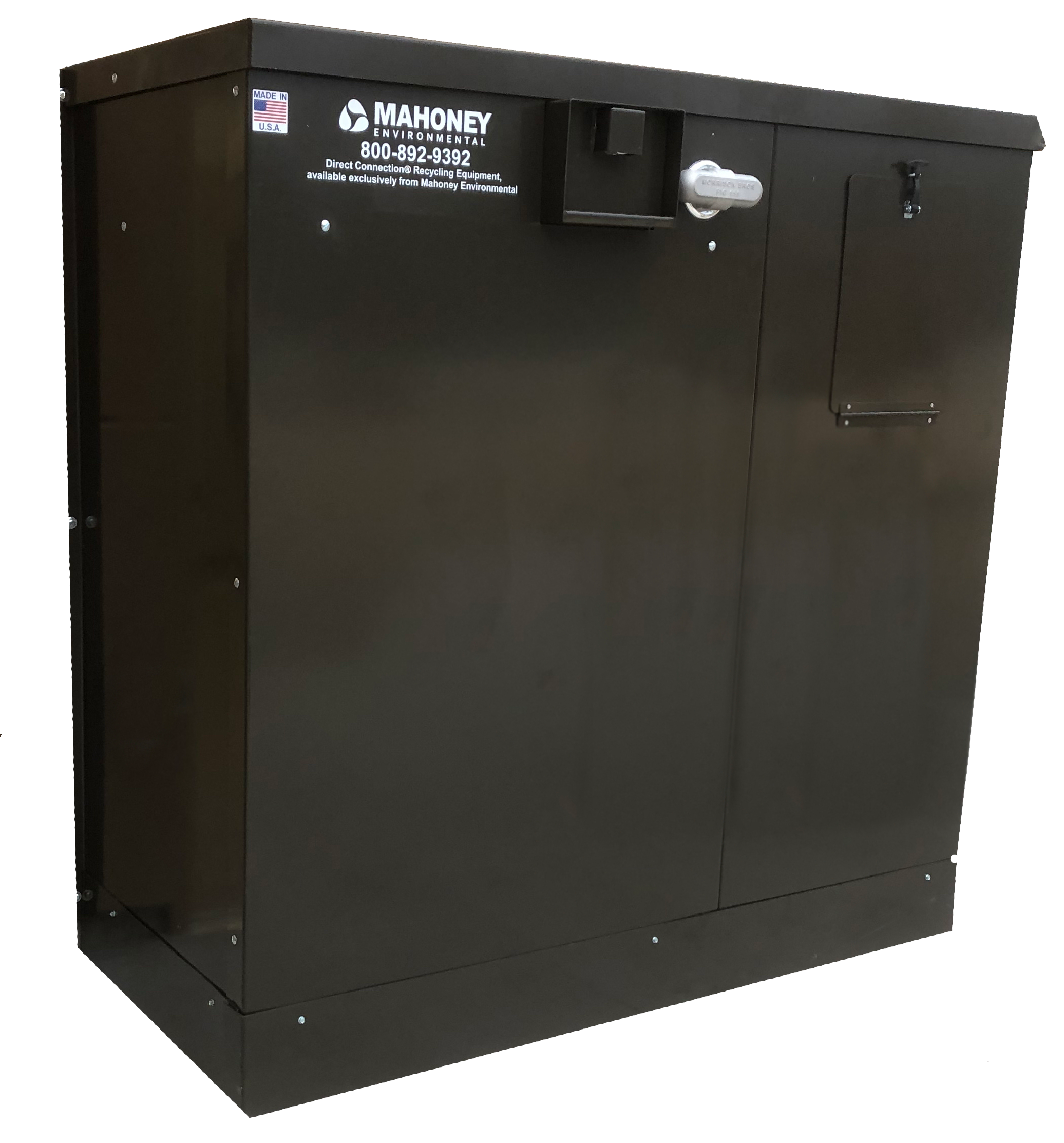
- Direct Connection Recycler System: Fixed piping connects the fryer bank to indoor or outdoor storage. A switch or lever moves the oil, and nobody lifts a bucket.
- Indoor System: An interior storage tank piped to each fryer, paired with a portable filter machine that keeps oil cleaner and extends fry life.
- Heated Outdoor Bulk Container: Insulated exterior storage fitted with a level sensor, a filter screen at the fill point, and an anti-theft lock. (Available in select markets.)
- Standard Storage Systems: Sealed bulk containers that screen debris at the opening, sized for a busy kitchen depositing oil by hand.
- Custom Equipment: Tanks, piping, and controls engineered around the specific needs of a kitchen no standard unit suits.
Available models include the MES Inside 183, MES Inside 352, DC 48, DC 72, and DC 600, and caddies and shuttles cover in-kitchen transport where fixed piping is not practical. Because used cooking oil carries resale value, our outdoor tanks use ported access rather than an open lid, which makes siphoning much harder. Mahoney also runs a grease theft program alongside customers and local law enforcement.
Why Atlanta Operators Stay with Mahoney
Routes in the metro: Our crews cover Fulton, DeKalb, Cobb, and Gwinnett, working under the same Watershed Management requirements your inspector enforces.
Since 1953: Seven decades in foodservice, doing this one job.
Nothing subcontracted: Equipment, collection, processing, and the finished fuel stay under Mahoney, so no outside hauler sits between your kitchen and the recycler.
Reliable service: Technicians show up on the scheduled day, which is what keeps tanks below capacity and traps below the 25 percent line.
Answered after hours: Grease traps rarely back up during business hours, so our line stays open around the clock.
Set Up Cooking Oil Pickup or Grease Trap Service in Atlanta
Oil collection, grease trap cleaning, and the equipment behind both run under a single schedule and a single invoice. Call (800) 892-9392, and we will build the program around your fryer count, service hours, and compliance calendar, or contact us online to get started.
Request a Quote | Schedule Service (Current Customers) | Contact Us
Mahoney Environmental serves Atlanta, Decatur, Sandy Springs, Marietta, Smyrna, Alpharetta, Roswell, Duluth, College Park, East Point, and surrounding metro communities.

 Call Us Now (800) 892-9392