The Short Answer: Restaurant waste management is the system a kitchen uses to sort, store, and dispose of everything it throws out, from food scraps and packaging to used cooking oil and grease. Handled well, it lowers disposal costs, keeps you compliant, and turns some of that waste into a resource instead of a bill.
A busy kitchen produces waste faster than most operators track it. Food prep trimmings, spent fryer oil, broken-down boxes, and whatever ends up on the plate all leave through different doors and different bills. When those streams get mixed or ignored, costs climb, and inspectors take notice. A simple plan for each type of restaurant waste keeps the back-of-house running and protects your bottom line.
What Are the Main Waste Streams in a Restaurant?
Most restaurant waste falls into a handful of streams. Sorting them is the first step toward controlling both cost and compliance.
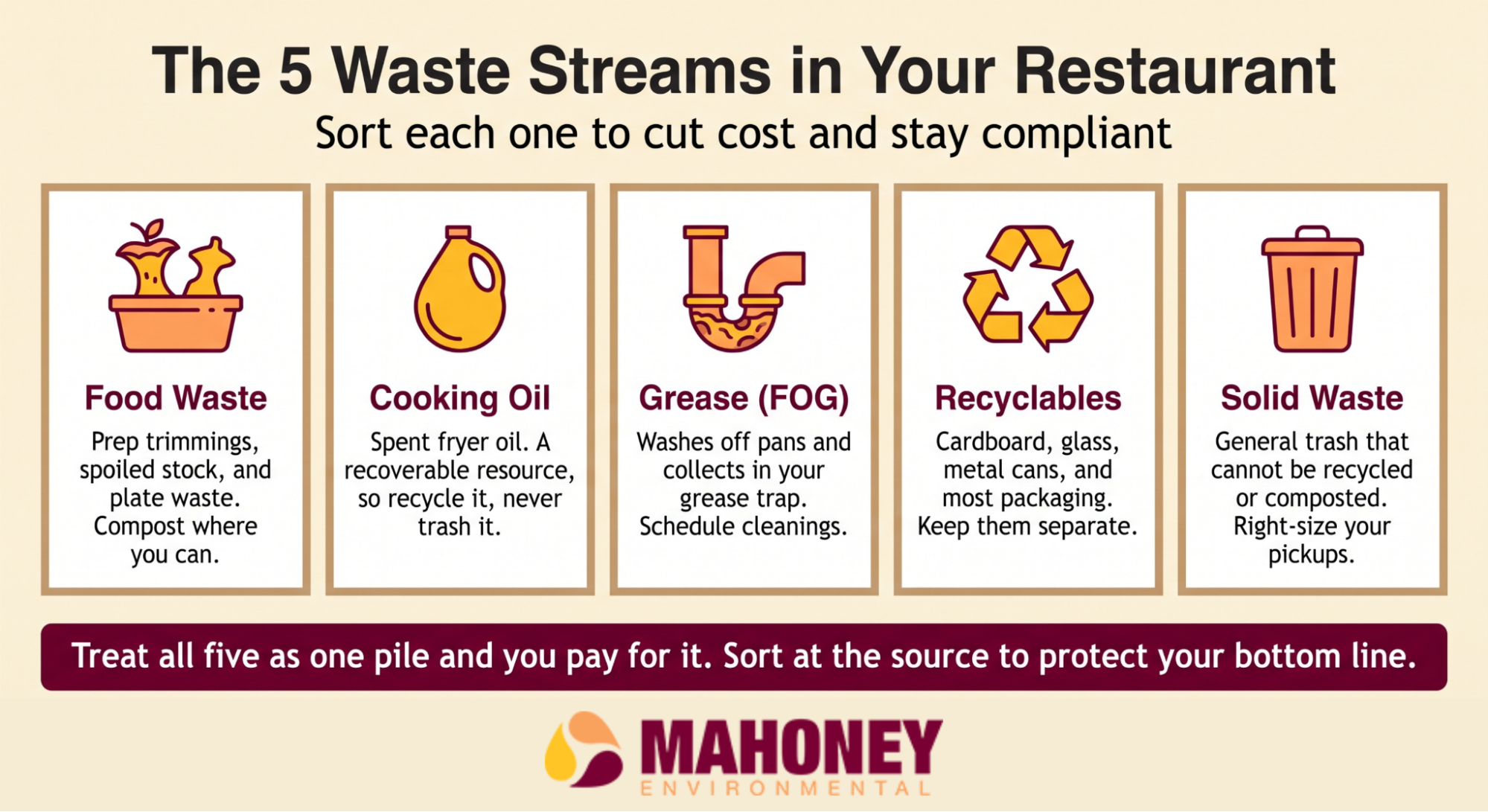
- Food waste covers prep trimmings, spoiled stock, and plate waste that comes back uneaten.
- Used cooking oil is the spent oil from your fryers, which is a recoverable resource rather than trash.
- Fats, oil, and grease (FOG) are what wash off pans and dishes and collect in your grease trap.
- Recyclable materials include cardboard, glass, metal cans, and much of your packaging waste.
- Solid waste is the general trash that cannot be recycled or composted.
Each stream has its own storage, its own pickup schedule, and its own rules. Treating them as one pile is where operators lose money.
What Good Waste Management Protects
Good waste handling is a cost lever, not just a chore. Three things are on the line for most operators:
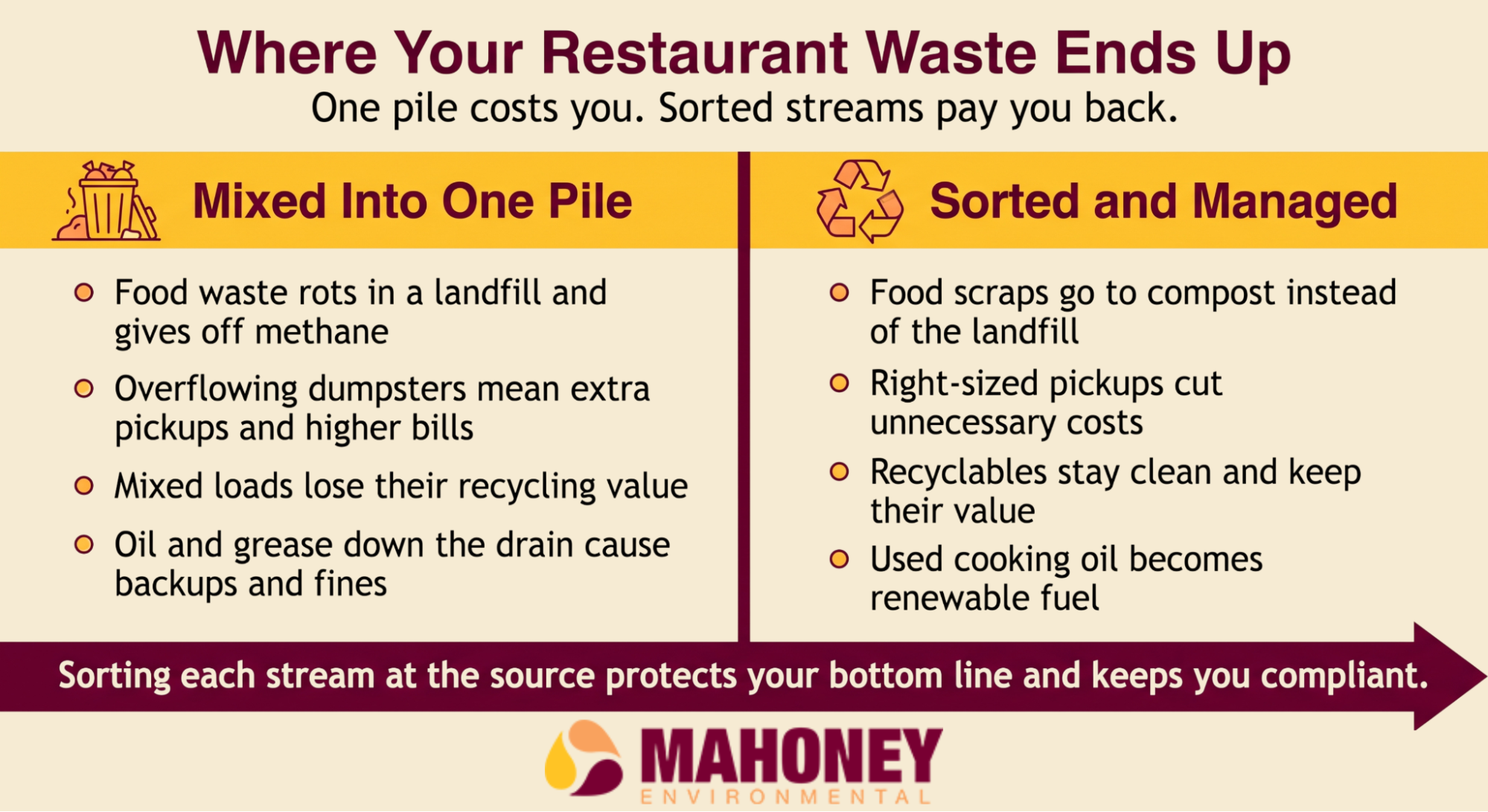
- Disposal costs. Overflowing dumpsters, extra pickups, and mixed loads all add unnecessary costs you can trim.
- Compliance. Many cities set rules for grease, organic waste, and recycling, and missed requirements bring fines.
- Environmental impact. Food waste in a landfill breaks down into methane emissions, and more than half of the greenhouse gas emissions from landfills come from wasted food.
The restaurant industry throws out a large share of the food it buys, so even small gains in waste reduction show up on the bottom line quickly.
How Do You Handle Food Waste in a Restaurant?
Food waste is usually the biggest stream by volume, and it is the easiest place to find cost savings. The goal is to throw away less and route what is left to the right place.
Cut the Waste Before It Starts
- Track what you toss. Even manual tracking of your top wasted items points to prep and portion fixes.
- Right-size portion sizes so less food comes back as plate waste.
- Tighten storage practices and stock rotation so less inventory spoils before use.
- Train restaurant staff to prep to par and label everything with dates.
Route What Is Left
- Send organic waste and food scraps to a composting facility where one is available.
- Some coffee grounds and vegetable trimmings can go to local compost or farm programs.
- Keep organic material out of the general trash to shrink your solid waste load.
Composting turns organic material into soil instead of methane, and it often costs less than sending the same weight to a landfill.
Handling Used Cooking Oil and Grease
Two of your messiest streams, used cooking oil (UCO) and grease, are also the two you should never pour down a drain. They need their own handling, and both can work in your favor when managed right.
Used Cooking Oil
Spent fryer oil is not garbage. A licensed recycler collects it and turns it into renewable fuel, so the oil that was a disposal problem leaves as a resource. Store it in a sealed container, keep it separate from other waste, and set a pickup schedule that matches your fryer volume.
Fats, Oil, and Grease
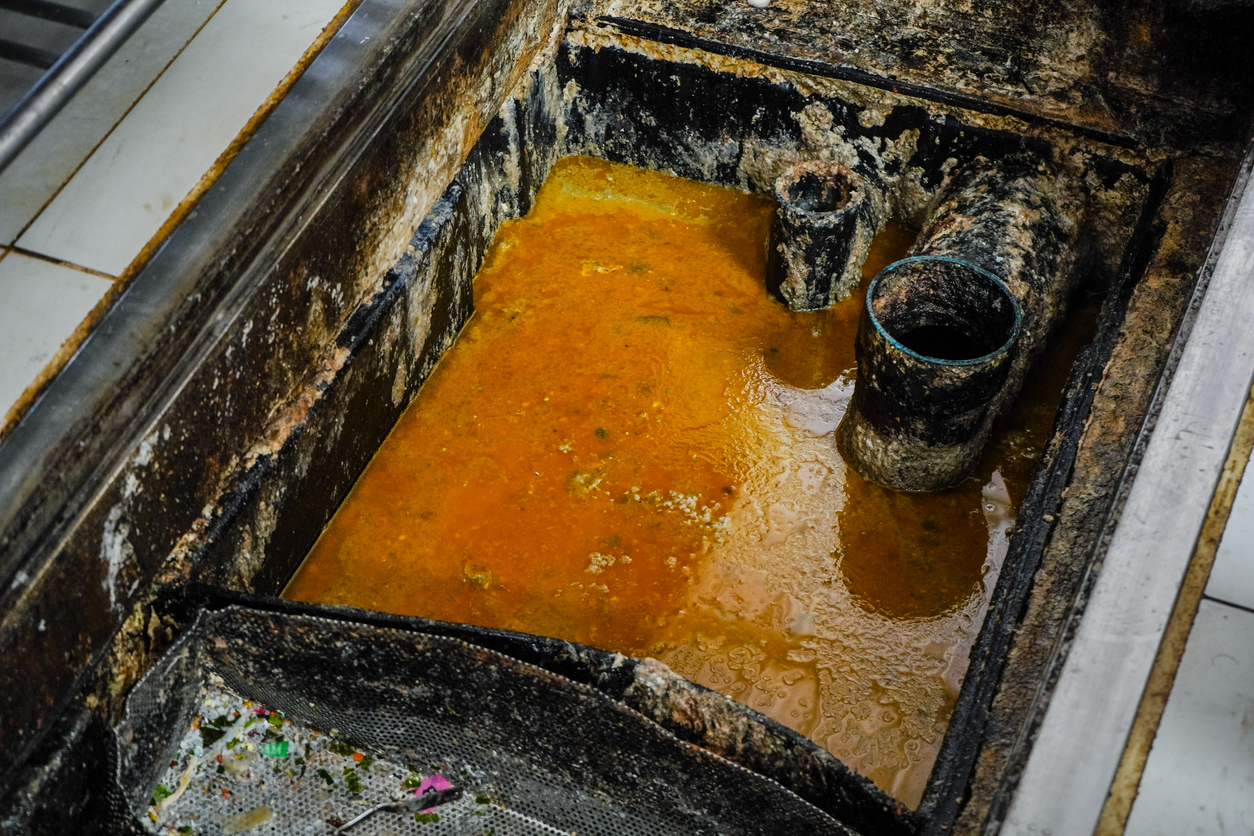
FOG that goes down the drain cools, hardens, and clogs your pipes. That is what a grease trap catches. Left too long, a full trap backs up, smells, and fails inspection. A scheduled cleaning keeps it working and keeps you compliant.
Both streams tie back to the same rule: keep them out of the trash and the drain, and hand them to a service built to handle them.
How Do You Build a Waste Management Plan?
A workable plan does not need software or a consultant to start. It needs clear streams and clear owners.
- List every waste stream your kitchen produces and how much of each you generate.
- Set up labeled, separate storage for oil, grease, recyclables, organics, and trash.
- Match each stream to a hauler and a pickup schedule so nothing overflows.
- Assign team members to sort at the source, since sorting after the fact rarely works.
- Review your bills each quarter to catch extra pickups and unnecessary costs.
Best Practices for Managing Restaurant Waste
A few habits separate kitchens that control waste from kitchens that pay for it. These best practices apply across streams.
- Sort at the source. It is faster and cleaner than pulling recyclables out of the trash later.
- Keep oil and grease separate from everything else. Mixed loads cost more and lose their recycling value.
- Match your trash collection schedule to your real volume, not a default that leaves you overflowing or overpaying.
- Partner with vendors who document pickups, since that paperwork supports your compliance and sustainability goals.
Sustainable practices work best when they also make operational sense. Sorting oil for recycling is good for the environment, and it keeps your dumpster from filling with a recoverable resource you are paying to throw away.
How Mahoney Environmental Helps
Your food scraps, recyclables, and general trash each need their own plan, and so do your two hardest streams. That is where a dedicated partner earns its place.
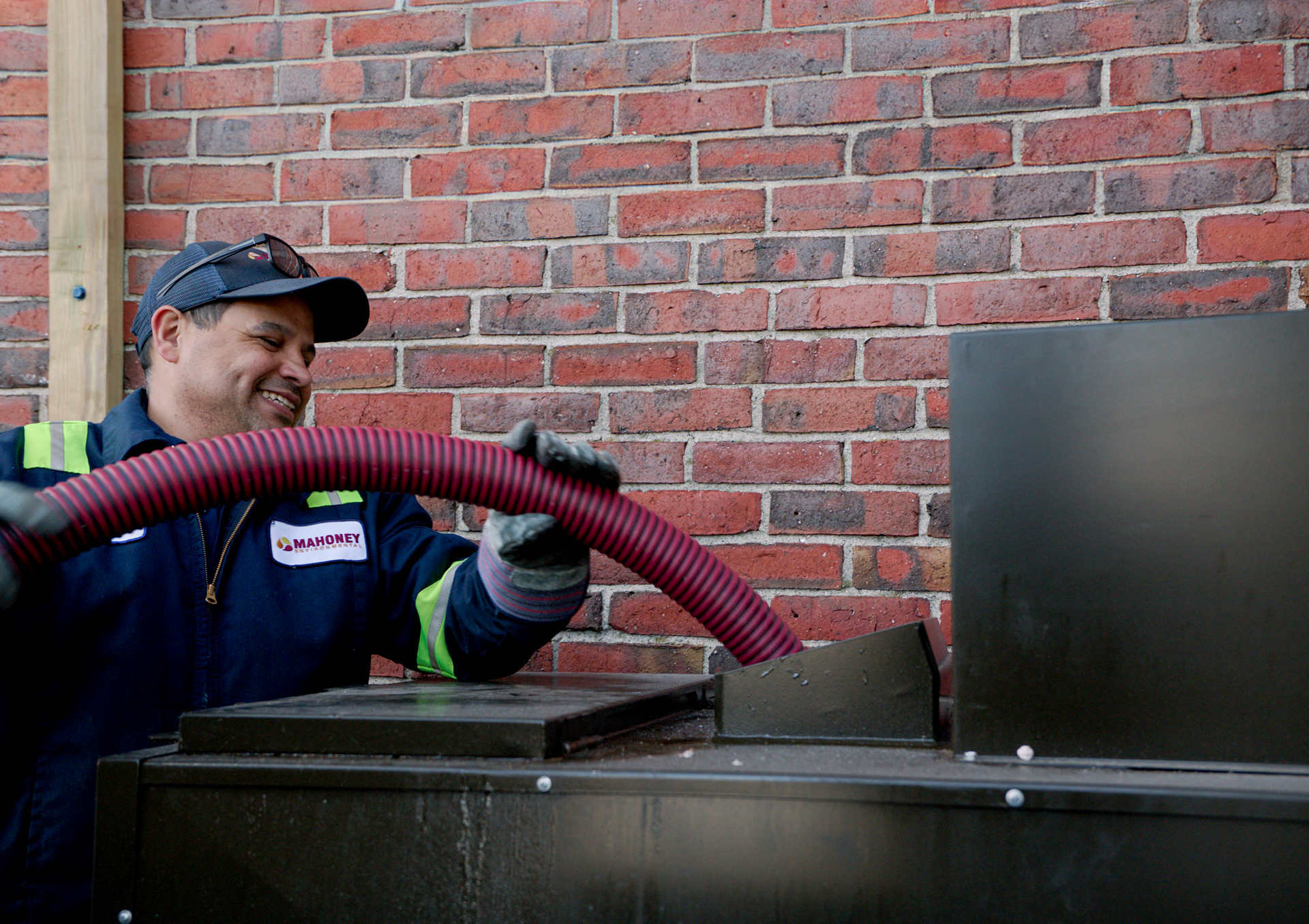
Mahoney Environmental has handled one job for commercial kitchens since 1953: take the used cooking oil and grease off your hands and turn them into something useful. Their EPA-licensed team runs used cooking oil recycling with scheduled pickups and keeps grease traps clean and maintained. The oil they collect becomes renewable fuel, which turns two of your messiest waste streams into part of a closed-loop system. Contact Mahoney or call (800) 892-9392 to set up a pickup schedule and take oil and grease off your waste list for good.

 Call Us Now (800) 892-9392