Used Cooking Oil Pickup and Recycling Services in Dallas, TX

Dallas kitchens fry at volume, and the oil and grease that comes out the back has to go somewhere legitimate. Mahoney Environmental picks up used cooking oil (UCO) and pumps grease traps for foodservice operators across Dallas proper and the eastern and northern suburbs, from Deep Ellum and Bishop Arts to Plano, Richardson, Garland, Irving, and Frisco.
The Dallas area holds an unusual density of multi-unit operators and franchise groups, so we build routes that cover several addresses under one agreement and one invoice. A single storefront gets the same arrival window as a forty-location group. Mahoney has done this work since 1953 and holds licensed EPA recycler status.
The Challenge of Fats, Oils, and Grease Management in Dallas
Fats, oils, and grease (FOG) go down warm and cool fast. Inside the pipe, cooled grease and bits of food bond to the wall and keep narrowing the opening until flow stops. The warnings arrive in order: a slow drain, then an unpleasant odor at the dish pit, then wastewater rising through a floor sink. The City of Dallas regulates grease disposal and expects a food service establishment to keep its trap maintained and its cleaning records available, and operators who cannot produce them risk fines.
Mahoney Environmental works with these industries across the Dallas area:
Used Cooking Oil Collection and Recycling Services
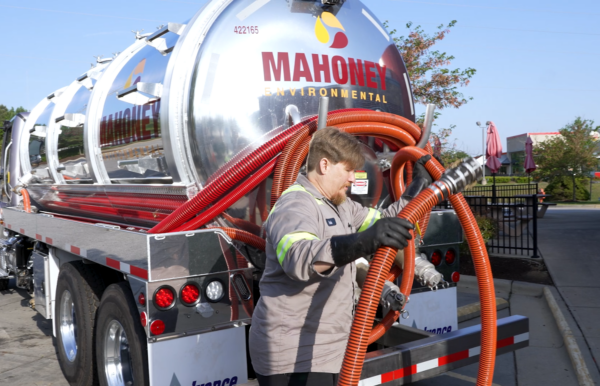
Fryer oil wears out on a schedule set by your menu, not the calendar. Once it is spent, it belongs in a sealed container until a hauler arrives. Our driver pumps the UCO out of that container and into the truck, so your staff never carries it. From there it moves to a Mahoney plant, gets screened and refined, and leaves as raw material for renewable fuel.
Every gallon that leaves your Dallas kitchen is weighed and recorded. Those records support audits, compliance filings, and whatever sustainability reporting your corporate office asks for.
What Our Cooking Oil Collection Program Covers:
- Route pickups: Frequency built around your fry volume instead of a default interval
- Container monitoring: Level tracking so the tank gets emptied before it tops out
- Licensed transport and processing: EPA-licensed hauling from your back door through our facility
- Equipment supply and setup: Storage and handling systems specified, installed, and serviced by us
- Gallon reporting: Documented volumes for audits, filings, and corporate sustainability programs
Benefits of Professional Cooking Oil Recycling
Handing this to a licensed recycler takes hot oil off your staff’s list and removes any reason to hunt for a drop-off site. The back of house runs cleaner, burns and slips get less likely, and what comes out of your fryers gets refined into sustainable aviation fuel (SAF) and renewable diesel instead of being hauled to a landfill.
Commercial Grease Trap Cleaning and Installation Services
Your grease trap is the last thing standing between a Dallas kitchen and the city sewer system. Wastewater slows as it passes through, which gives grease time to float and solid material time to drop, leaving only the middle layer to exit through the outlet pipes. That works until the trap reaches capacity. Past that point, FOG rides straight out to the sewer lines, and flow through the plumbing system starts to slow down.
Consequences of Neglected Grease Traps
- Standing water on the kitchen floor during a dinner rush
- A foul odor around the dish area that reaches guests
- Findings written up at your next health inspection
- After-hours pump-outs billed at after-hours rates
- Municipal penalties for a gap in your cleaning record
What Our Grease Trap Cleaning Service Covers:
- Regular cleaning: Trap maintenance on intervals matched to your fry volume and trap size
- Pump-out and repair: Removal of accumulated FOG and solid waste, plus repair work on baffles, lids, and worn parts
- Rodding and jetting: Opening drain lines and sewer pipes that have already closed down
- Interceptor work: Service for the larger underground grease interceptor units behind high-volume kitchens
- Grease trap inspections: A written condition report each visit, building the history that flags potential problems and plumbing issues early
- Emergency coverage: Around-the-clock response for overflows and sudden backups
How Often Should a Dallas Kitchen Clean Its Grease Trap?
Most commercial kitchens land somewhere between monthly and quarterly. Two things move that number. A menu heavy on fried food fills a trap faster than a bakery or a corporate cafeteria does, and a small indoor unit fills faster than an outdoor interceptor. The working standard is to service before FOG and solids reach a quarter of the trap’s capacity, since separation stops working past that mark.
Two habits stretch the interval on their own. Have staff scrape food waste into the bin before dishes reach the sink, and keep cooking oil out of the drainage system entirely. A grease trap is not a septic tank and treats nothing. It holds what it catches until our vacuum trucks arrive.
Commercial Used Cooking Oil Containers and Automated Systems
Most back-of-house burns happen while somebody is walking hot oil from a fryer to a container. Mahoney designs and installs equipment that removes that wallk.
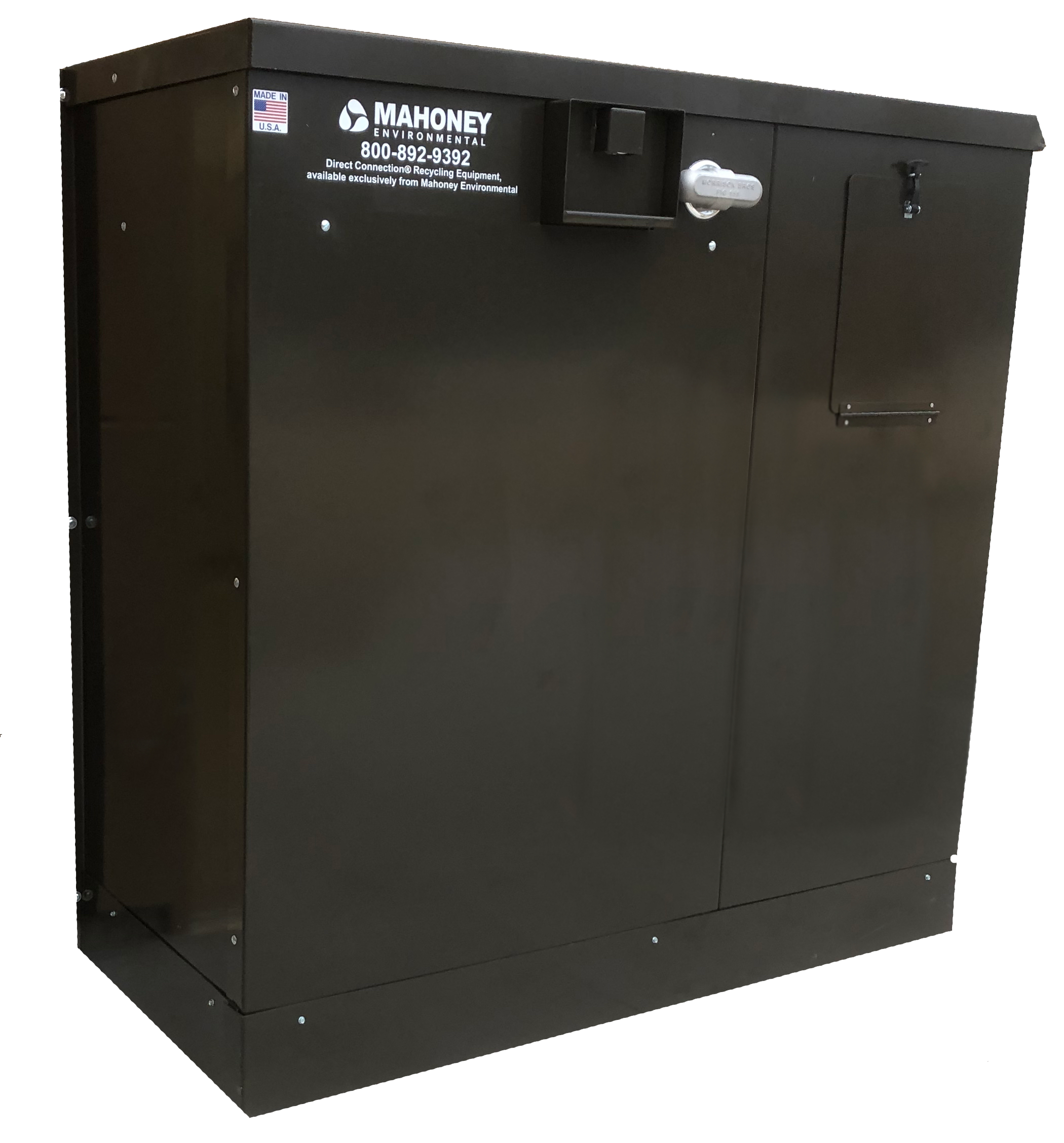
- Direct Connection Recycler System: A dedicated line runs from the fryer bank to storage, indoors or out. A lever or switch moves the oil.
- Indoor System: A tank sits inside, piped to the fryers, with a portable filter machine handling filtration.
- Heated Outdoor Bulk Container: Insulated exterior storage, locked against theft, screened at the opening, and fitted with a level sensor. (Available in select markets.)
- Standard Storage Systems: Bulk containers that seal and screen, sized for kitchens that deposit by hand.
- Custom Equipment: Tanks, lines, and controls engineered to a footprint that does not fit anything standard.
Equipment Options: MES Inside 183, MES Inside 352, DC 48, DC 72. Oil caddies and shuttles cover in-kitchen transport where a fixed line is not practical.
Our outdoor equipment uses ported access rather than an open lid, so oil cannot be pulled out the way it can from a standard container. Mahoney also runs a theft prevention program built as a partnership between our customers, law enforcement, and our team. We help identify theft when it happens, educate local agencies on how UCO theft works, and pursue prosecution. Customers who help us catch it are eligible for rewards.
Why Dallas Foodservice Operators Rely on Mahoney
Built for Multi-Unit Operations: Routes, reporting, and billing consolidate across locations, which matters in a metro this dense with franchise groups.
Since 1953: Seven decades in foodservice, doing this one job.
Nothing Handed Off: Equipment, collection, processing, and finished fuel stay under Mahoney, so no third-party hauler sits between you and the recycler.
A Schedule That Holds: Technicians arrive when scheduled, which keeps containers under capacity and traps clean.
Emergency Coverage: Traps fail on their own timing, so we answer around the clock.
Call Your Dallas Oil Recycler, Mahoney Environmental
Collection, grease trap cleaning, and handling equipment all come from the same provider on the same schedule. Call (800) 892-9392, and we will size the program to what your kitchen actually produces.
Request a Quote | Schedule Service (Current Customers) | Contact Us
Our Dallas service area covers Plano, Richardson, Garland, Irving, Frisco, Addison, and communities across the eastern and northern metroplex.

 Call Us Now (800) 892-9392